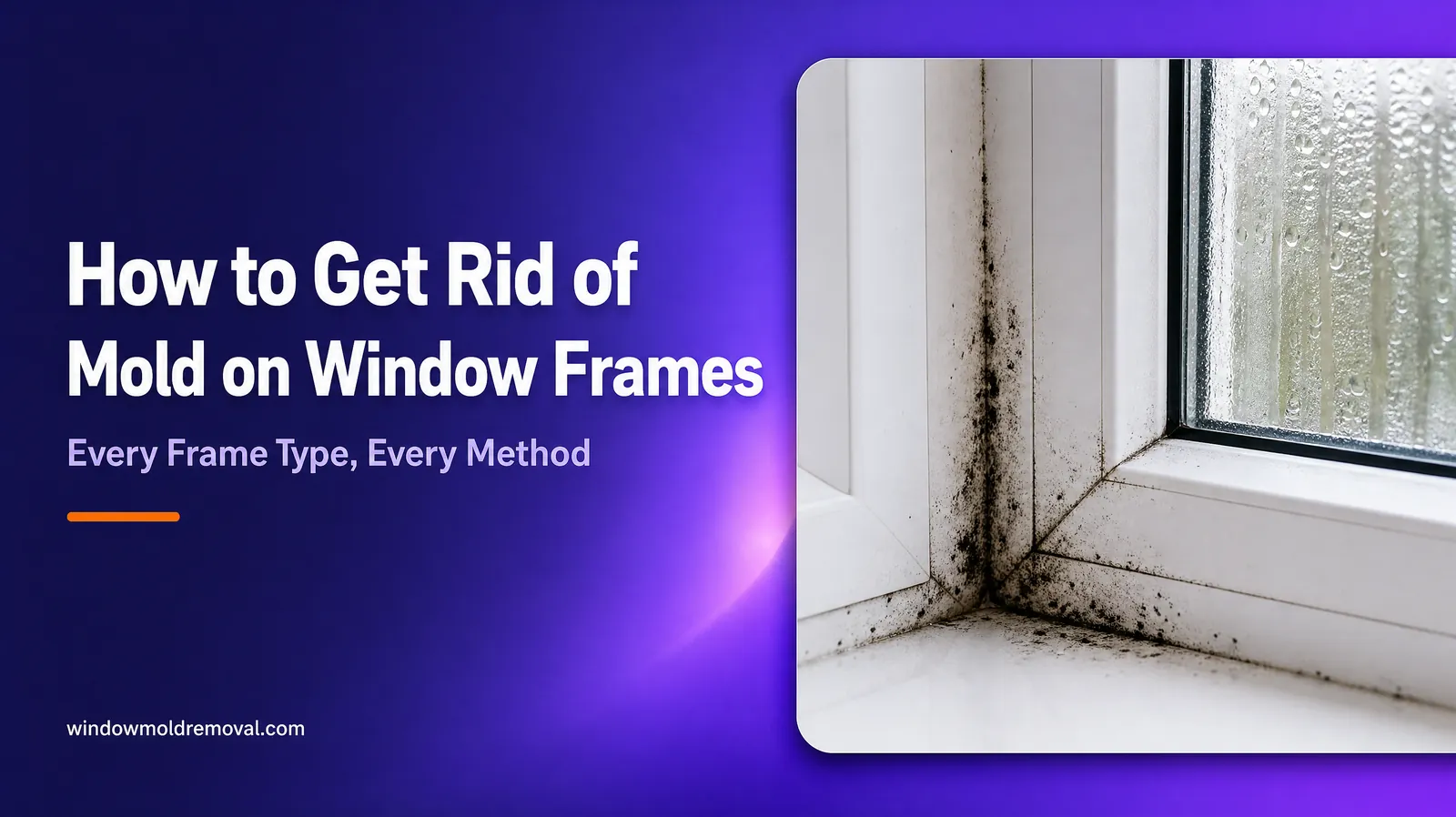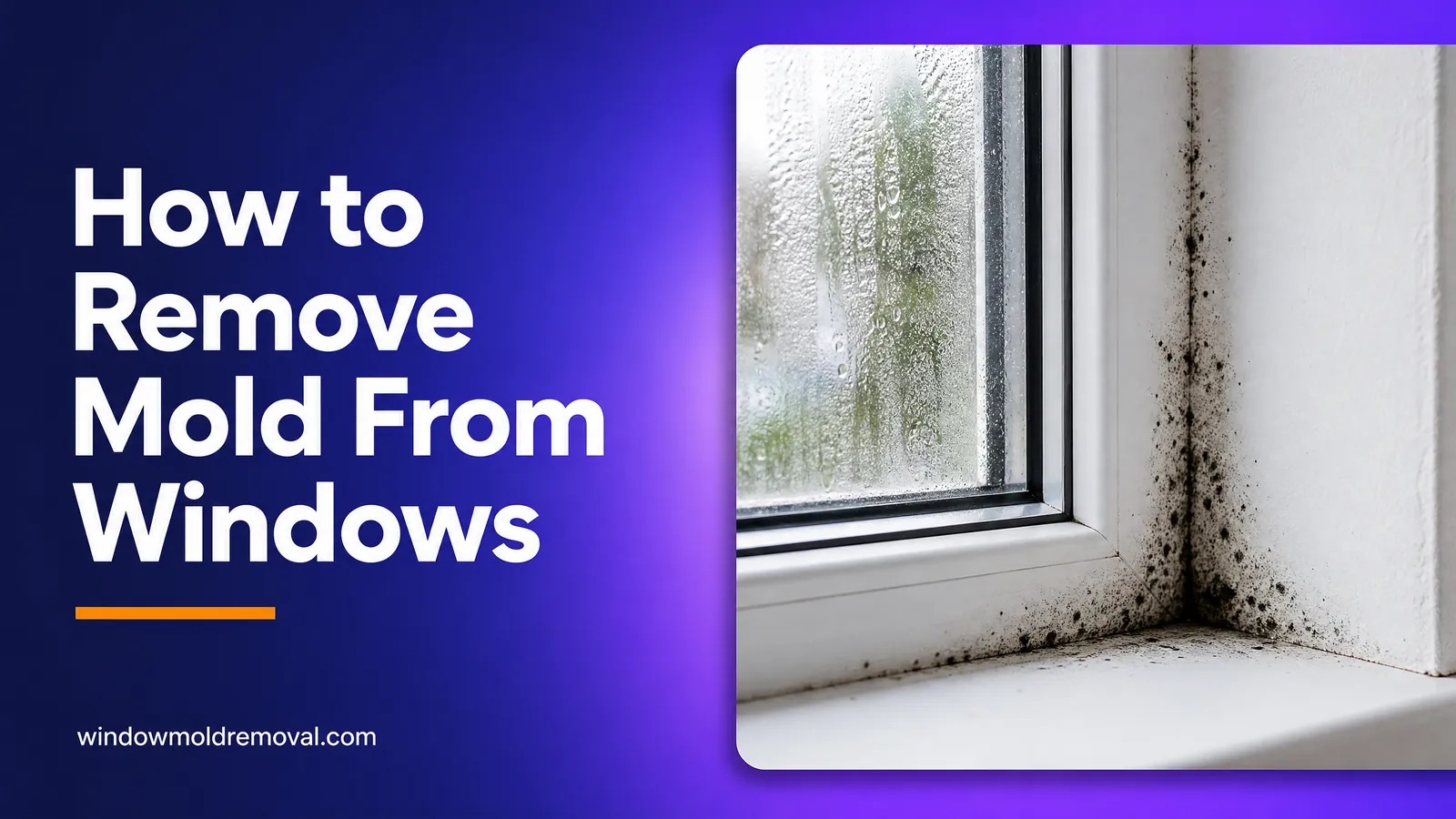
Quick answer: To remove mold from windows, put on gloves and a mask, then spray white vinegar (undiluted, or 4 parts vinegar to 1 part water) or soapy water on a cloth and wipe the glass, frame and sill. Scrub the tracks and rubber seals with a soft brush, clear the drainage holes, and dry every surface completely. Finally, find out why the window gets wet, usually condensation, and fix it. If you skip that last step, the mold grows back within weeks.
Mold on windows is one of the most common mold problems in any home. It shows up as black, grey, green or white spots on the bottom of the glass, along the frame, on the sill, inside the sliding track and in the folds of the rubber seals. It is especially common in winter, when windows are the coldest surface in the house and collect water every night.
The good news: almost all window mold is surface mold that you can clean yourself in under an hour per window. This guide covers every part of the window, the right cleaner for each material, how to tell mold from mildew and dirt, whether it is dangerous, and how to stop it coming back for good.
Where Is the Mold on Your Window?
Start by finding exactly where the mold is growing. Each part of a window needs a slightly different method, and the location tells you a lot about the cause.
| Where you see it | What it usually means | Jump to |
|---|---|---|
| Bottom edge of the glass | Nightly condensation running down | Cleaning window glass |
| Frame face and corners | Condensation pooling on a cold frame | How to get rid of mold on window frames |
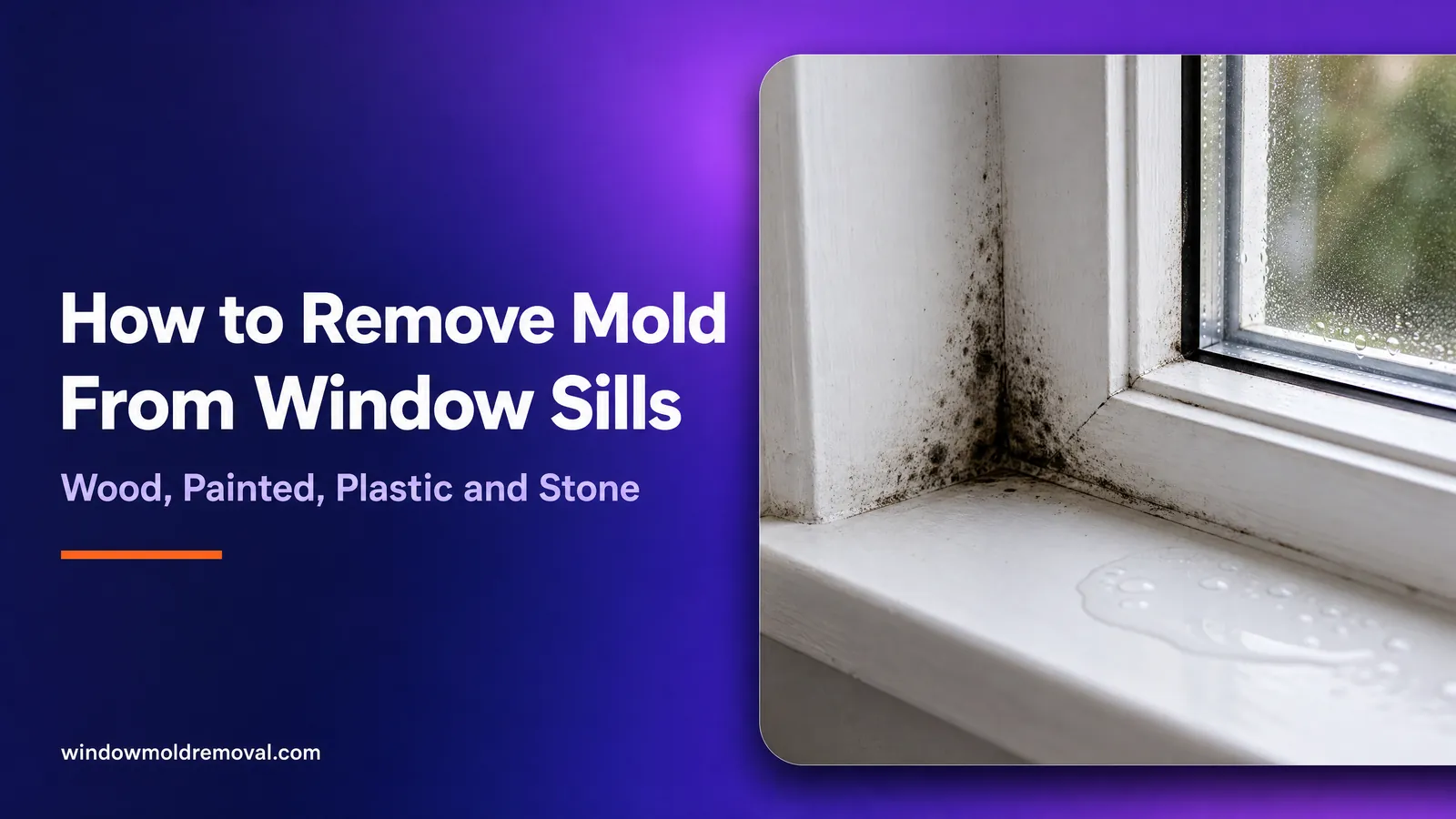
| Window sill (inside ledge) | Water dripping off the glass and sitting | How to remove mold from window sills |
| Sliding track and grooves | Trapped water, dust and blocked drainage | Cleaning window tracks |
| Rubber seals and gaskets | Moisture held in the rubber folds | Cleaning window seals |
| Caulk or silicone joints | Mold growing into the sealant | Cleaning caulking |
| Between the two panes of glass | A failed double-glazing seal | Mold between panes |
| Wall or plaster around the window | Leak, cold spot or long-term damp | Mold on the wall around a window |
| Blinds, shades or curtains | Fabric touching wet glass | Blinds and curtains |
Is It Mold, Mildew or Just Dirt?
Not every dark mark on a window is mold. Before you start, spend 30 seconds checking what you are looking at.
Mold vs mildew on windows
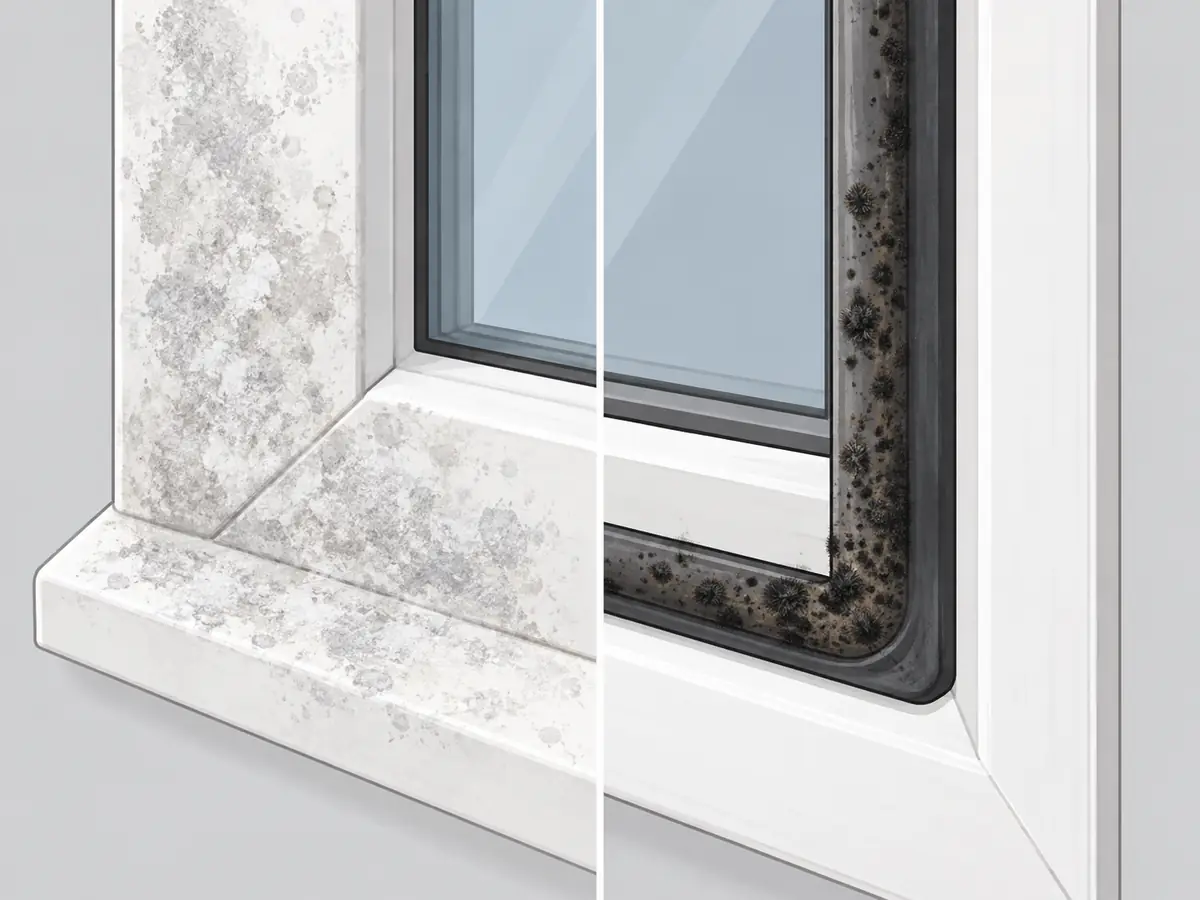
Mildew is a type of mold that grows flat on the surface. It usually looks white, grey or yellowish and powdery, and it wipes off easily. Mold is a broader term. On windows it is usually black, dark green or grey, fuzzy or slimy, and it often grows into seals, caulk and wood.
You clean both the same way. The difference matters mainly because mildew is an early warning: the same conditions will grow darker, deeper mold if you leave them.
Types of mold on window sills and frames
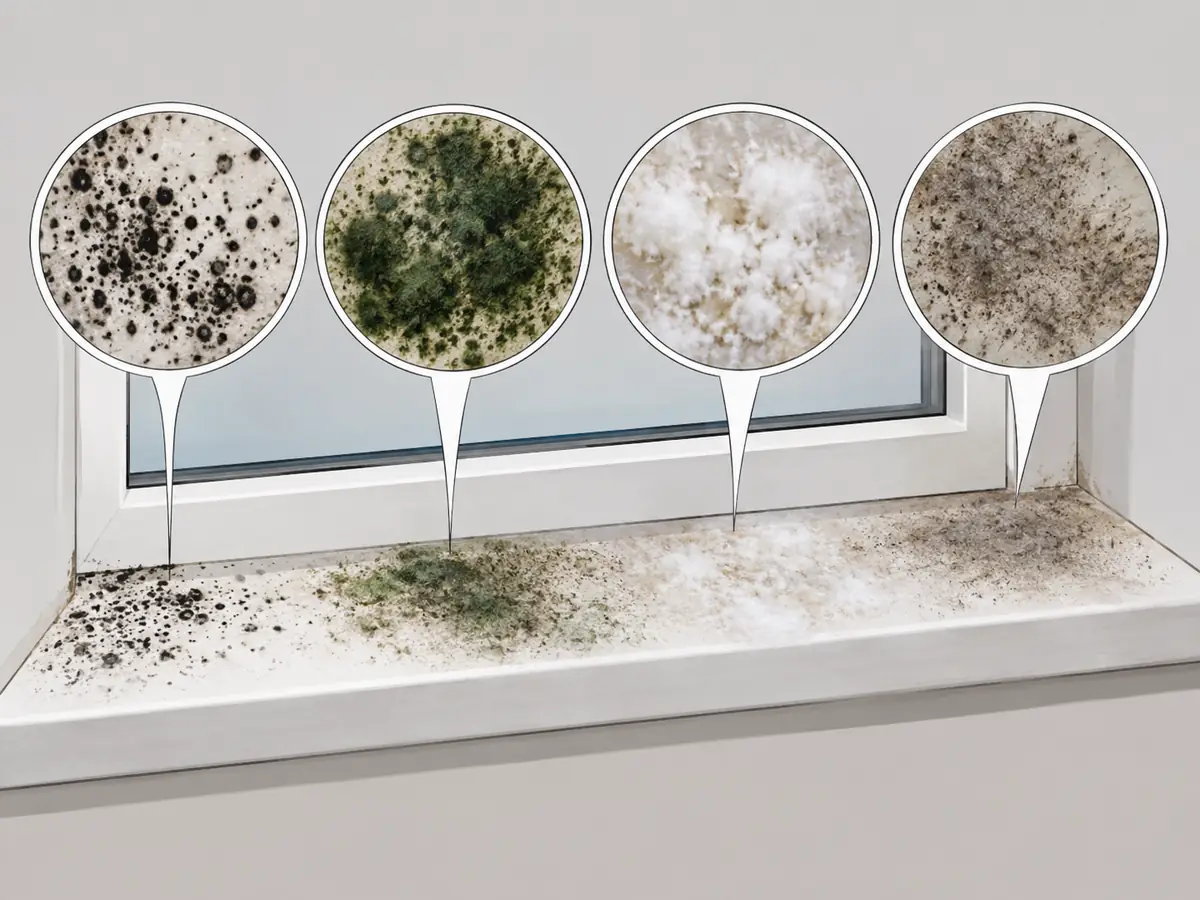
You cannot identify a mold species by looking at it. The molds most often found on windows are common indoor types that thrive on condensation, such as Cladosporium, Aspergillus, Penicillium and Alternaria. Stachybotrys, the mold usually called “toxic black mold”, needs material that stays soaking wet for weeks, like drywall or wood after a leak. It is unusual on glass or plastic frames, but possible in rotted sills or wet wall cavities.
The 3-second test for mold vs dirt
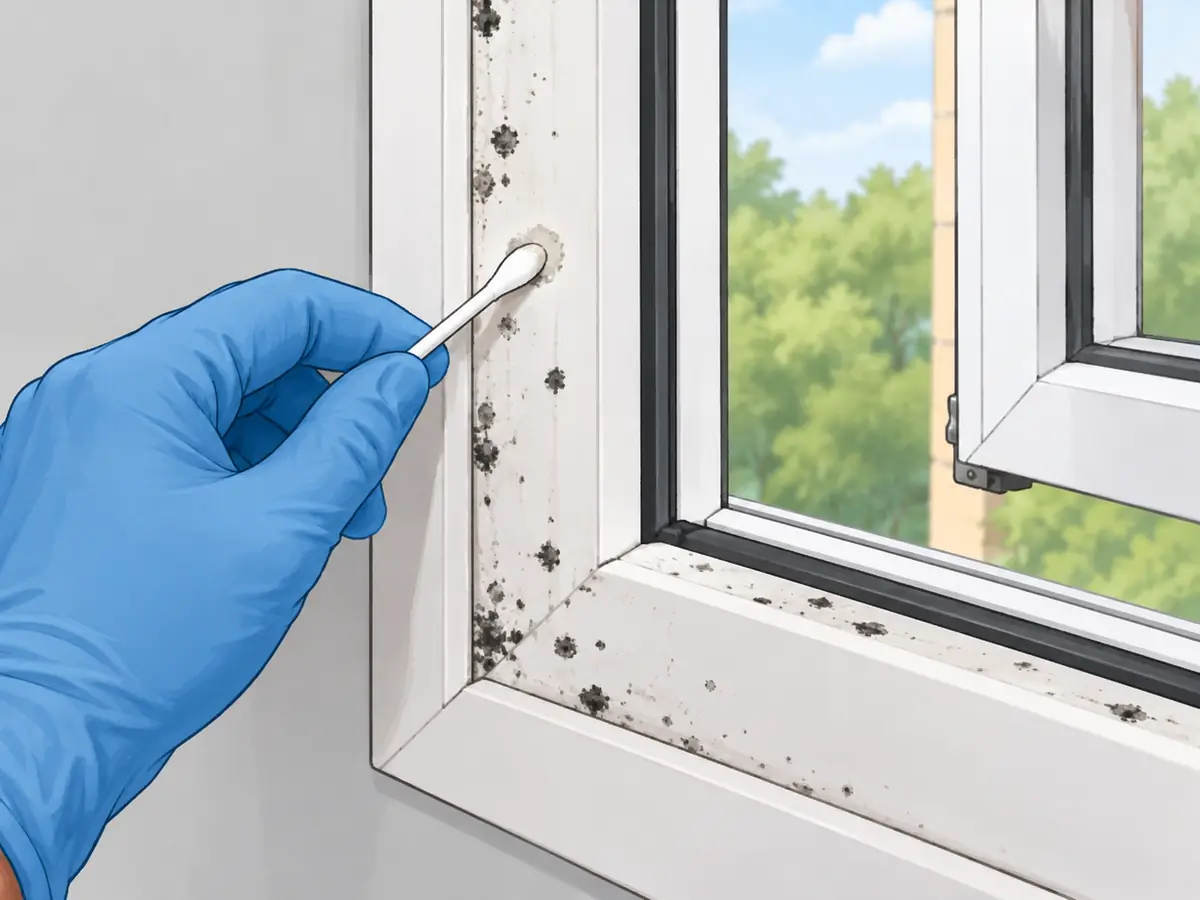
Dab the spot with a cotton bud dipped in a little diluted bleach or a bleach-based cleaner, outdoors or with the window open. If the mark lightens within a minute or two, it is probably mold. If it stays the same color, it is more likely dirt, soot or a stain. Do this only on a small spot on glass or a white plastic frame, never on wood, aluminum or colored finishes, and never mix the bleach with any other product.
Other clues: dirt and soot smear when you wipe them dry, while mold sits in spots or clusters and comes back in the same places. A musty smell near the window strongly suggests mold.
Is Mold on Windows Dangerous?

Mold on windows is very common, but it is not something to ignore.
According to the CDC, mold exposure can cause a stuffy nose, wheezing, coughing, and red or itchy eyes or skin. People with asthma, mold allergies or a weakened immune system can have stronger reactions. Small patches of surface mold that you clean promptly are a low risk for most healthy adults. Large or long-term growth, especially in bedrooms where people sleep near the window, is worth taking more seriously.
Is black mold on a window sill dangerous? The color does not tell you how dangerous it is. Most black mold on window sills is a common mold, not Stachybotrys. Treat all mold the same way: protect yourself, remove it, and fix the moisture.
First signs that window mold may be affecting you: symptoms that are worse in one room or worse in the morning, a constantly stuffy nose at home that clears when you are away, and a musty smell. If you have symptoms, talk to a doctor, especially if you have asthma.
Should You Remove Window Mold Yourself?
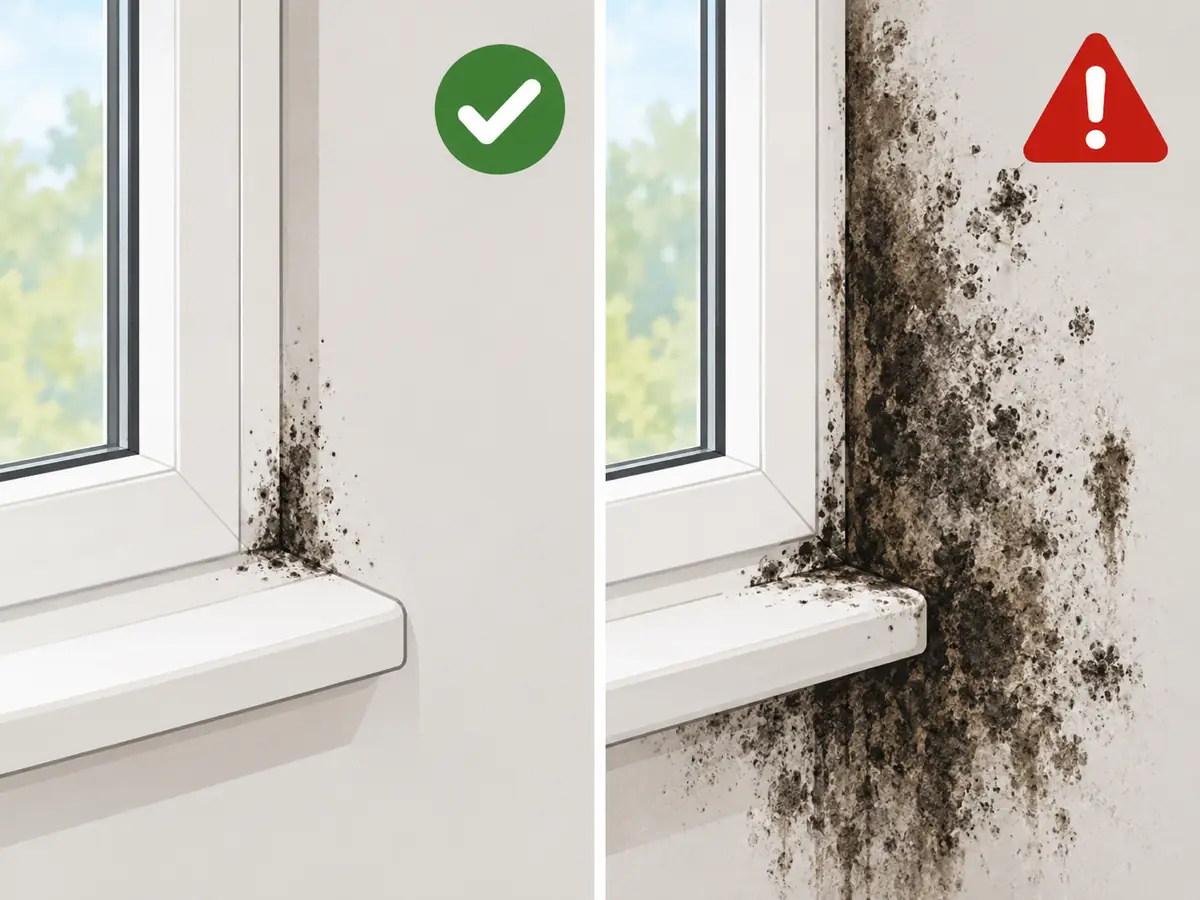
The EPA’s guideline is that if the moldy area is less than about 10 square feet (roughly a 3 ft by 3 ft patch), you can usually clean it yourself.
| Situation | DIY or professional? |
|---|---|
| Spots or strips of mold on glass, frames, sills or tracks | DIY |
| Mold returns within 2 to 4 weeks | DIY clean, then find the moisture source |
| Wood feels soft, spongy or crumbles | Professional or carpenter (rot repair) |
| Mold spreading across the wall, under paint or behind trim | Professional |
| Musty smell but no visible mold | Professional inspection |
| Someone in the home has asthma, a mold allergy or a weakened immune system | Have someone else clean it, or hire a professional |
| Peeling paint in a home built before 1978 | Do not sand or scrape until the paint is tested for lead |
What You Need to Remove Mold From Windows
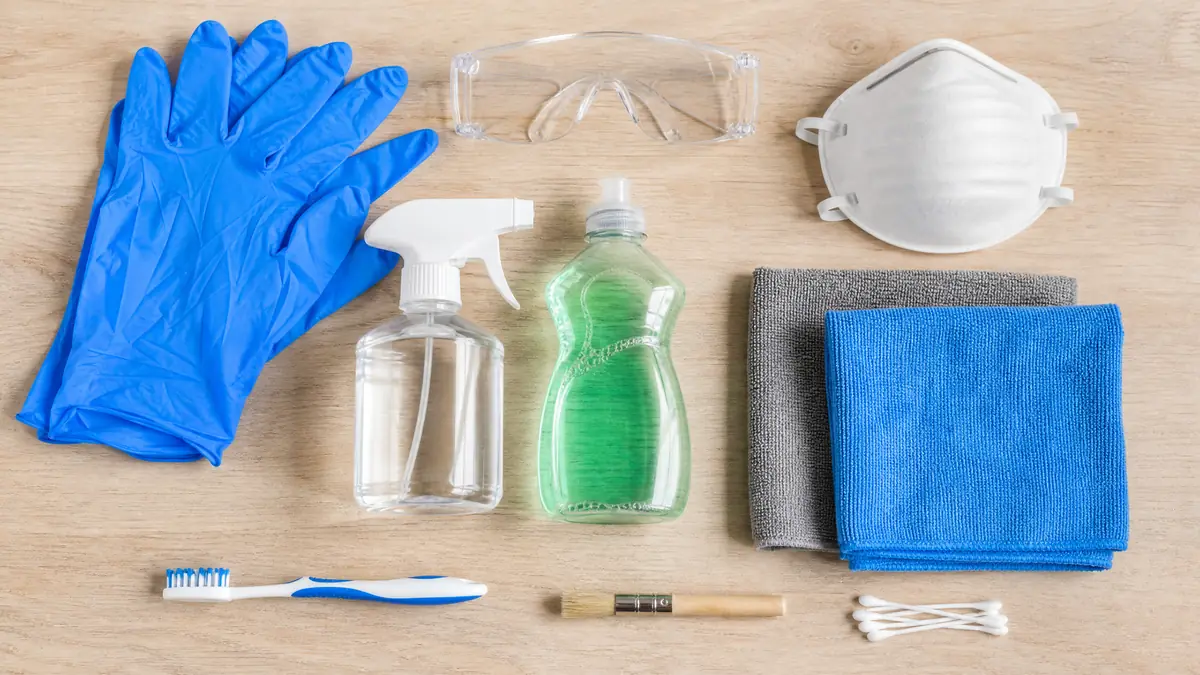
- Rubber or nitrile gloves
- Safety glasses or goggles
- N95 mask (P2 in the UK and Australia)
- Spray bottle
- White vinegar, dish soap, or 3% hydrogen peroxide
- 3 or 4 microfiber cloths
- Old soft toothbrush and a small detailing brush
- Cotton buds or pipe cleaners
- Squeegee
- Old towel or plastic sheet
- Plastic bag for used cloths
- Optional: vacuum with a HEPA filter and crevice tool
How to Remove Mold From Windows: Step by Step
Step 1: Find every spot of mold
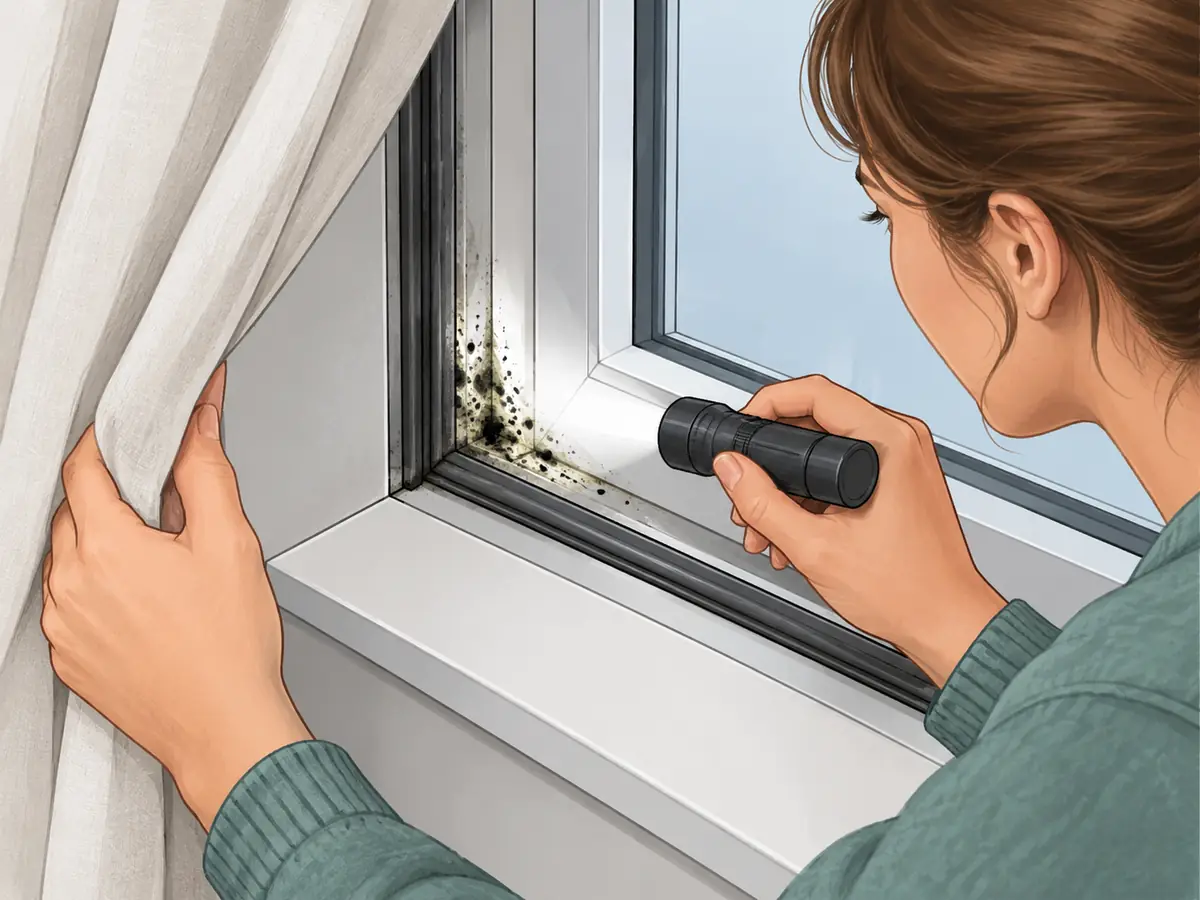 Open the window fully and look in all the places mold hides: the bottom of the glass, both corners of the frame, the sill, the track, the rubber seals, the caulk line where the frame meets the wall, and the drainage holes. Pull back curtains and blinds. Missing even one corner is the most common reason window mold “comes back” a week later.
Step 2: Protect yourself and the room
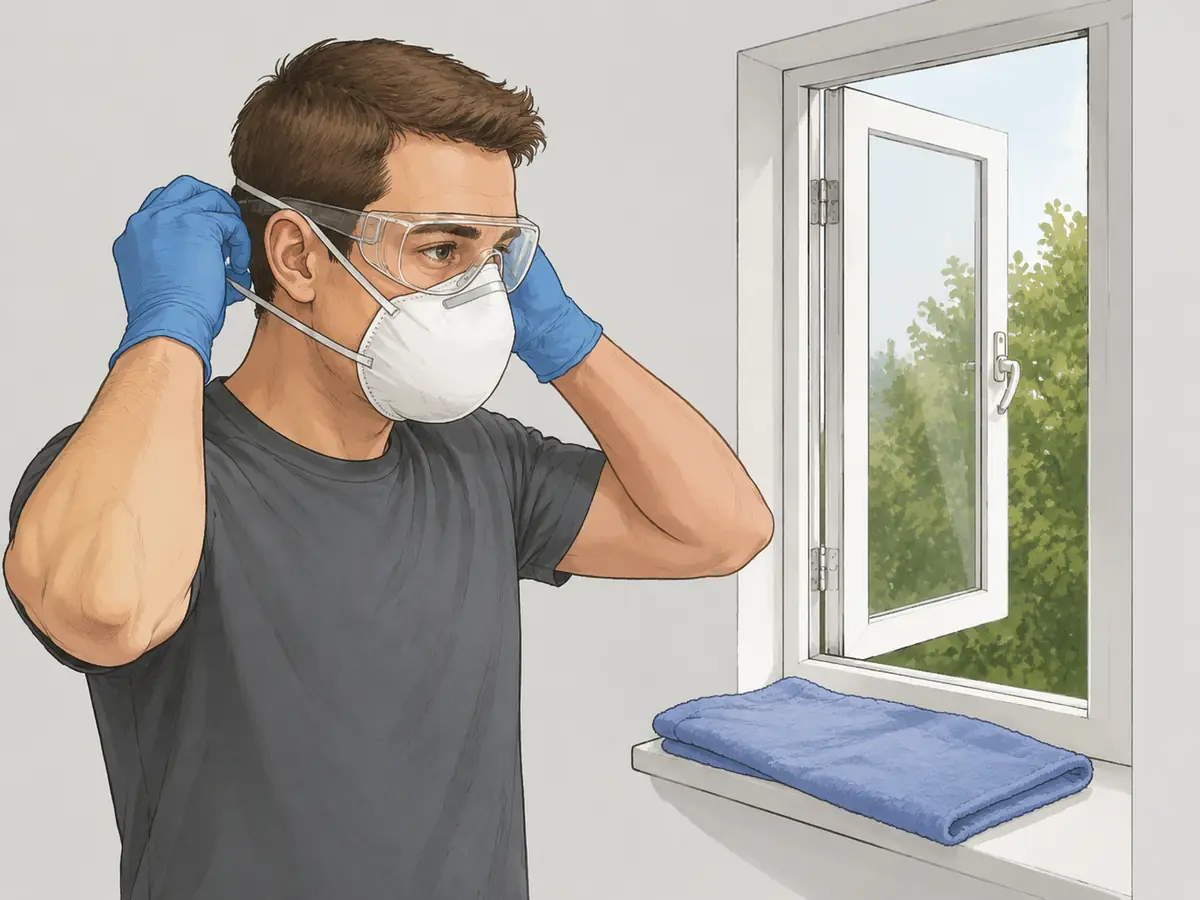 Put on gloves, goggles and an N95 mask. Open the window and close the door to the rest of the house so spores do not drift into other rooms. Lay a towel or plastic sheet under the window. Take down curtains and wash them on a hot cycle separately. Keep children and pets out.
Never dry brush or vacuum mold with a normal vacuum. Dampen it first, so the spores stay put.
Step 3: Mix your cleaning solution
 Choose one solution and use only that one:
- White vinegar: undiluted, or 4 parts vinegar to 1 part water. Best all-rounder for glass, plastic, painted and sealed wood frames, sills and seals.
- Dish soap and water: a few drops in a quart (1 liter) of warm water. Safe on every surface, including aluminum and natural stone.
- 3% hydrogen peroxide: straight from the bottle. Good on white plastic frames, seals and grout. Test first on wood and painted finishes.
Never mix products. Bleach plus vinegar releases chlorine gas, and bleach plus ammonia releases chloramine gas. Both are dangerous in a small room.
Step 4: Clean the glass
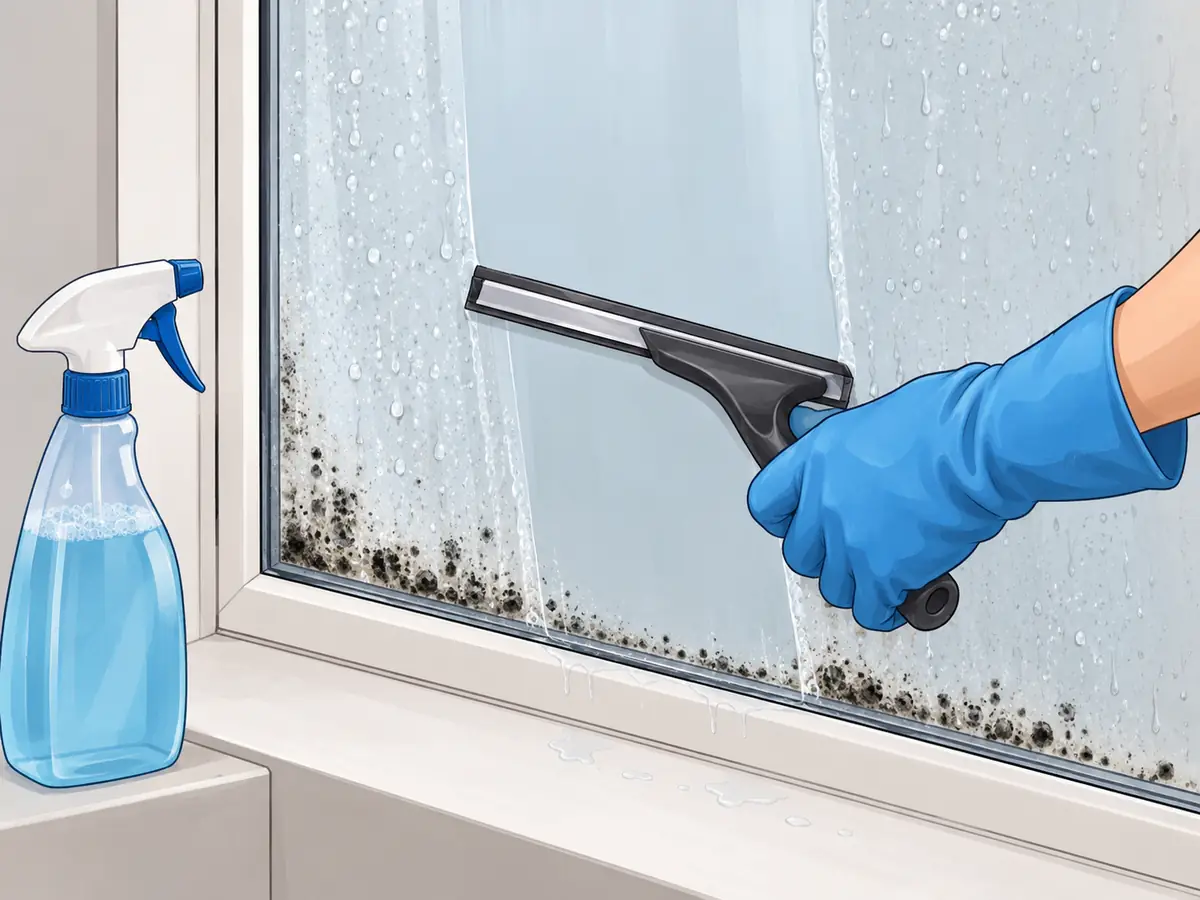 Spray the solution on the glass, focusing on the bottom few inches where condensation collects. Let it sit for 5 to 10 minutes. Wipe from the top down with a microfiber cloth, then use a squeegee to pull the water down and off. Mold on the glass itself wipes off easily because glass is non-porous. The mold in the rubber seal at the glass edge is the part that takes work.
Step 5: Clean the frame
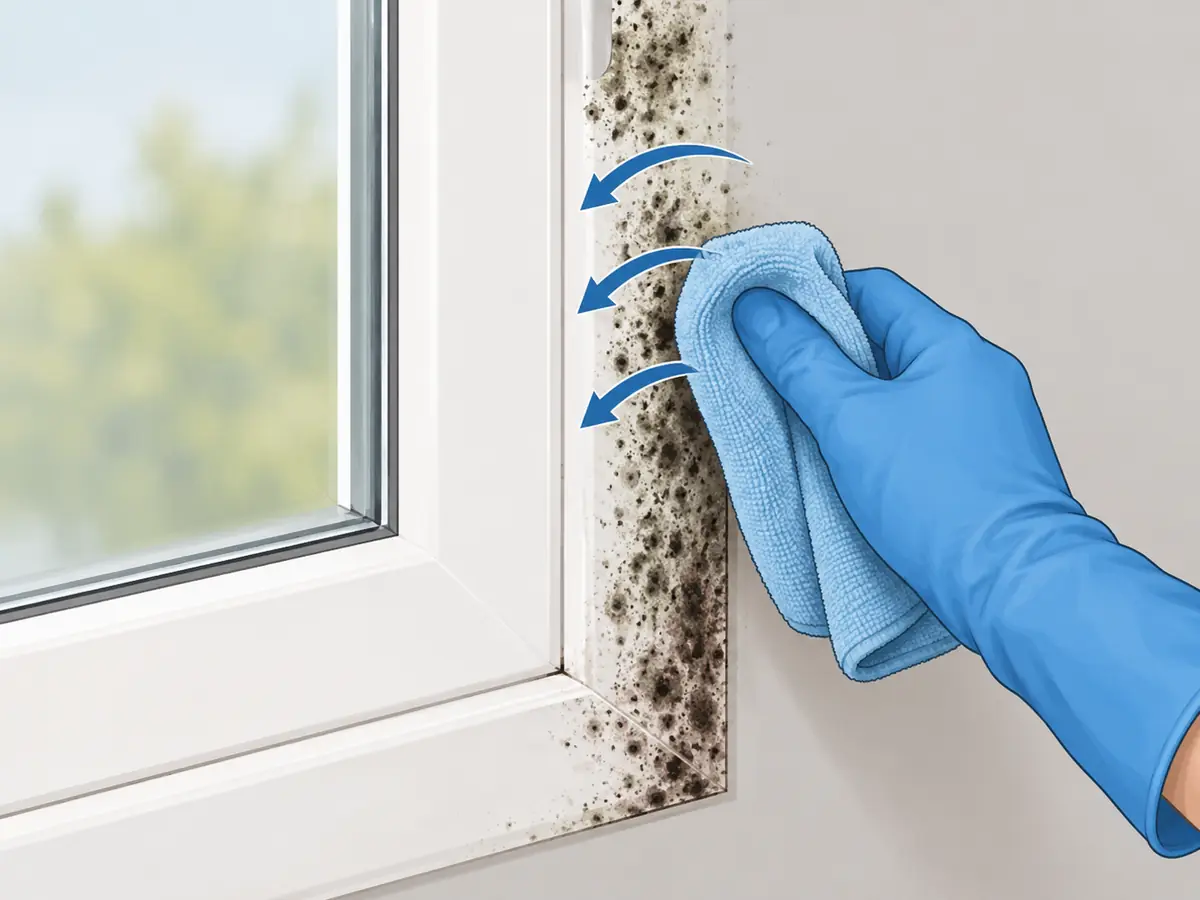 Spray the solution onto a cloth, not directly onto the frame, so liquid does not run into joints. Wipe from the outer edge of each patch toward the center so you do not spread it. Fold the cloth to a clean side after every pass. For stubborn spots, leave the solution on for 10 minutes (up to an hour for vinegar) and wipe again. Our full guide on how to get rid of mold on window frames covers wood, uPVC, aluminum and painted frames in detail.
Step 6: Clean the sill
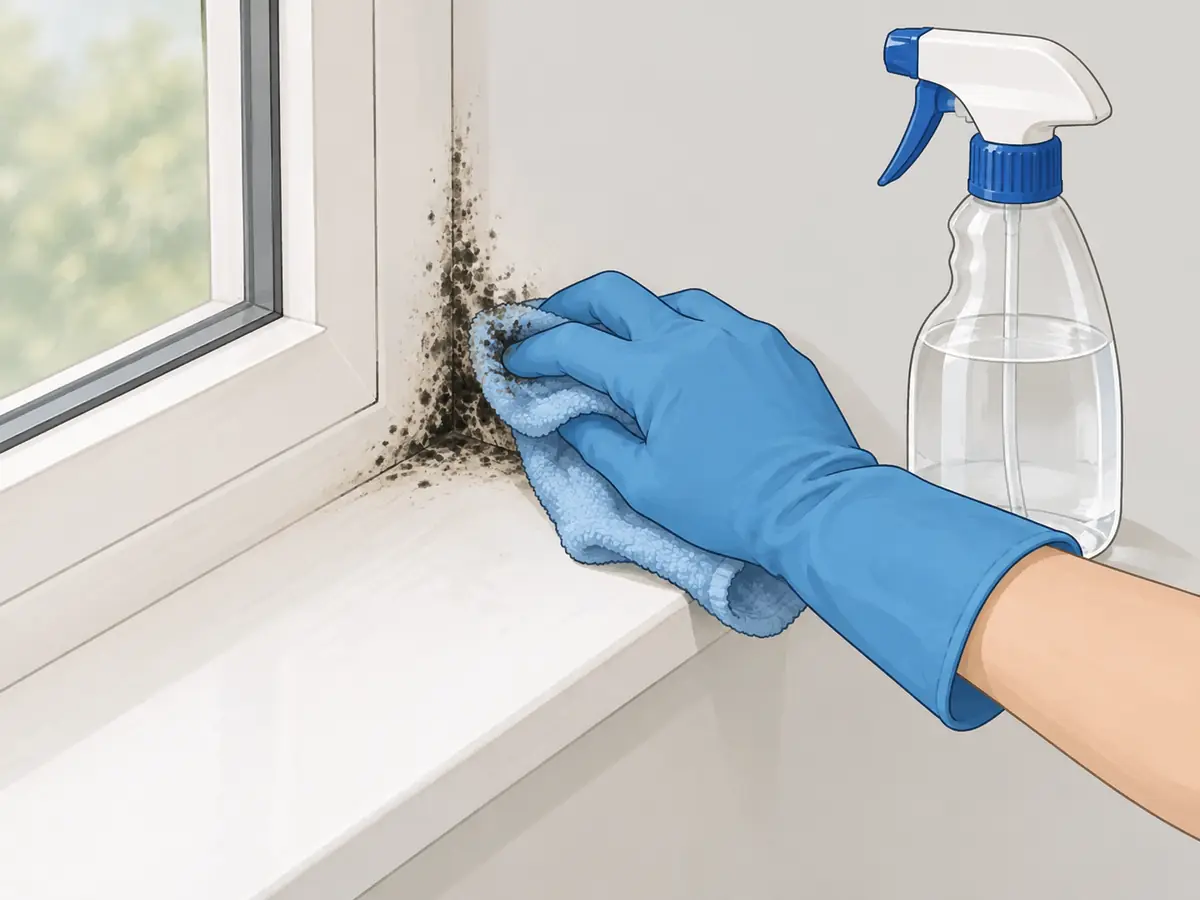 The sill catches every drop that runs off the glass, so it often has the worst mold. Wipe it with your solution, paying attention to the back corners where the sill meets the frame. Check for soft or swollen wood with a screwdriver tip. Our guide on how to remove mold from window sills covers wood, painted, plastic and marble sills.
Step 7: Scrub the tracks, seals and corners
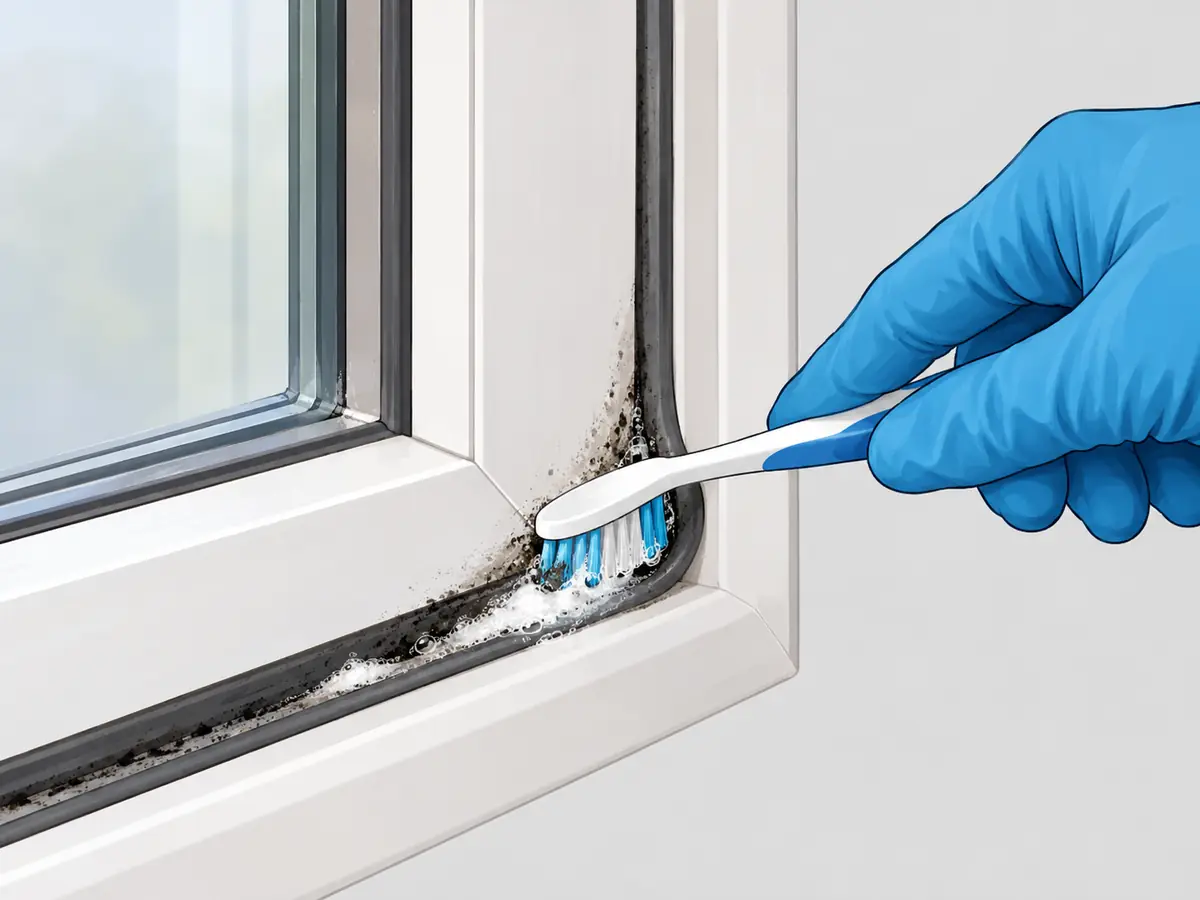 Dip a soft toothbrush in the solution and scrub along the rubber seals, into the corners and through the sliding track. Wrap a cloth around a putty knife or an old plastic card to reach into narrow grooves. Clear each drainage (weep) hole at the bottom of the outer frame with a cotton bud or pipe cleaner. Blocked drainage holes keep water in the frame, which feeds mold all year.
Step 8: Rinse and dry completely
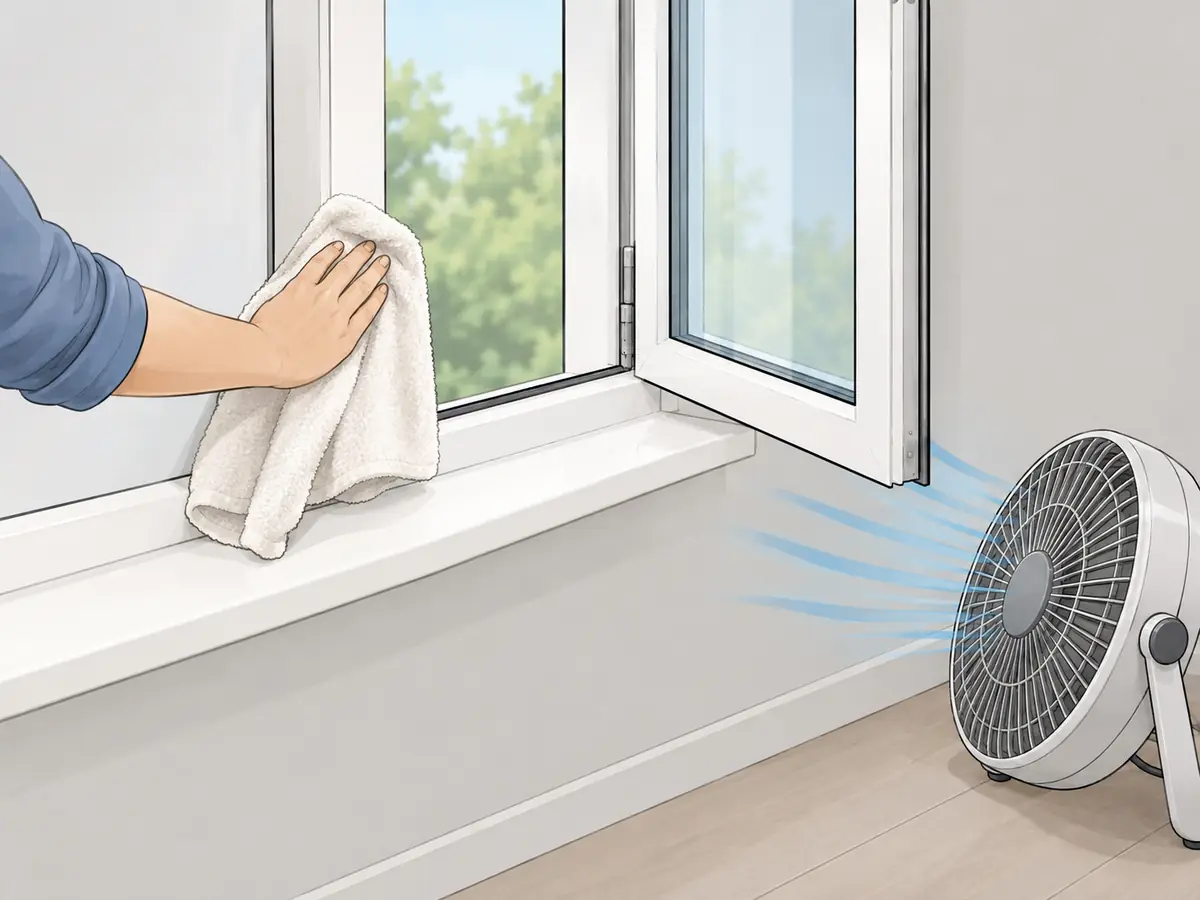 Wipe everything with a cloth dampened in clean water (you can skip this with vinegar). Then dry the glass, frame, sill, track and seals with a dry cloth. Leave the window open or run a fan for an hour. Bag the used cloths and throw them away, or wash them on their own on a hot cycle.
Drying is not optional. Mold needs moisture, and a frame left damp after cleaning is a perfect place for it to regrow.
Step 9: Find and fix the moisture source
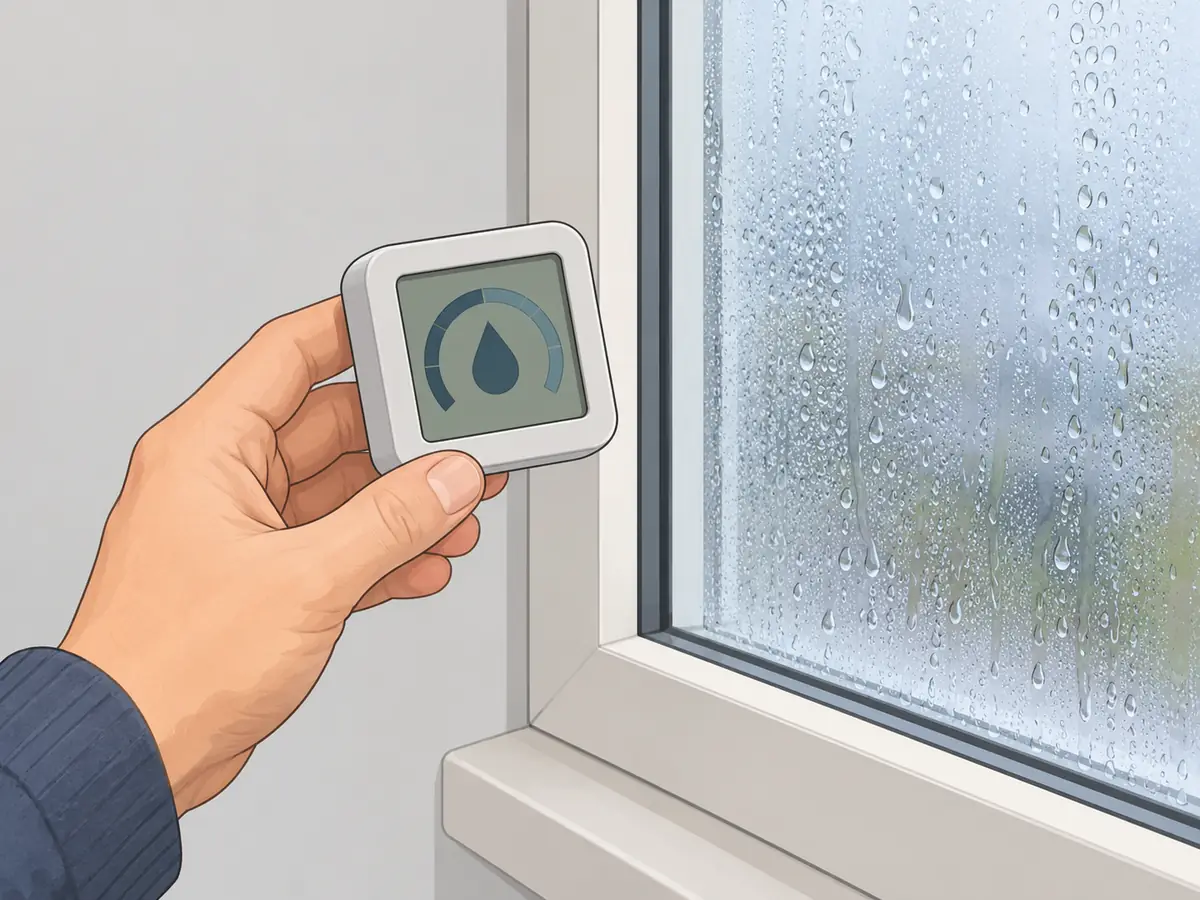 Cleaning removes today’s mold. The moisture creates next month’s. Use the condensation or leak check further down this guide to find the cause, then fix it. This is the step most people skip, and it is why window mold keeps coming back.
What Is the Best Cleaner for Mold on Windows?
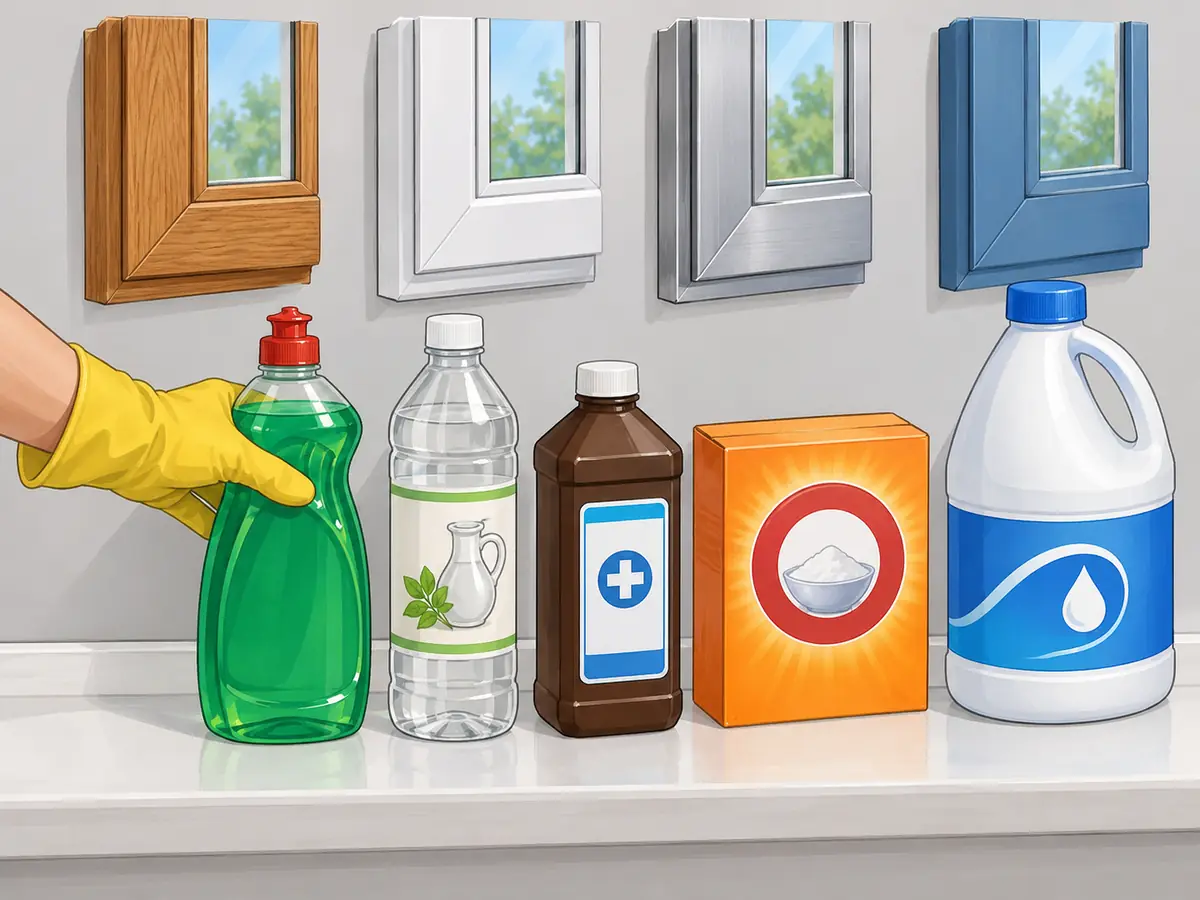
| Cleaner | Glass | uPVC / vinyl | Wood (sealed) | Aluminum | Painted | Rubber seals | Marble / stone |
|---|---|---|---|---|---|---|---|
| Dish soap + water | ✅ | ✅ | ✅ | ✅ | ✅ | ✅ | ✅ |
| White vinegar | ✅ | ✅ | ✅ wipe, don’t soak | ⚠️ rinse | ✅ test | ✅ | ❌ etches stone |
| 3% hydrogen peroxide | ✅ | ✅ | ⚠️ can lighten | ✅ | ⚠️ test | ✅ | ⚠️ test |
| Baking soda paste | ⚠️ can scratch coatings | ⚠️ gentle | ⚠️ gentle | ✅ gentle | ⚠️ can dull | ✅ | ✅ gentle |
| Diluted bleach | ✅ | ⚠️ rinse well | ❌ | ❌ corrodes | ⚠️ can strip color | ❌ degrades | ⚠️ |
| Mold spray (label approved) | ✅ | ✅ | ✅ | ✅ | ✅ | ✅ | ✅ if listed |
✅ suitable · ⚠️ use with care · ❌ avoid
Vinegar
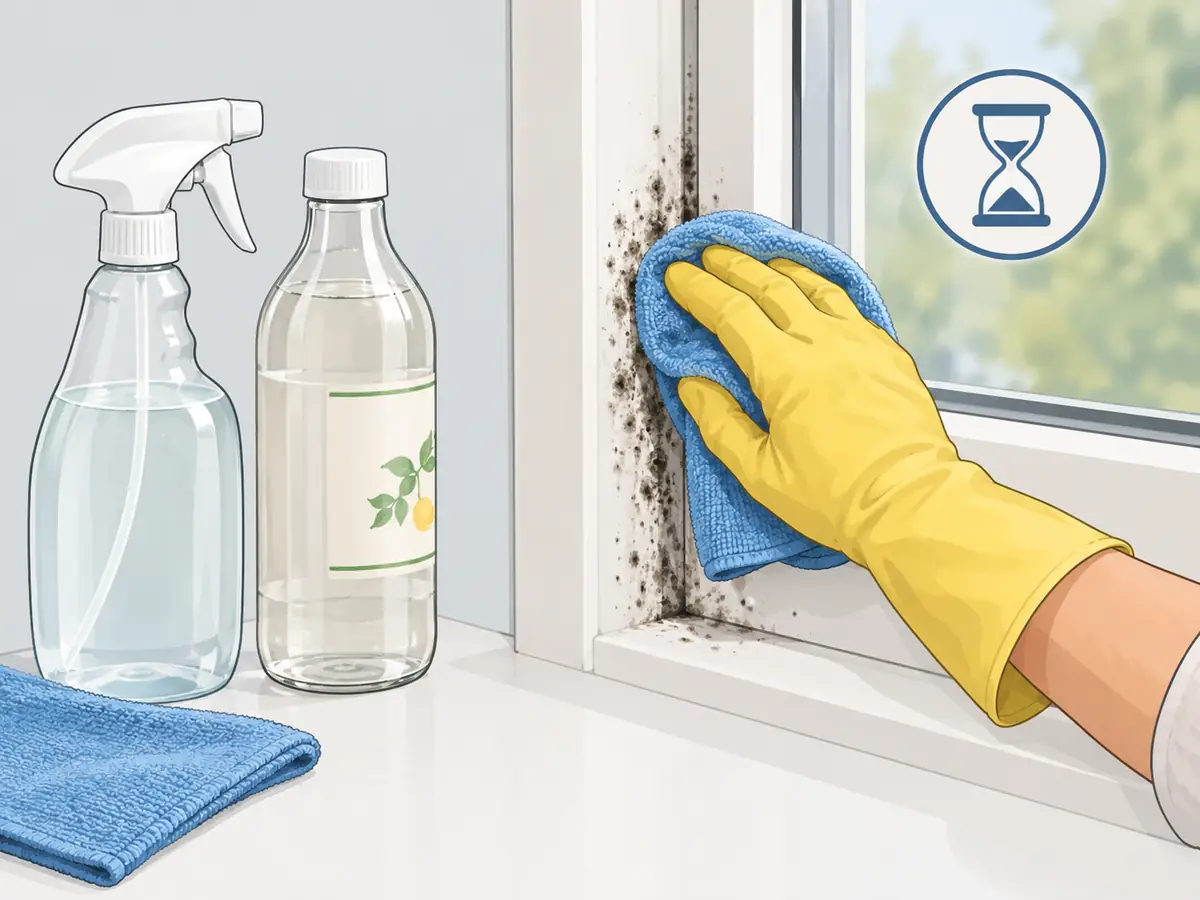 White vinegar is the most popular natural window mold cleaner, and it works well on most window surfaces. Spray it on undiluted (or 4:1 with water), leave it for up to an hour, then wipe and dry. The smell fades as it dries. Do not use vinegar on marble, limestone or other natural stone sills, because the acid etches the surface.
Hydrogen peroxide
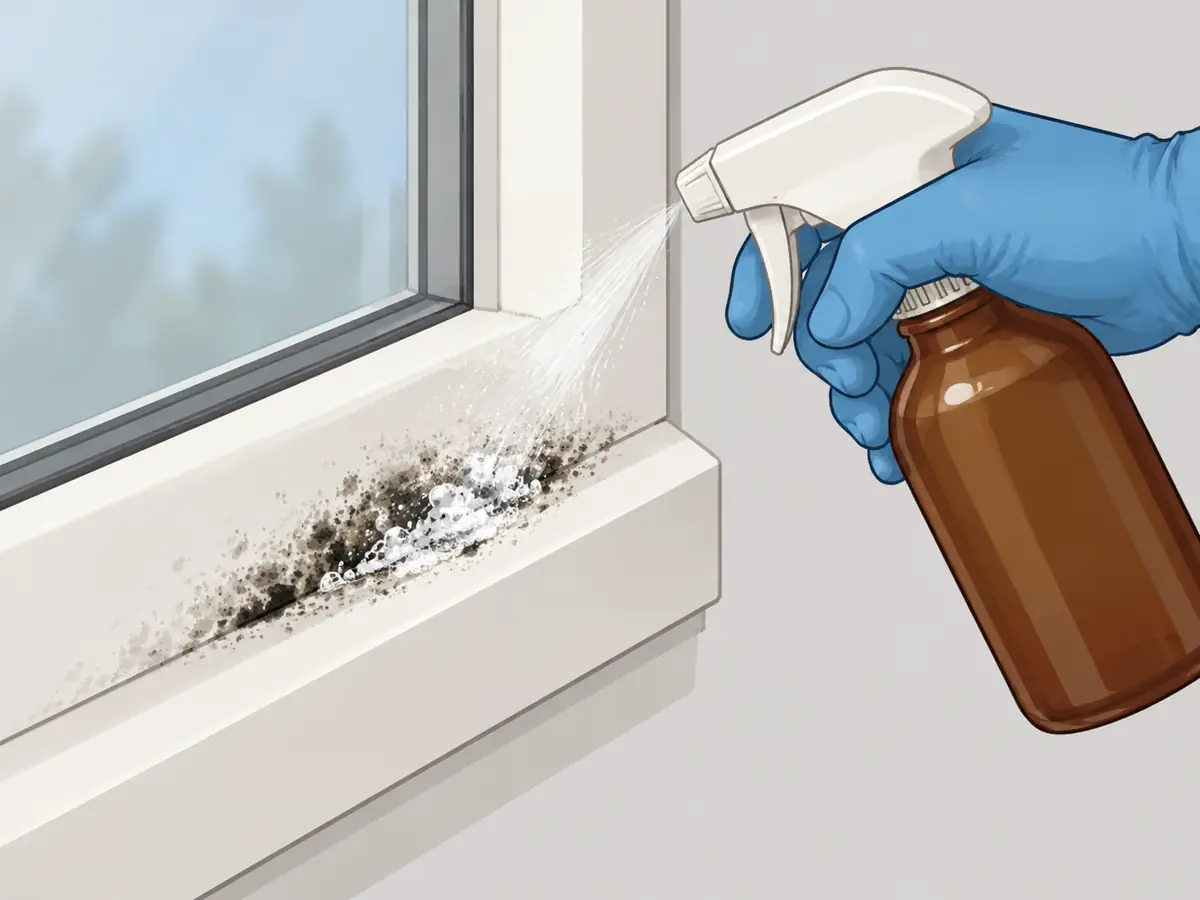 3% hydrogen peroxide fizzes on contact and lightens mold staining without the fumes of bleach. Spray, leave for 10 minutes, wipe and dry. It is particularly good for grey shadows on white uPVC frames and black spots in rubber seals.
Dish soap and water
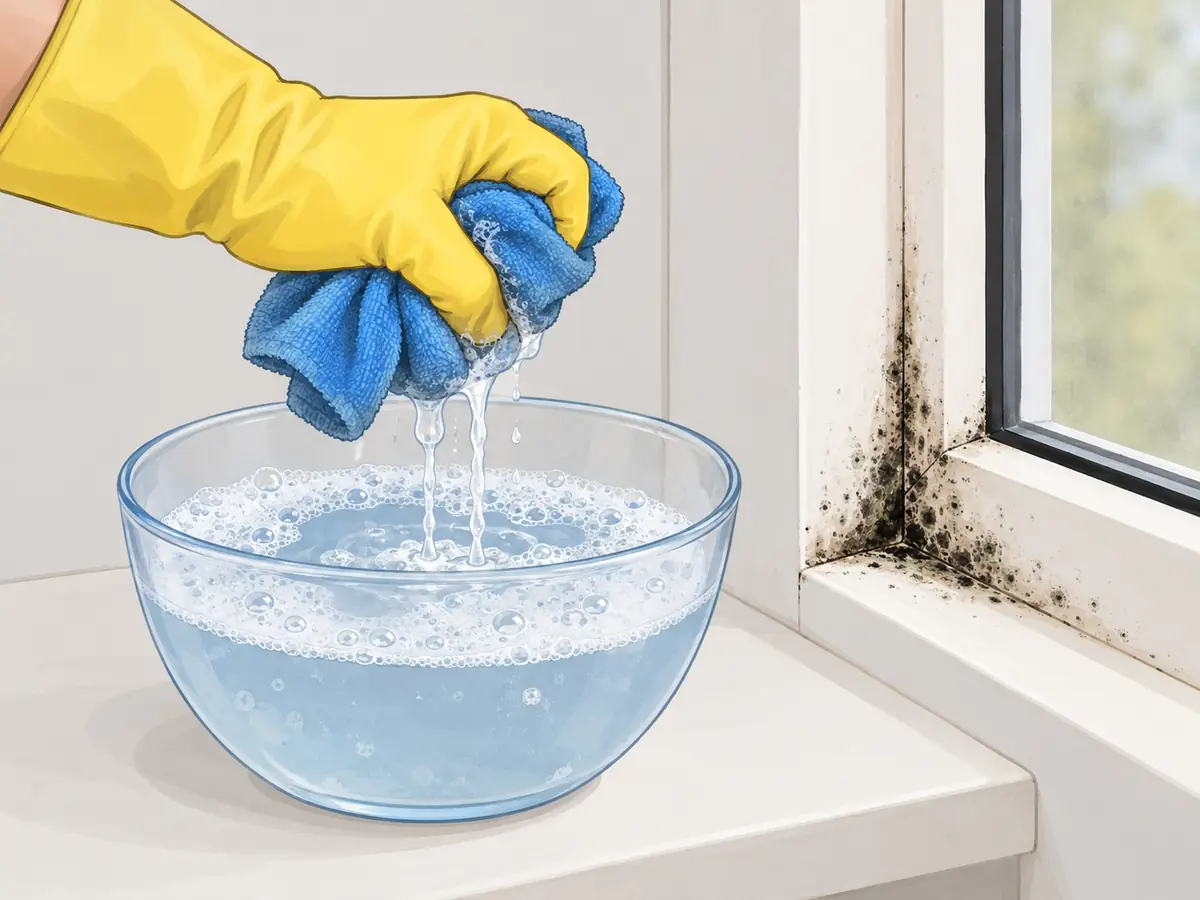 Soapy water does not “kill” mold the way spray labels promise, but it does not need to. The EPA’s guidance is that physically removing mold and drying the surface is what matters, because dead mold can still cause allergic reactions. Soap and water is safe on every window surface, which makes it the best first choice when you are not sure what your frame is made of.
Baking soda
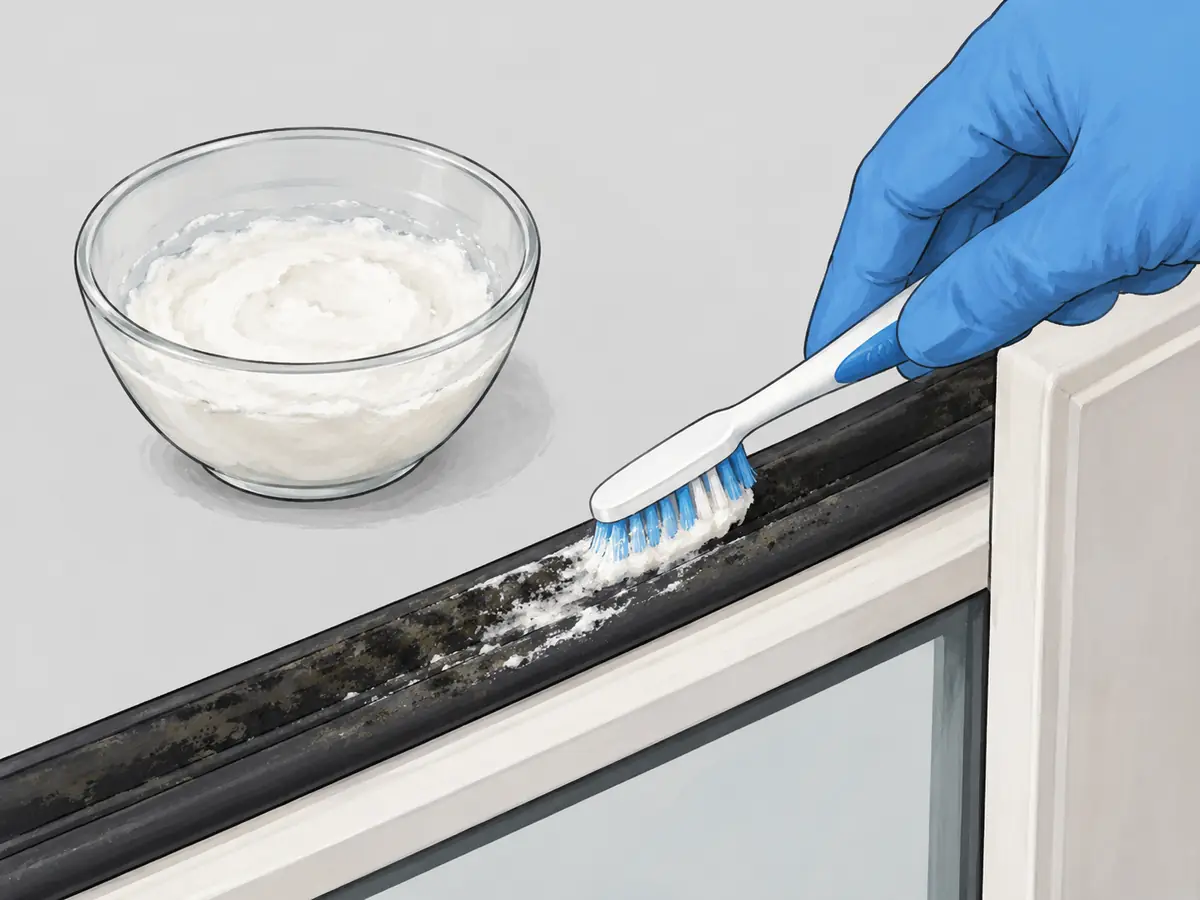 Baking soda is a gentle abrasive. Mix a tablespoon into a cup of water, or make a thin paste, and use it with a soft brush on stubborn spots in seals and corners. Rinse well, because dried baking soda leaves a white film.
Bleach: vinegar or bleach for window mold?
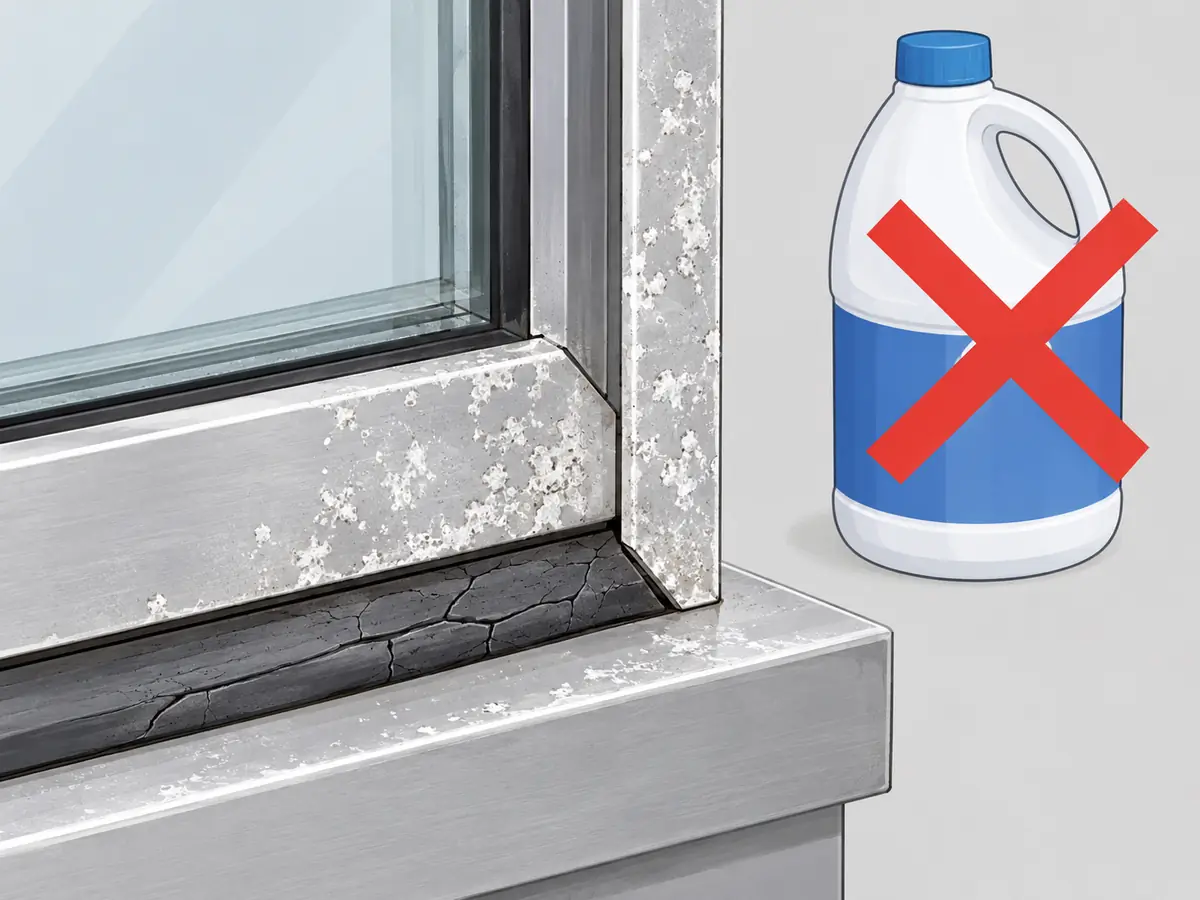 For windows, vinegar or soapy water is usually the better choice. Bleach removes the color of mold, which is why it looks effective, but it corrodes aluminum, degrades rubber seals and cannot soak into wood. The EPA says using biocides such as chlorine bleach is not recommended as a routine part of mold cleanup. If you use a bleach product to lift a stubborn stain on glass or white plastic, follow the label, ventilate the room and rinse thoroughly.
Window mold sprays and commercial removers
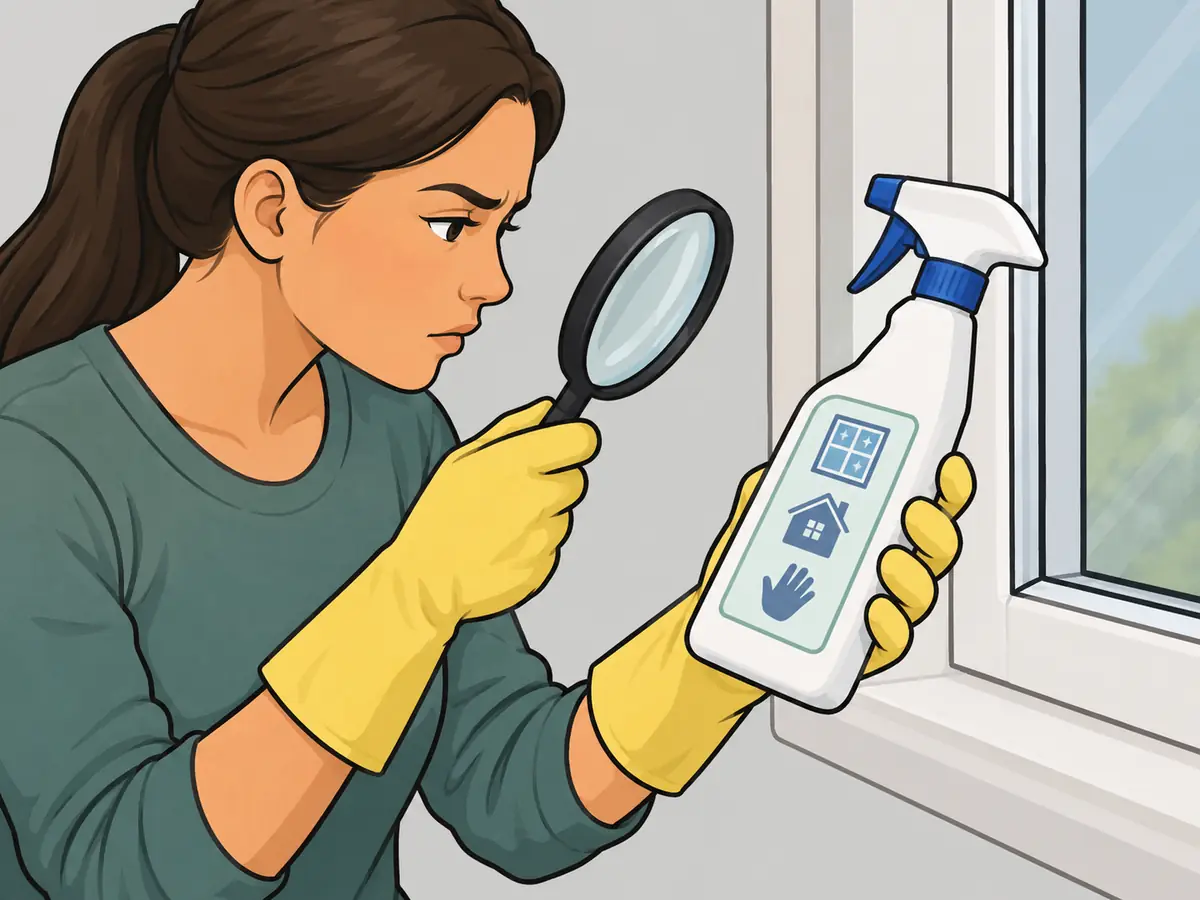 A commercial mold and mildew spray can be useful for heavy staining. Check the label for three things: the surfaces it is approved for, indoor use, and how long to leave it on. Leaving a product on longer than the label says does not work better and can damage the finish.
What kills mold on windows fastest?
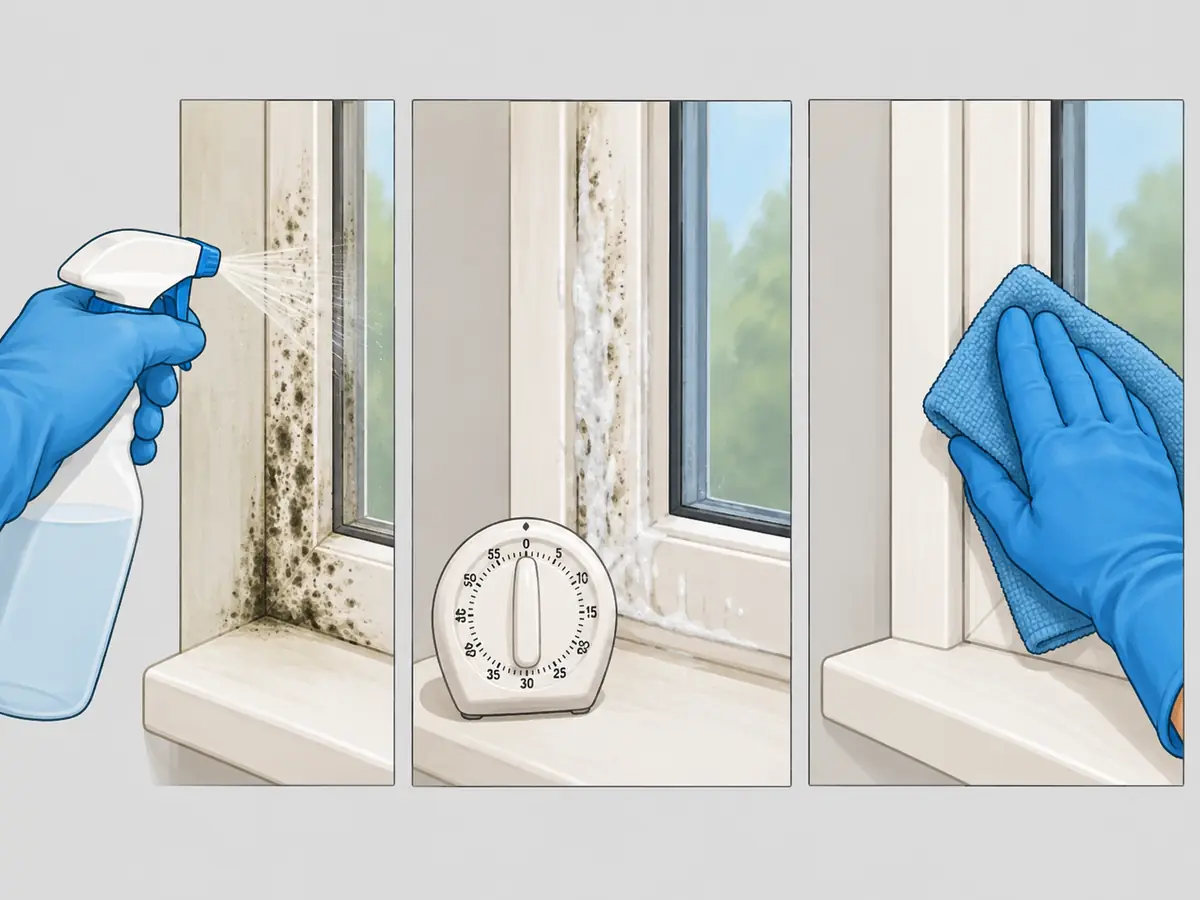 There is no instant fix that makes mold vanish without scrubbing. Bleach-based sprays and hydrogen peroxide lighten mold fastest, often within minutes, but you still need to wipe the mold away and dry the surface. On windows, physical removal plus drying beats any “instant” spray.
How to Clean Mold Off Each Part of a Window
Window glass
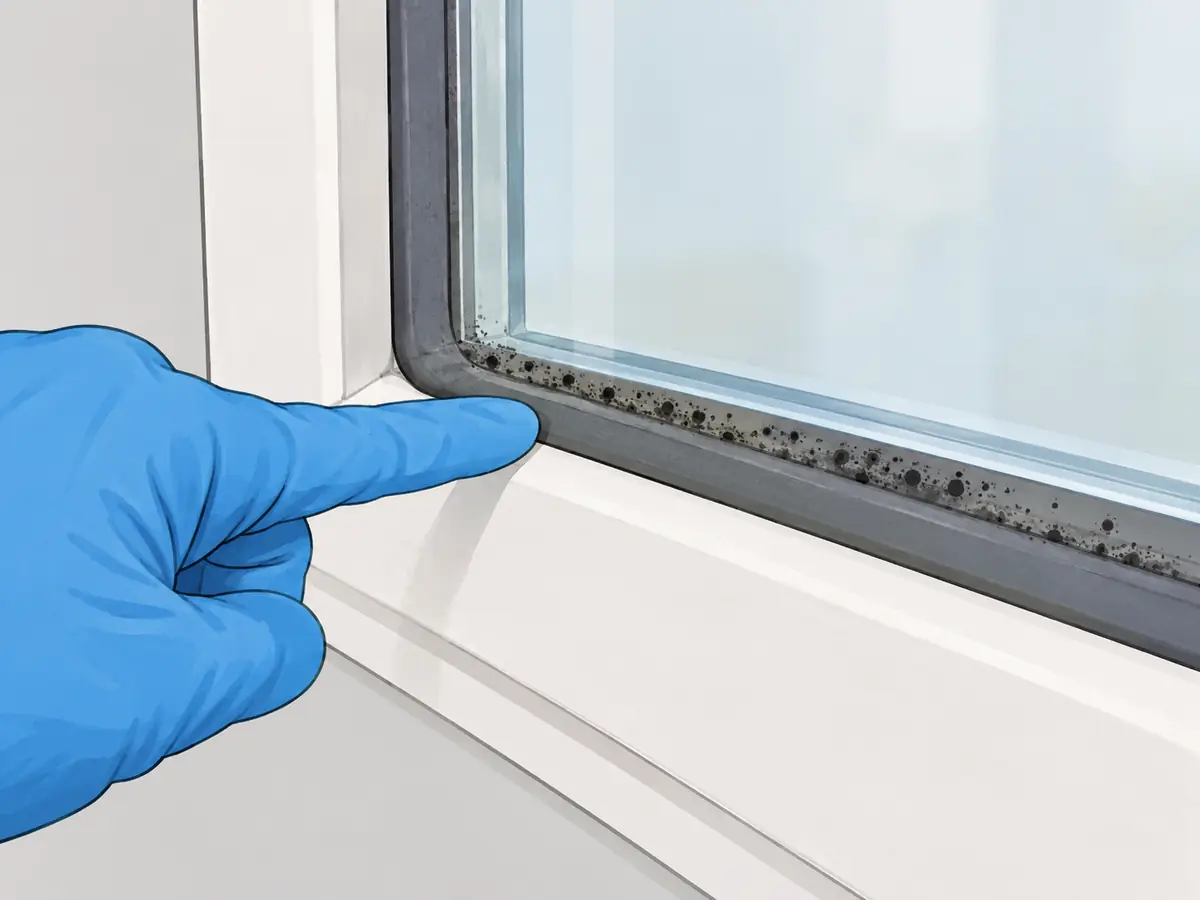 Mold rarely grows on glass itself. It grows on the film of dust, skin cells and grease that collects on glass, especially along the bottom edge. Clean it with your solution and a squeegee, then dry it. If you see dark spots that stay after cleaning, look closely: they are often inside the rubber seal at the edge of the glass, not on the glass.
Window frames
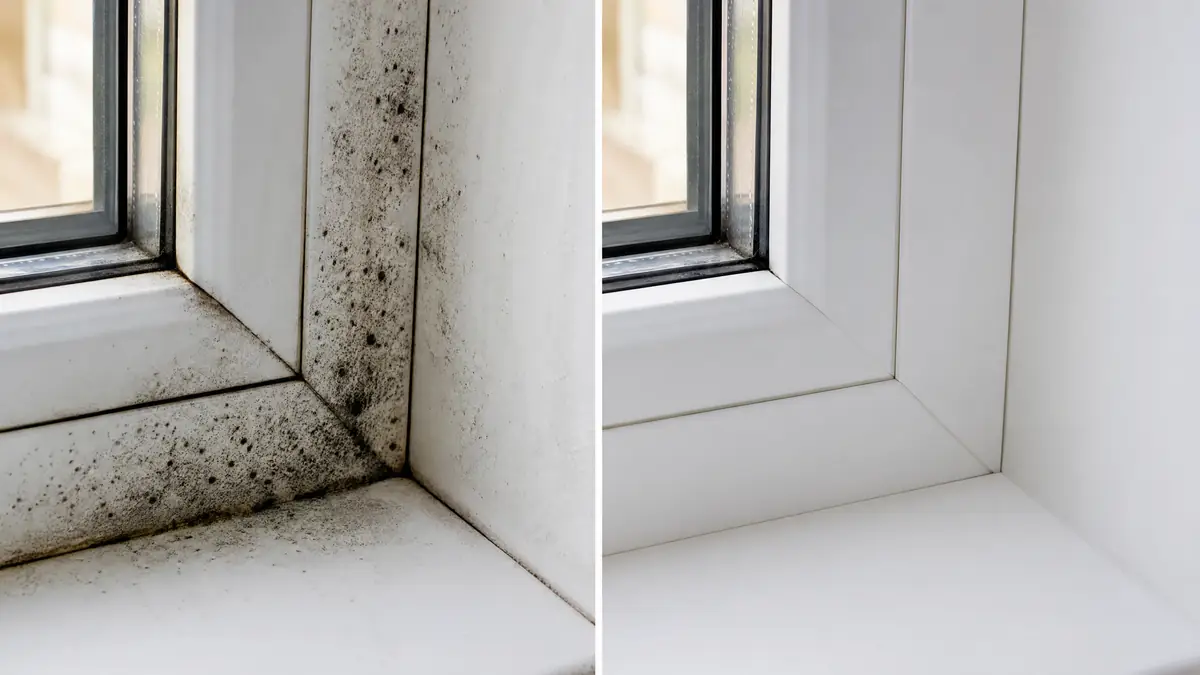 Frames are the most common place for window mold because water runs off the glass and pools on the bottom rail. Wood, uPVC, aluminum and painted frames each need a slightly different approach. See the full guide: how to get rid of mold on window frames.
Window sills
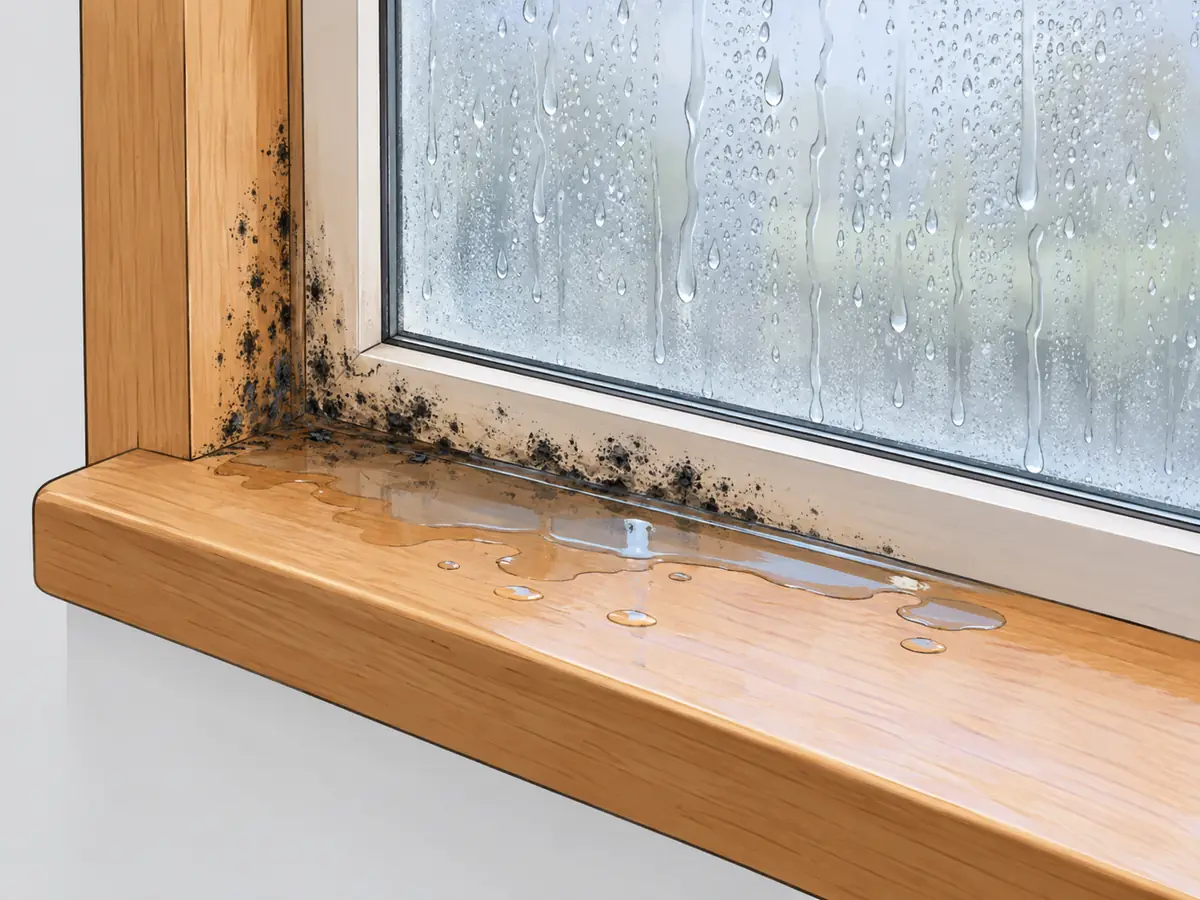 The inside sill catches condensation and holds it. Wooden and painted sills can absorb water and rot under the mold. The complete method is in how to remove mold from window sills.
Window tracks and grooves
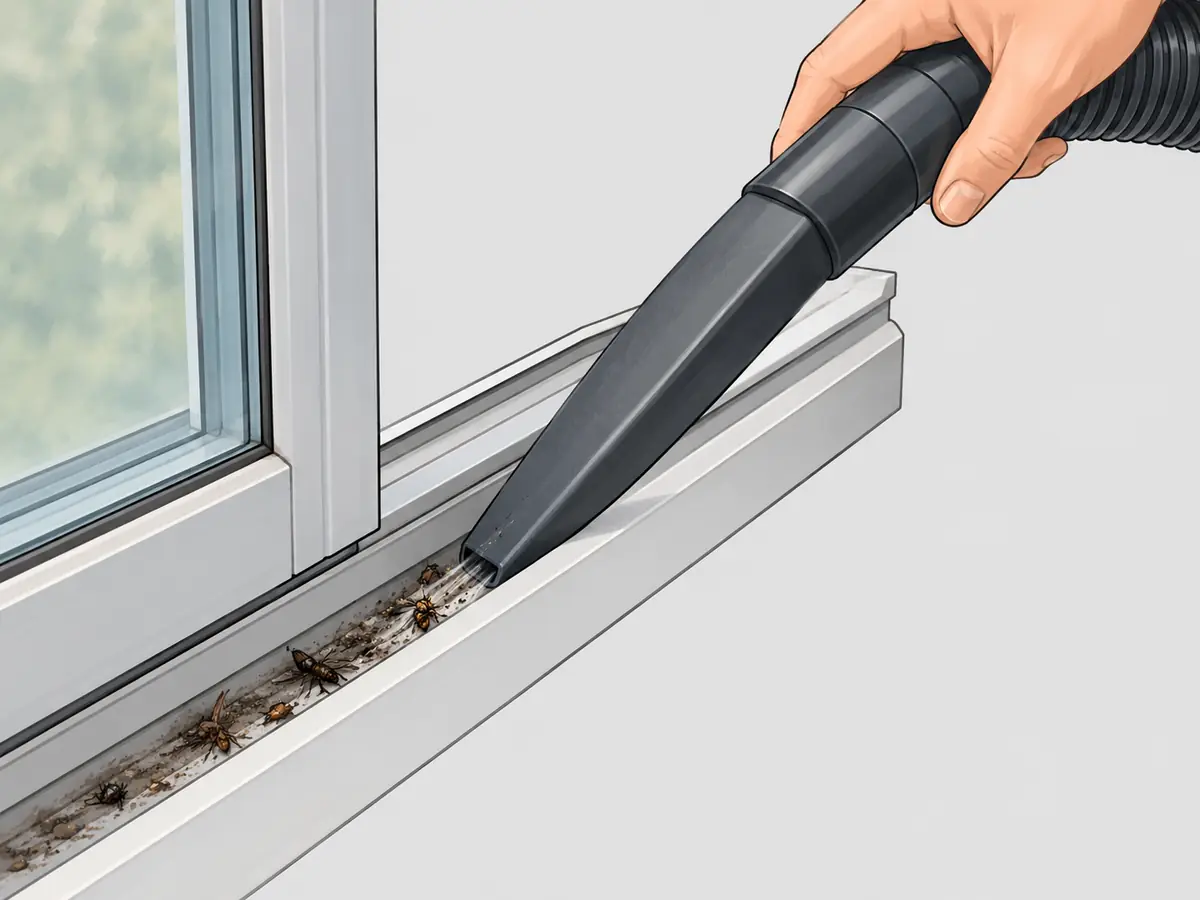 Sliding window tracks collect dust, dead insects and leaves, which hold water and feed mold. Vacuum out loose debris first with a crevice tool, then spray, scrub with a toothbrush, wipe with a cloth wrapped around a putty knife, and clear the drainage holes. Clean tracks monthly in winter.
Rubber seals and gaskets
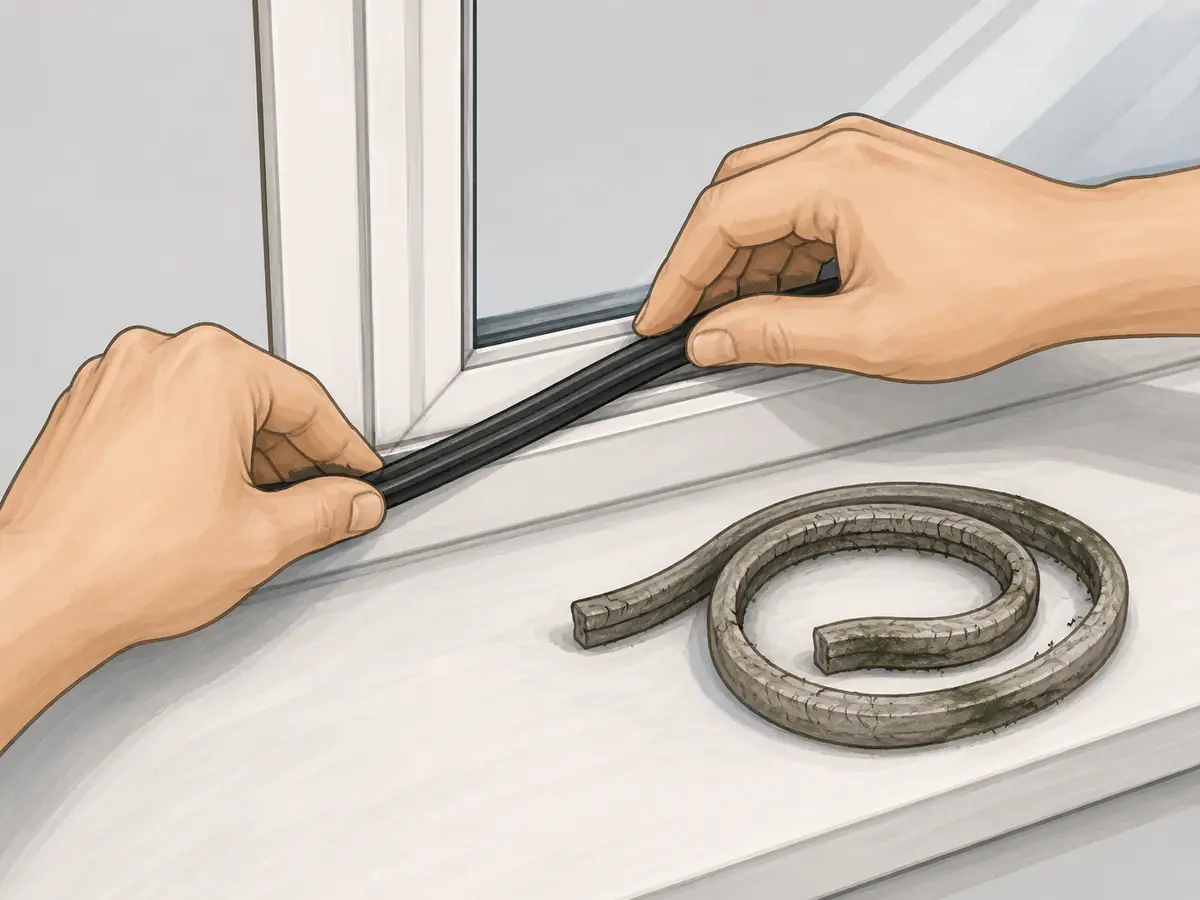 Seals hold moisture in their folds, and mold can grow into the rubber. Scrub gently with a soft toothbrush and vinegar or hydrogen peroxide, then dry. Do not pull the seal out of its channel. If black spots remain inside the rubber after two cleans, or the seal is cracked or hard, replace it. Replacement gaskets are inexpensive and usually press into place.
Caulk and silicone
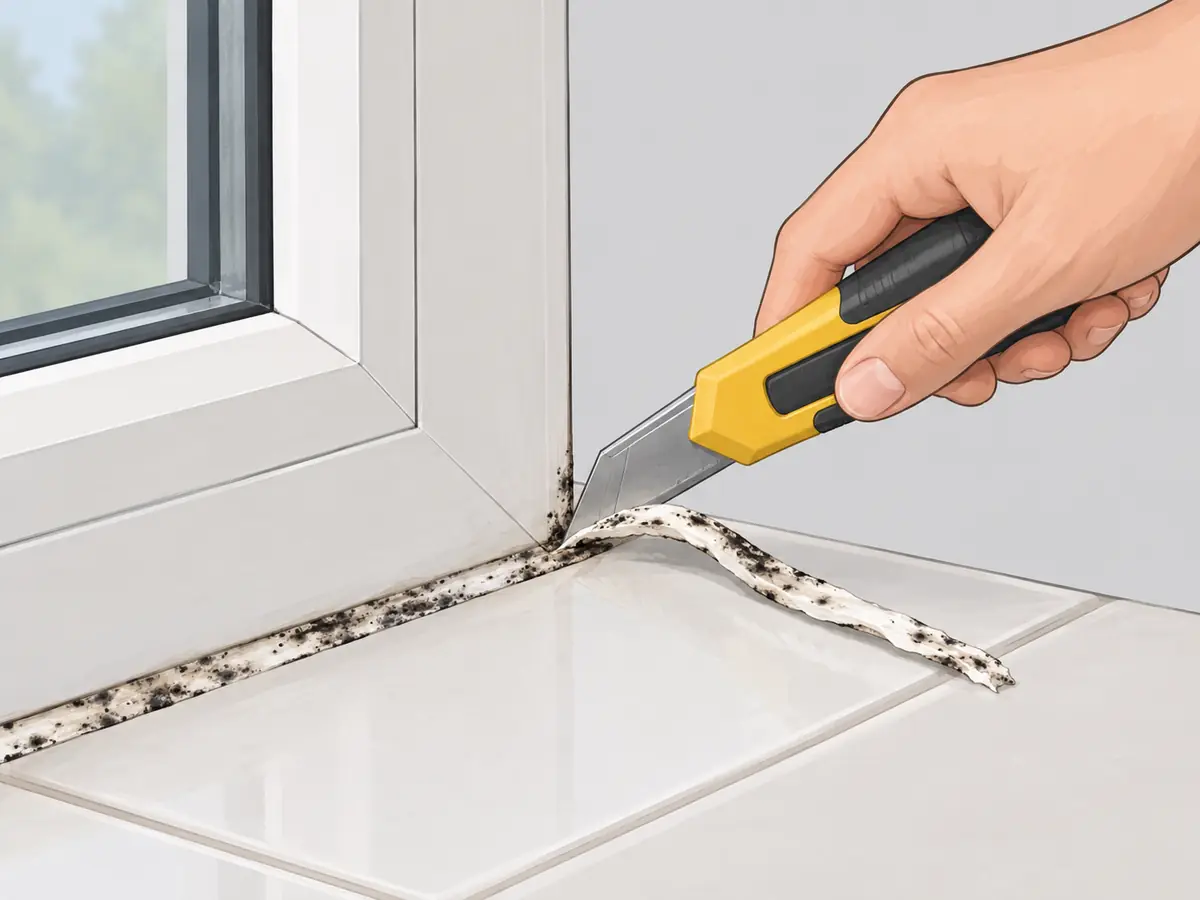 Mold often grows into the silicone or caulk where the frame meets the wall or sill. Surface mold can be cleaned with hydrogen peroxide and a toothbrush. If black marks stay inside the sealant, the only real fix is to cut out the old caulk, clean and dry the joint completely, and apply a new bead of mold-resistant silicone.
Mold between window panes
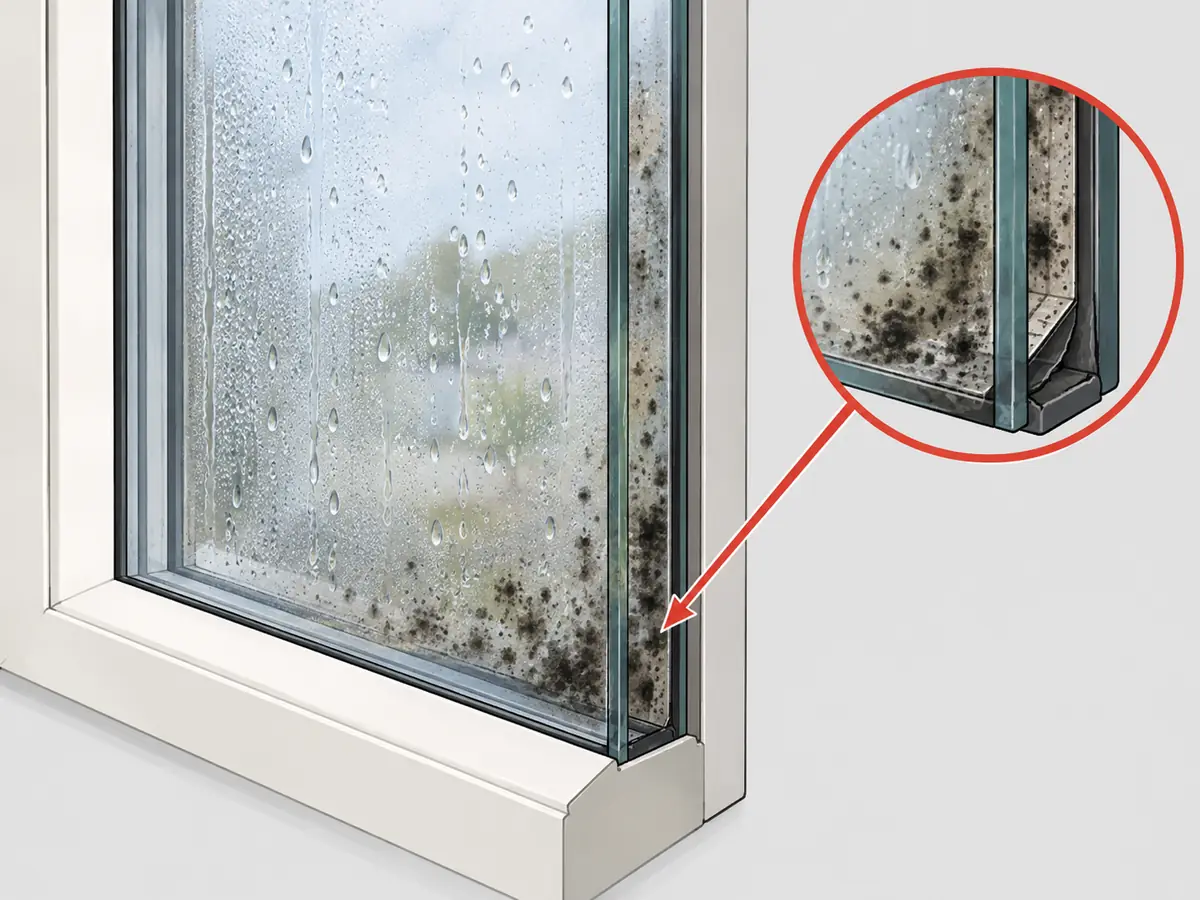 If mold or fog appears between the two panes of a double-glazed window, the factory seal on the glass unit has failed and moist air is getting in. You cannot clean between the panes. The sealed glass unit needs replacing, but the frame can usually stay.
Window screens
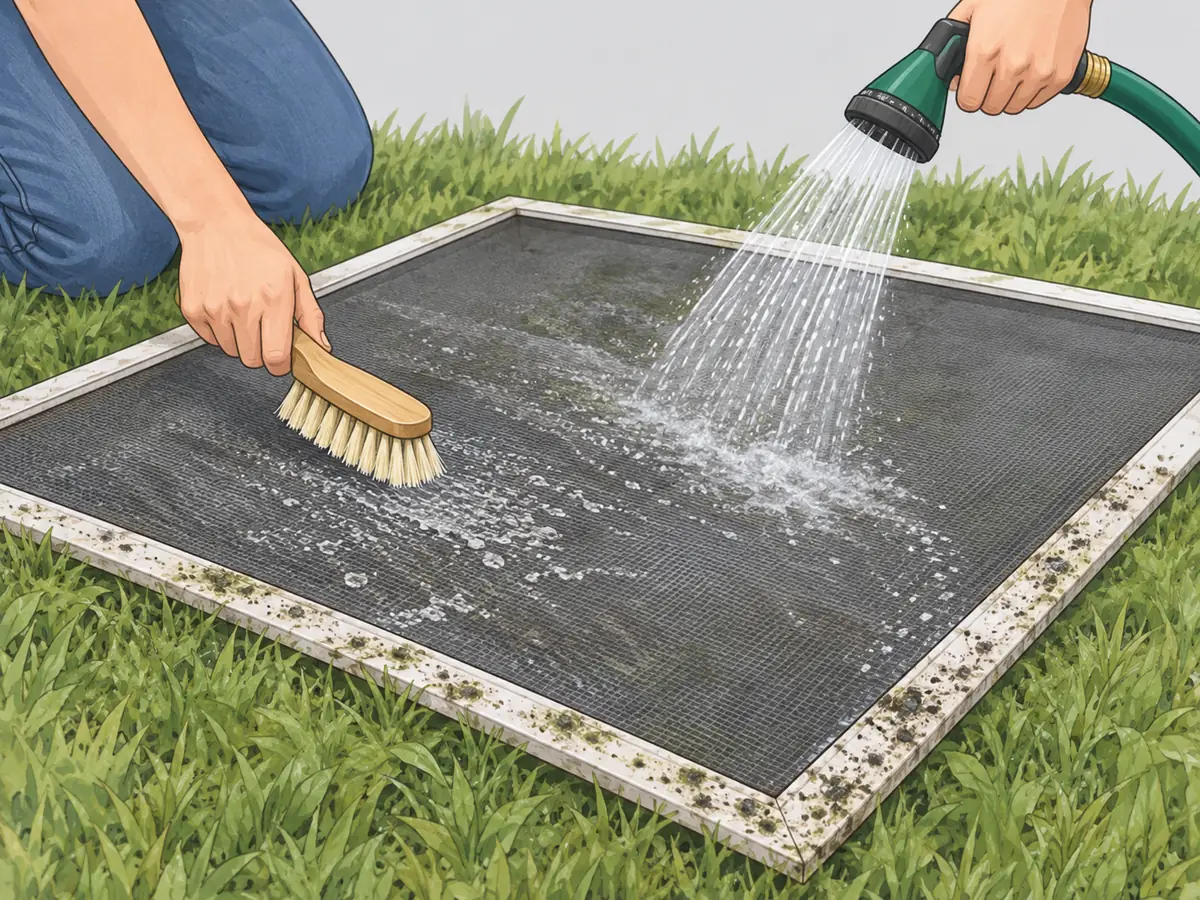 Remove the screen, lay it flat outdoors, spray with soapy water or vinegar, brush gently with a soft brush, rinse with a hose and let it dry completely in the sun before refitting.
Blinds, shades and curtains
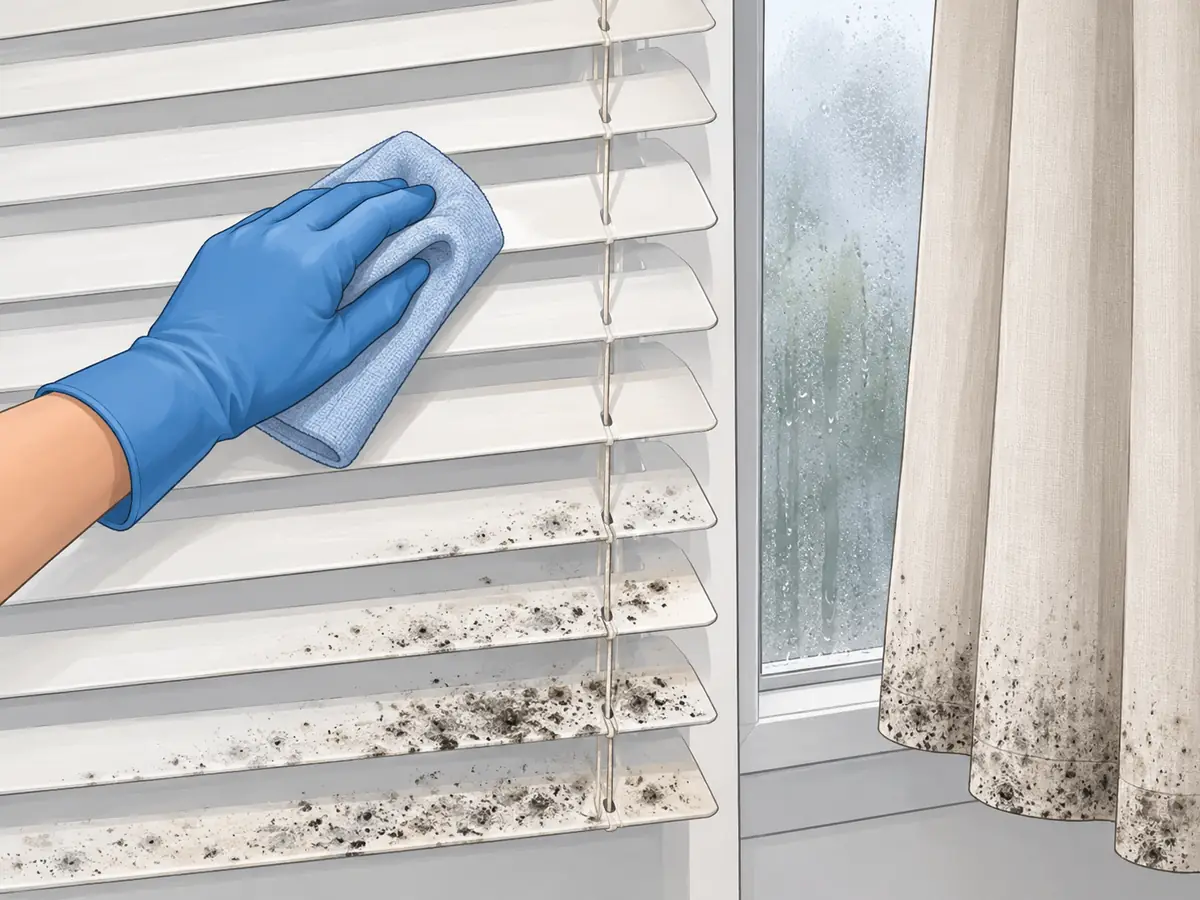 Fabric that touches cold, wet glass gets moldy fast, especially roller shades kept closed all day. Wash fabric curtains on a hot cycle. Wipe vinyl or aluminum blinds slat by slat with soapy water. Spot clean shades according to the manufacturer’s instructions, and replace them if the mold has soaked into the fabric. Keep curtains a few inches away from the glass in winter.
The wall around the window
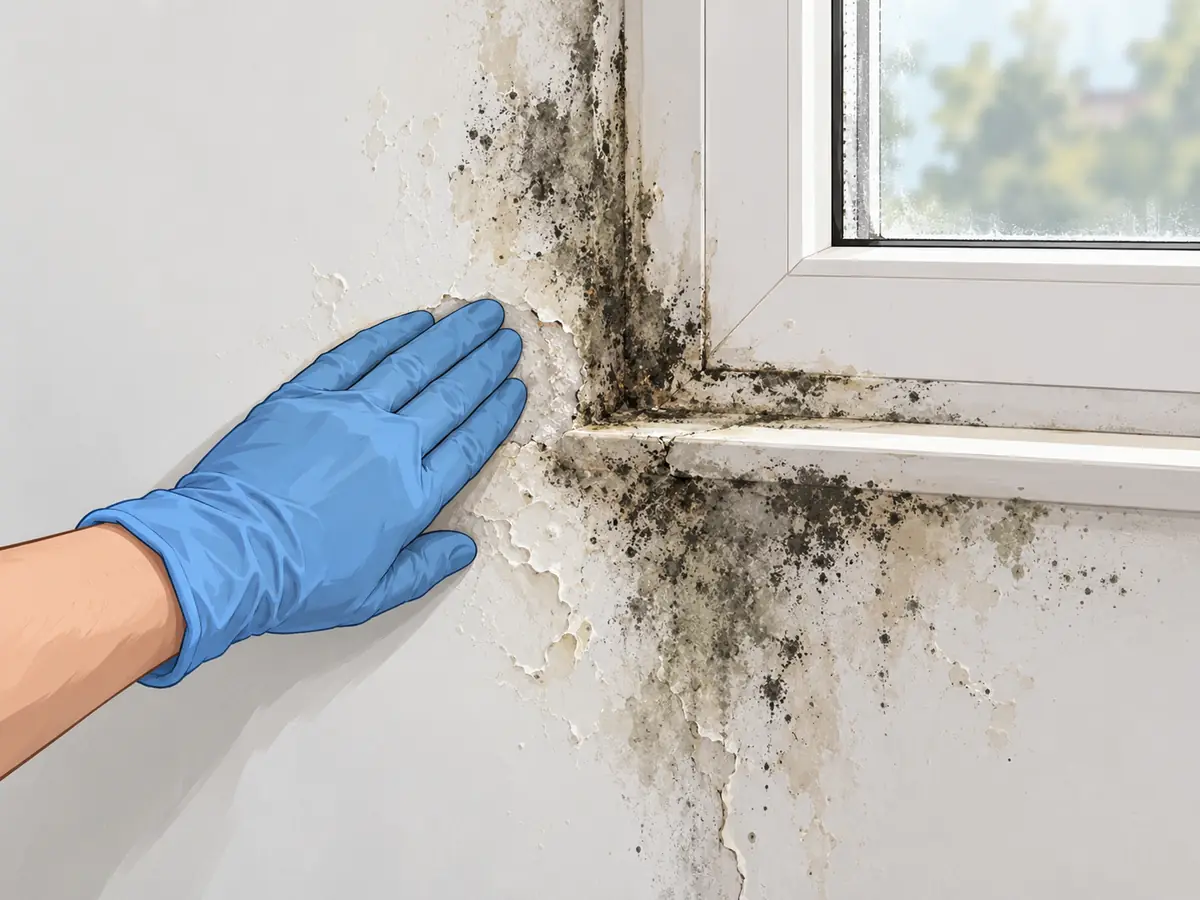 Mold on the plaster or drywall around a window usually means water is getting in around the frame, or there is a cold spot in the wall. Wipe small surface patches on painted walls with soapy water and dry them. If the mold keeps returning, the paint is bubbling, or the drywall feels soft, the problem is inside the wall and needs a professional.
Why Do Windows Get Moldy?
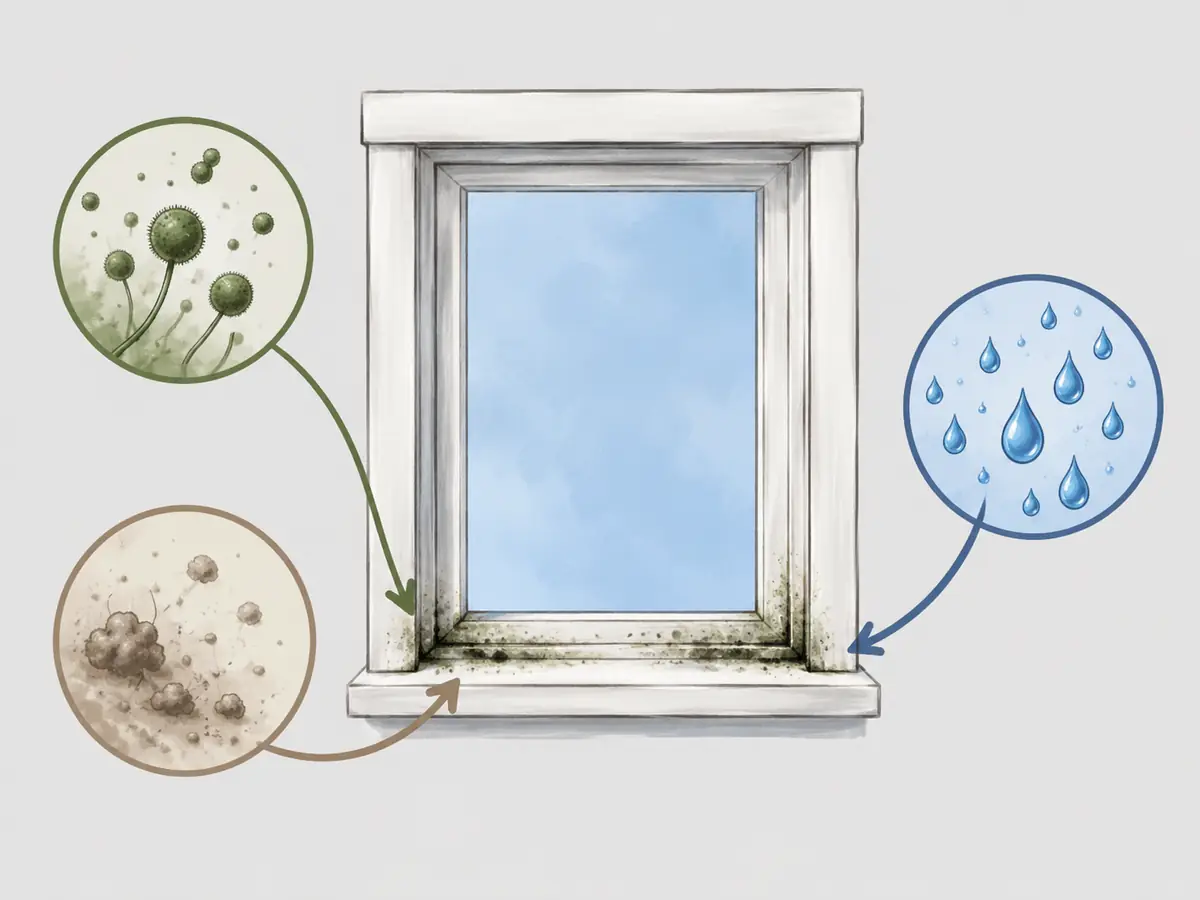
Mold needs three things: spores, which are always in the air; food, such as dust and grime; and moisture. You cannot get rid of spores or all the dust, so moisture is the only thing you can control. Windows get moldy because they are where indoor moisture turns into water.
Condensation: the number one cause
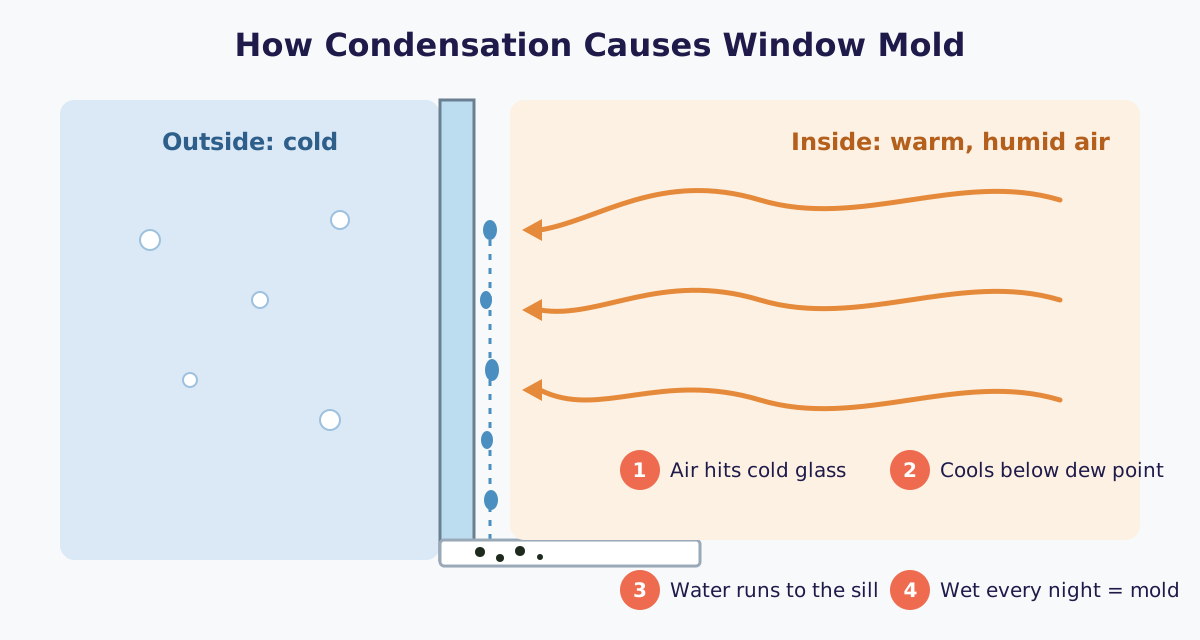 Warm indoor air holds water vapor. When that air touches a surface colder than its dew point, the vapor turns into water droplets. In cold weather, windows are the coldest surface in most rooms. Water forms on the glass overnight, runs down, and soaks the frame and sill. If that happens every night, the window never fully dries, and mold moves in.
Why window mold is worse in winter and in the morning
 The colder it is outside, the colder the glass, and the more water condenses on it. Overnight, people breathe out moisture in closed bedrooms while the outside temperature drops. That is why you find the most water, and the most mold, on bedroom windows first thing in the morning in winter.
High indoor humidity
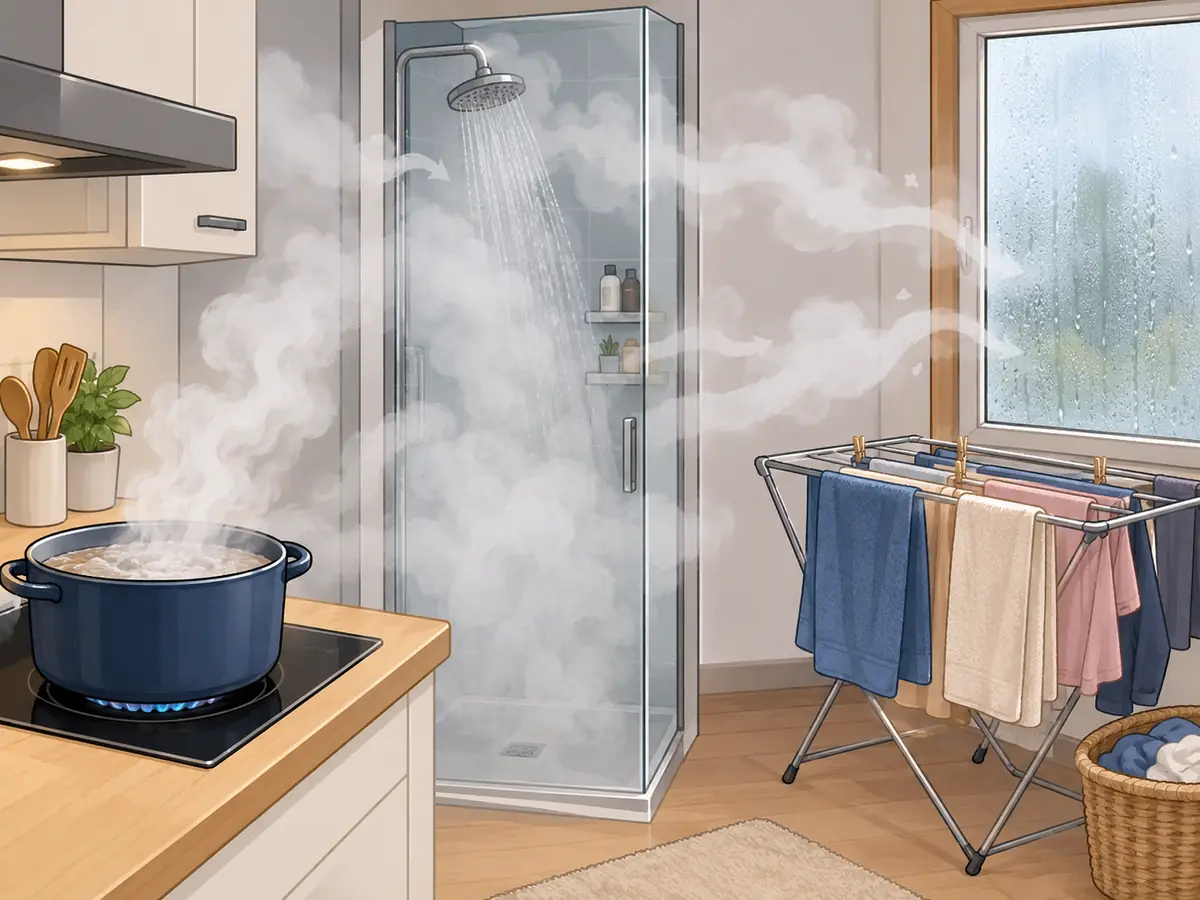 Cooking, showering, drying laundry indoors, unvented gas heaters, aquariums and houseplants all add water to indoor air. A typical family adds several quarts of water to the air every day. If it cannot escape, it ends up on the windows.
Poor ventilation
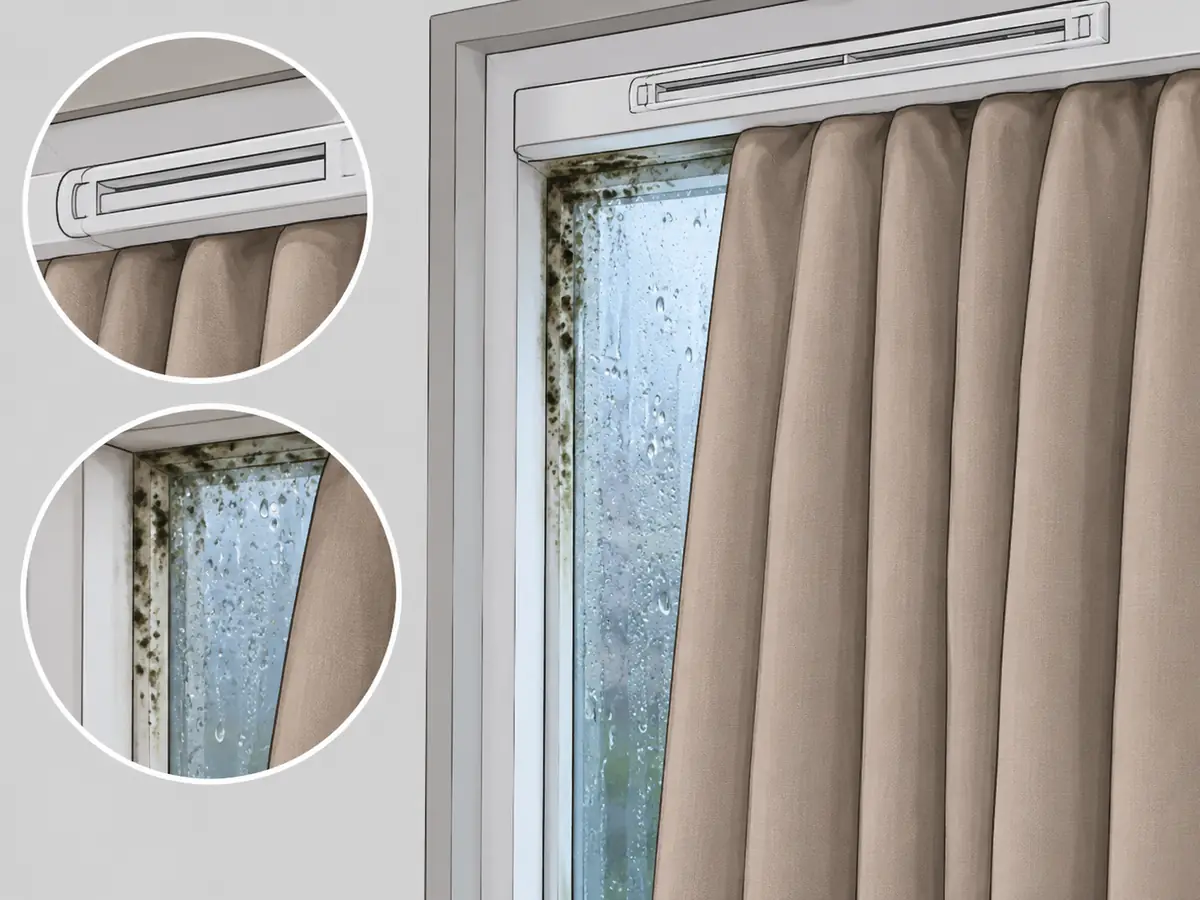 Modern homes are well sealed, which saves energy but traps moisture. Closed trickle vents, kitchens without a vented range hood, bathrooms without an exhaust fan, and heavy curtains pressed against the glass all keep humid air sitting on the coldest surface in the room.
Leaks and water getting in
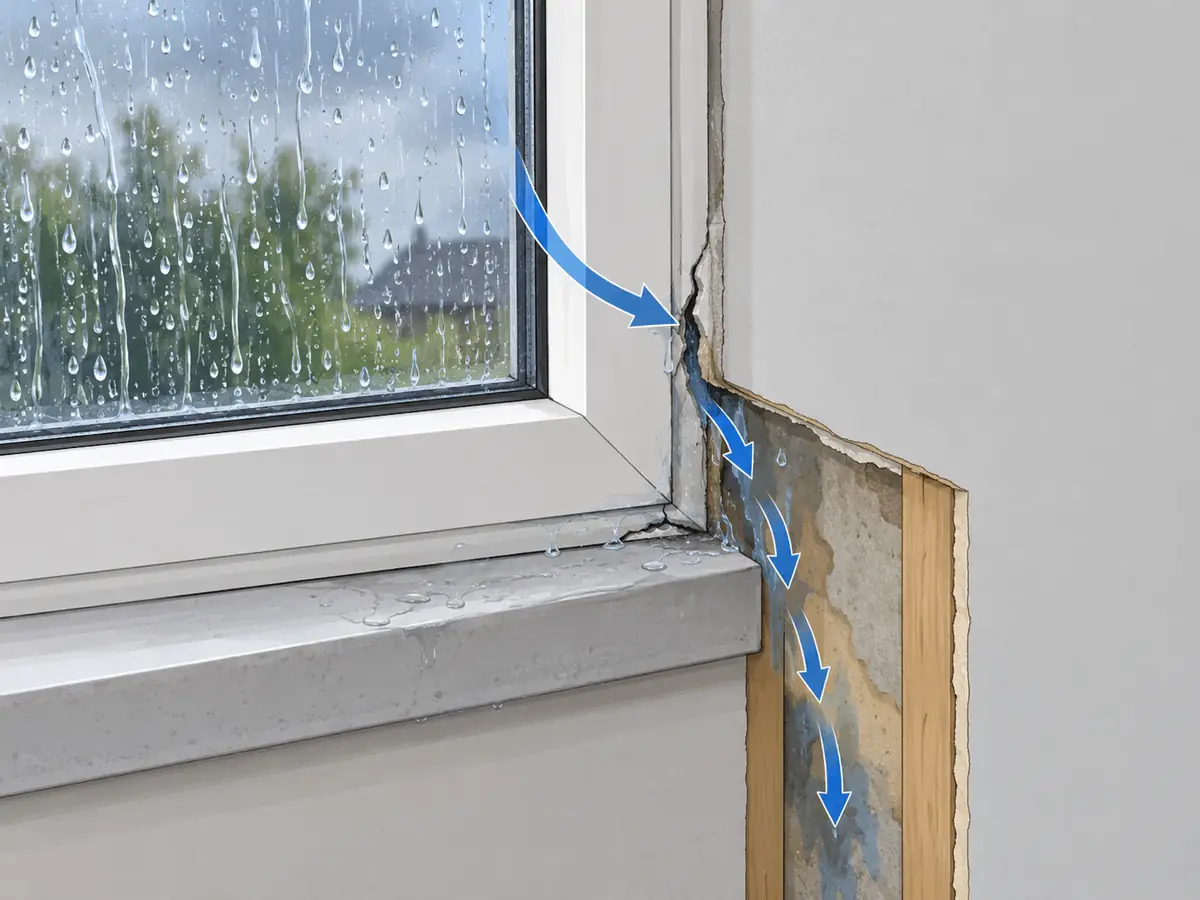 Rain can get in through cracked caulk, failed seals, blocked drainage holes, missing flashing above the window, or cracks in the wall. Leaks usually show up in the corners of the frame, at the top of the window, or as staining on the wall underneath.
Old or poorly insulated windows
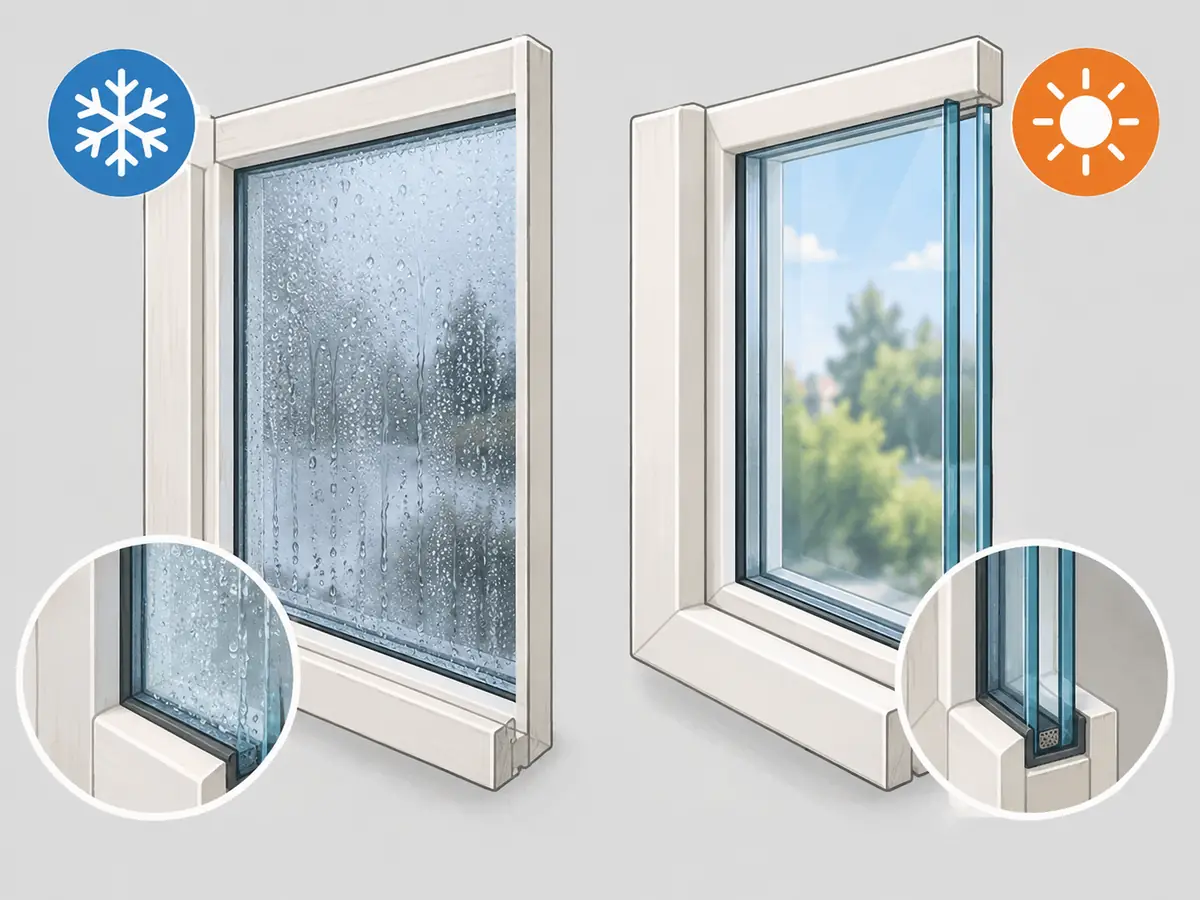 Single-glazed windows and aluminum frames without a thermal break get much colder than modern double-glazed units, so they collect far more condensation. Failed double-glazed units, where the panes fog up inside, lose most of their insulating value.
Condensation or Leak? The 60-Second Check
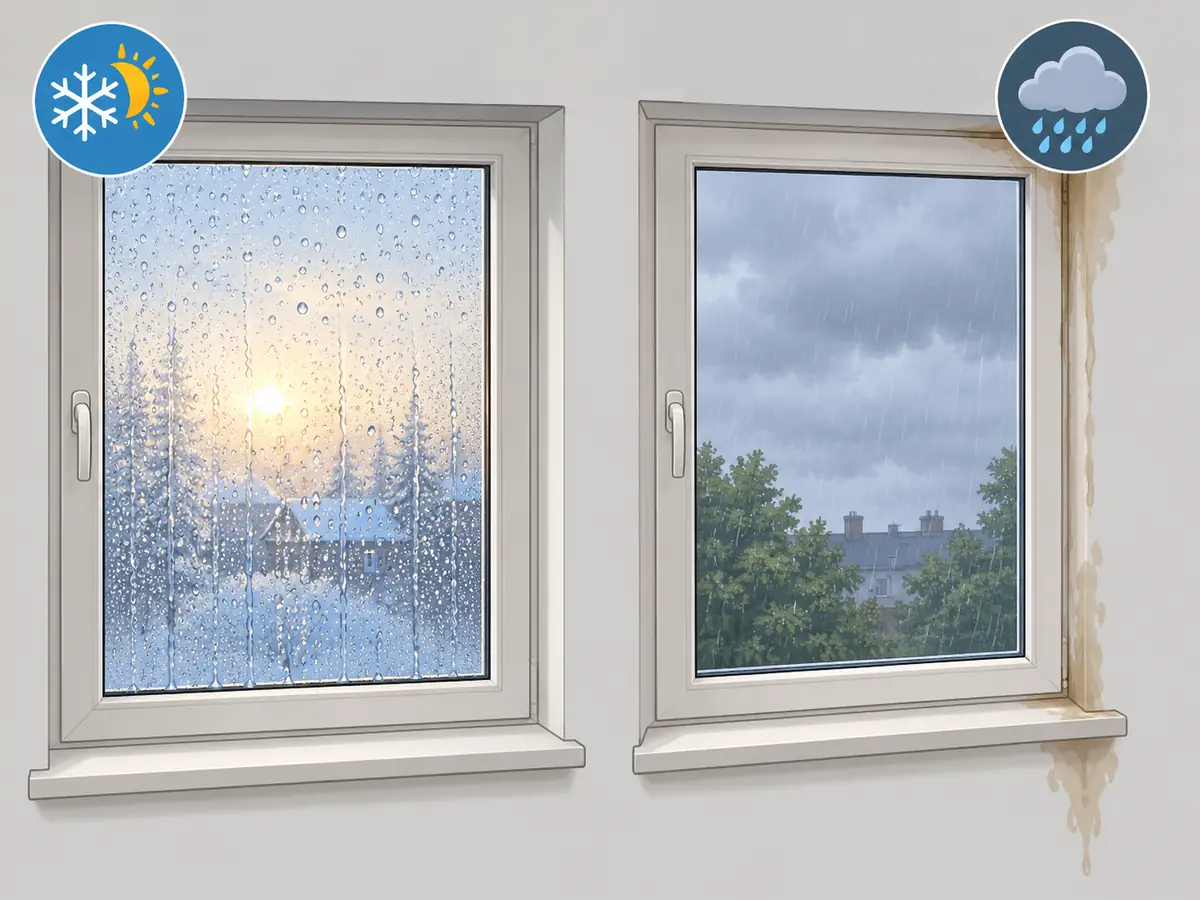
| Question | Points to condensation | Points to a leak |
|---|---|---|
| When is the window wet? | Mornings and cold weather | After rain, any season |
| Where is the water? | All over the inside of the glass, bottom rail and sill | Corners, top of the frame, wall below |
| Is the inside of the glass wet? | Yes, covered in droplets | No, the glass is dry |
| How many windows? | Many, worst in bedrooms and bathrooms | Usually one or two |
| Staining on the wall or ceiling? | No | Yes, or bubbling paint |
| Indoor humidity reading | Above 60% | Normal |
Mostly condensation: follow the prevention steps below. Mostly leak: check the outside caulk, seals, drainage holes and flashing, and book a window repair if you cannot find the cause. Mixed: you may have both. Fix the leak first, then lower the humidity.
Mold Around Windows in Different Rooms
Bedroom windows
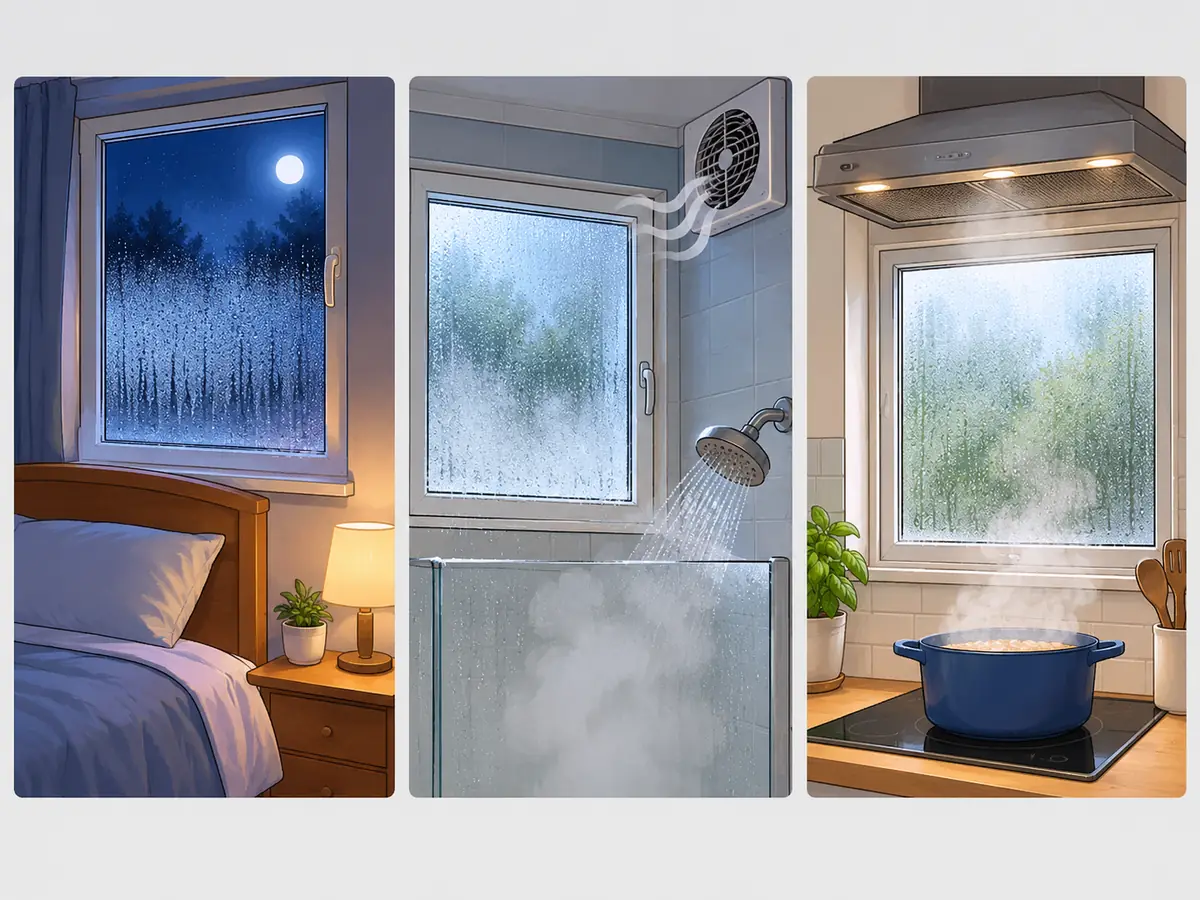 Bedroom windows are the most common place for window mold. Two people breathe out a lot of moisture overnight in a closed room. Leave the door or a trickle vent open at night, keep curtains a few inches from the glass, keep the room a little warmer in winter, and wipe the window each morning.
Bathroom windows
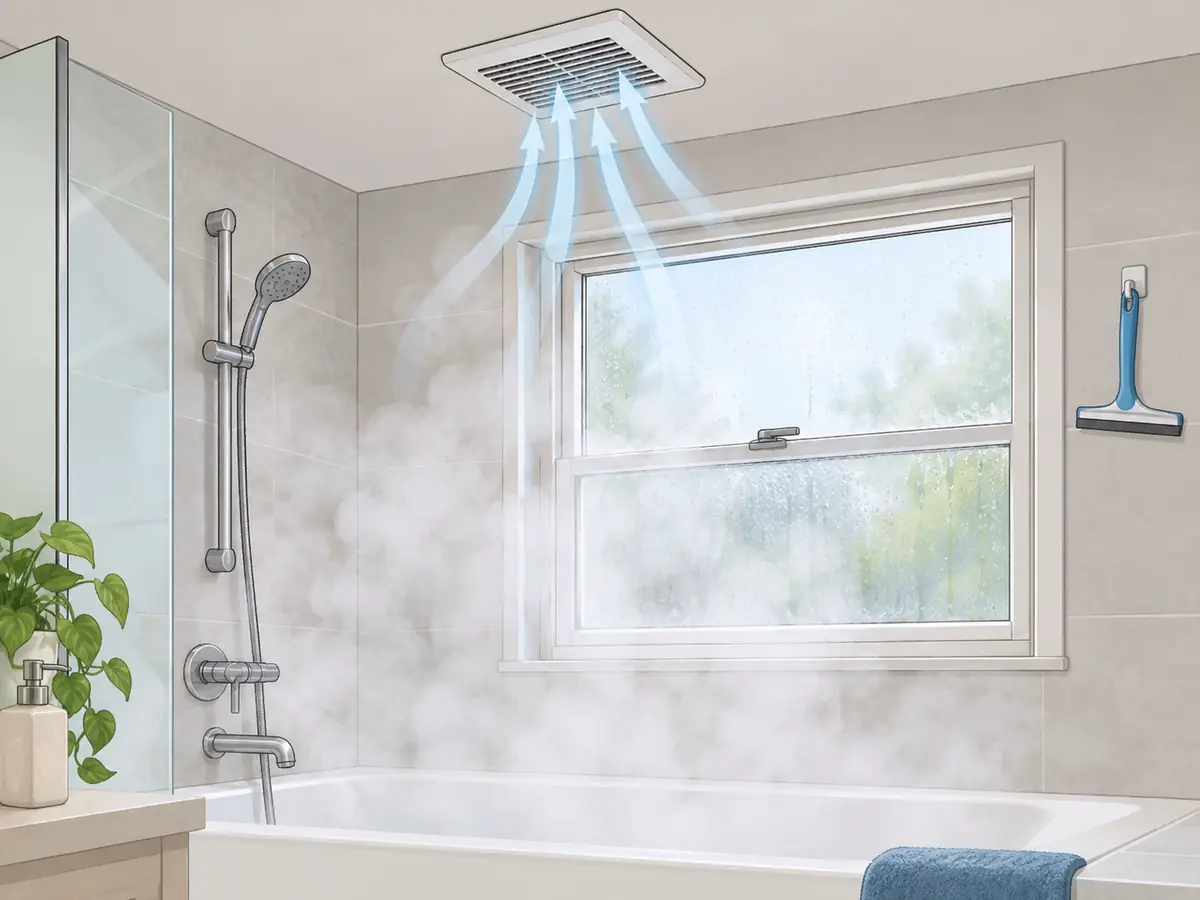 Showers produce more humidity than anything else in the house. Run the exhaust fan during the shower and for 20 to 30 minutes after. Squeegee the glass and wipe the frame after each shower. If there is no fan, open the window after every shower.
Kitchen windows
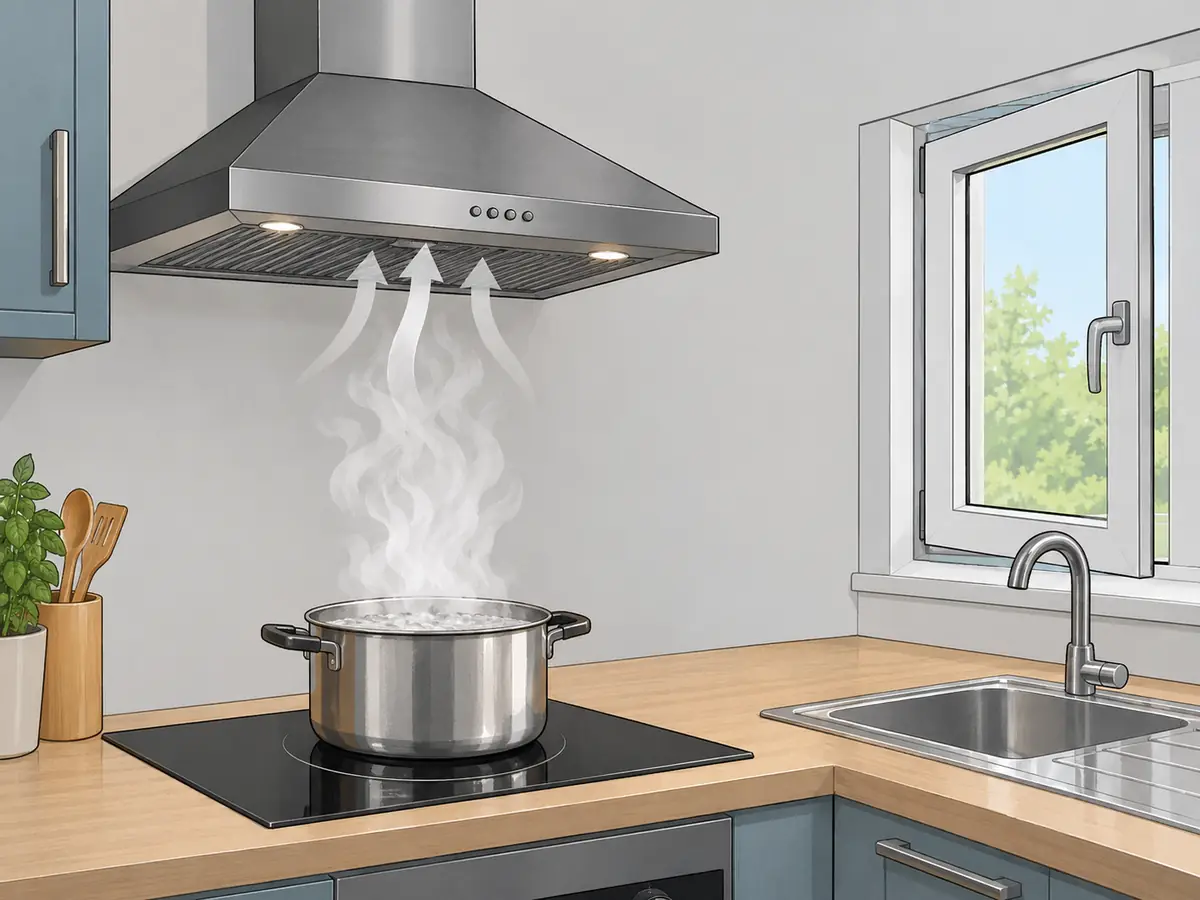 Boiling and cooking add steam. Use a range hood vented to the outside, keep lids on pots, and open the kitchen window while cooking.
Basement windows
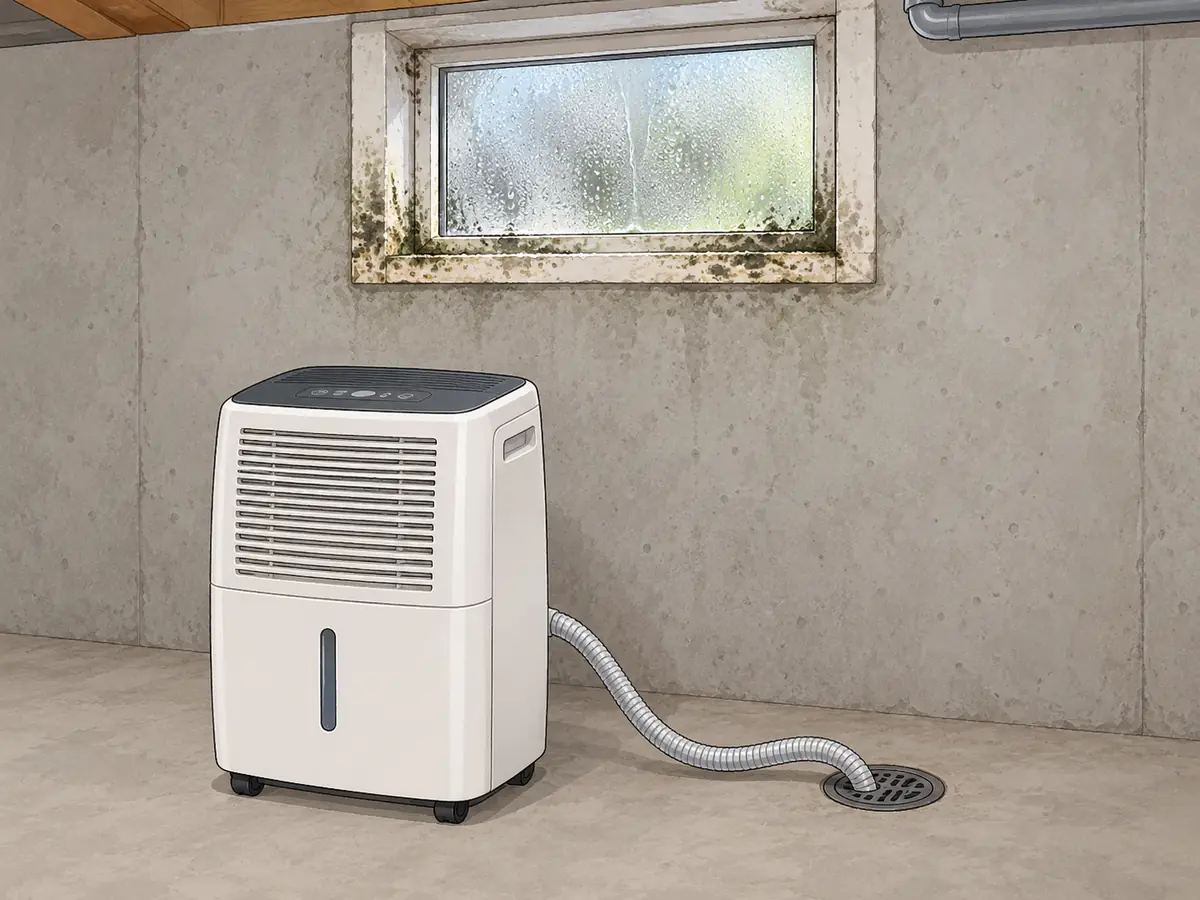 Basement windows sit below or near ground level, in the coolest and dampest part of the house. A dehumidifier is usually the only reliable fix. Check that the window well outside drains properly and is not filled with leaves.
How to Stop Mold Coming Back on Windows
Keep indoor humidity between 30% and 50%
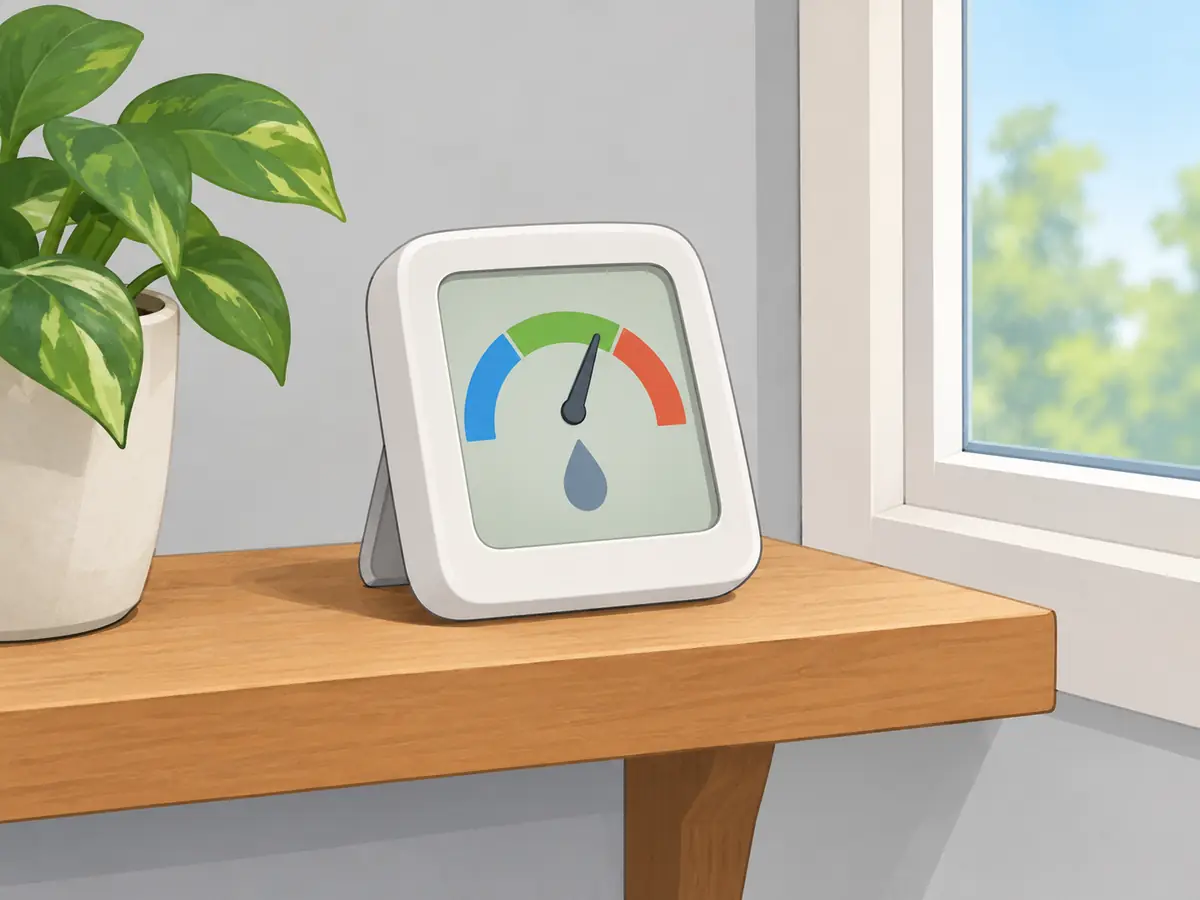 The EPA recommends keeping indoor relative humidity below 60%, ideally between 30% and 50%. A cheap digital hygrometer tells you where you are. In very cold weather, aim for the lower end of that range to stop condensation on the glass.
Ventilate every day
 Open windows for 10 to 15 minutes each morning, even in winter. Leave trickle vents open. Use bathroom and kitchen exhaust fans every time. Dry laundry outside or in a vented dryer.
Run a dehumidifier in problem rooms
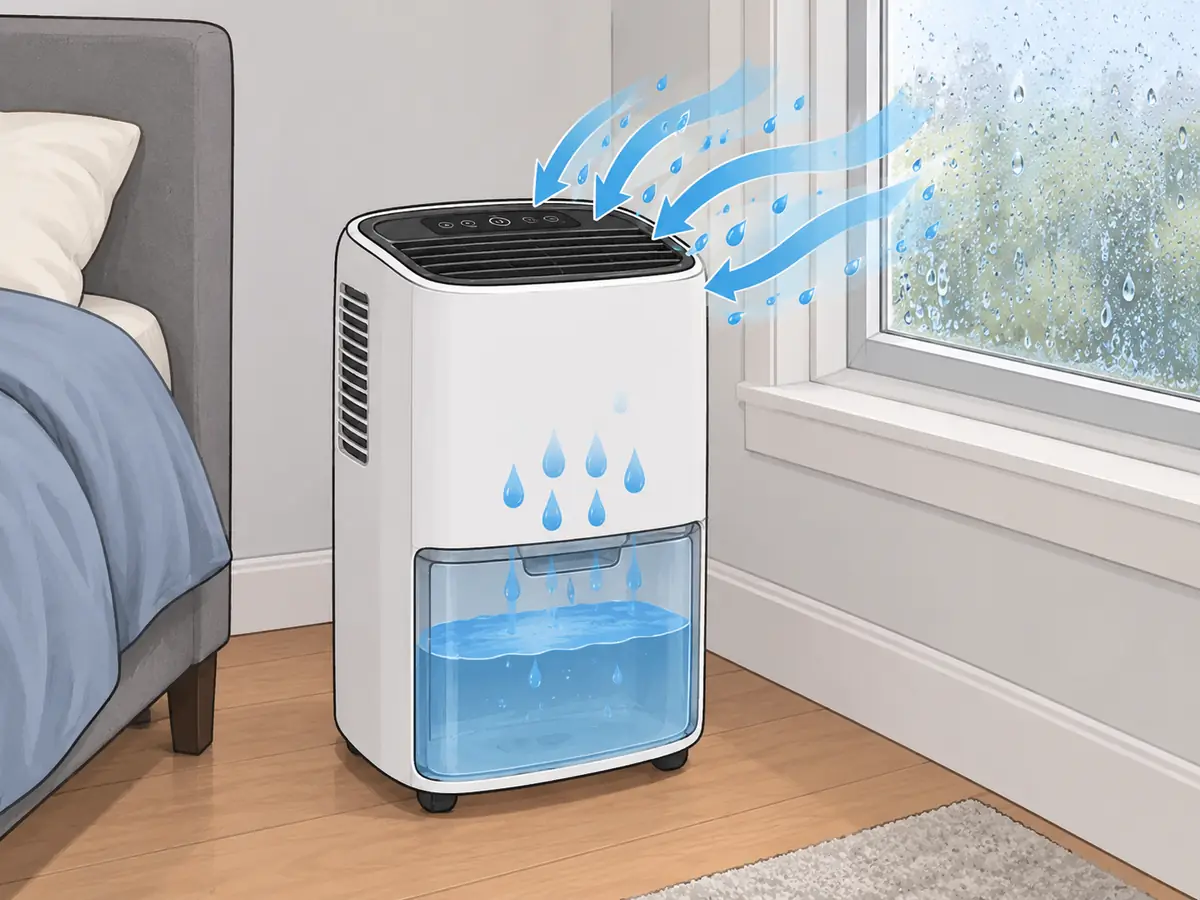 A dehumidifier in a damp bedroom or basement can stop window condensation completely. Empty it every day or set it to drain. It treats the symptom, so still fix any leaks.
Wipe condensation every morning
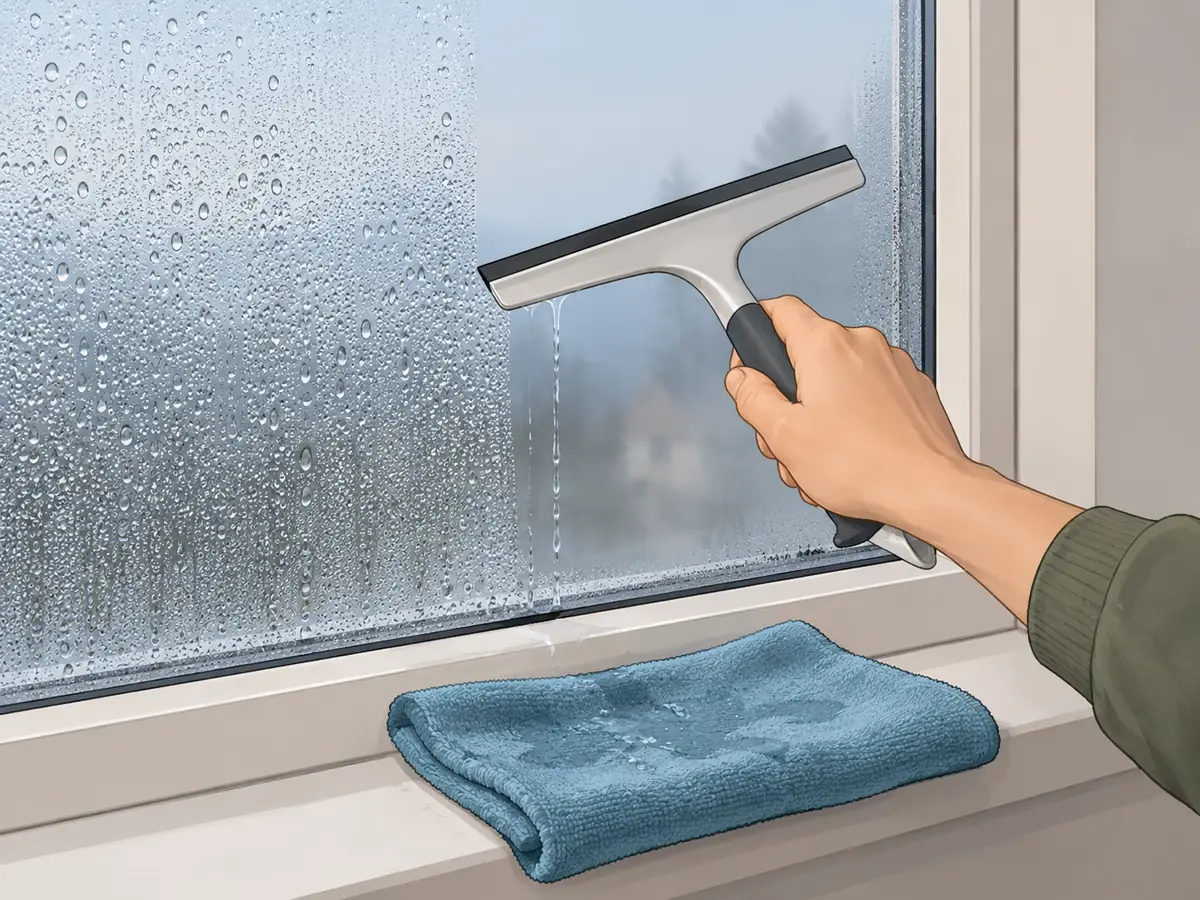 A squeegee and a microfiber cloth take about 30 seconds per window. Moisture-absorbing strips along the bottom of the glass help on windows that run with water.
Keep tracks, seals and drainage holes clean
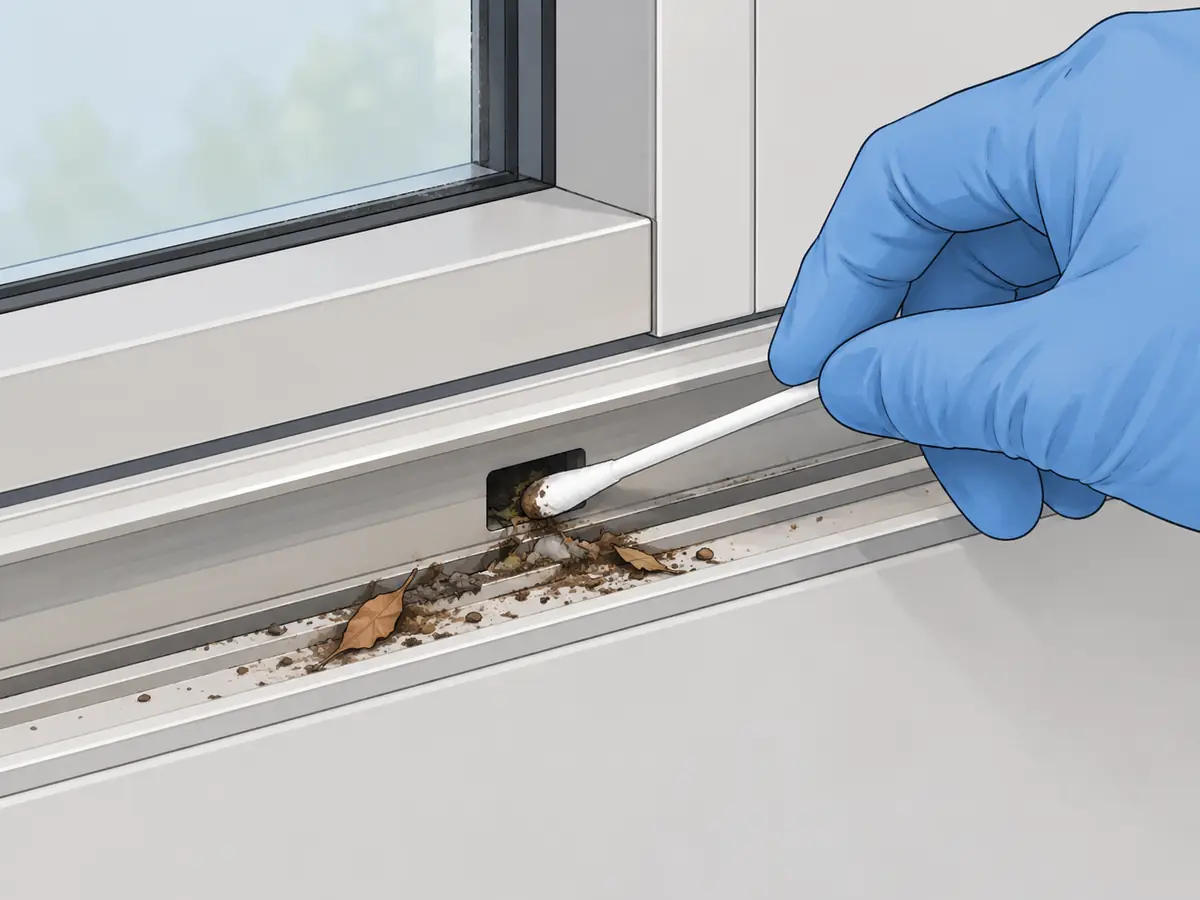 Vacuum tracks and wipe seals monthly in winter. Clear drainage holes twice a year. Dirt holds water, and water feeds mold.
Move furniture and curtains away from windows
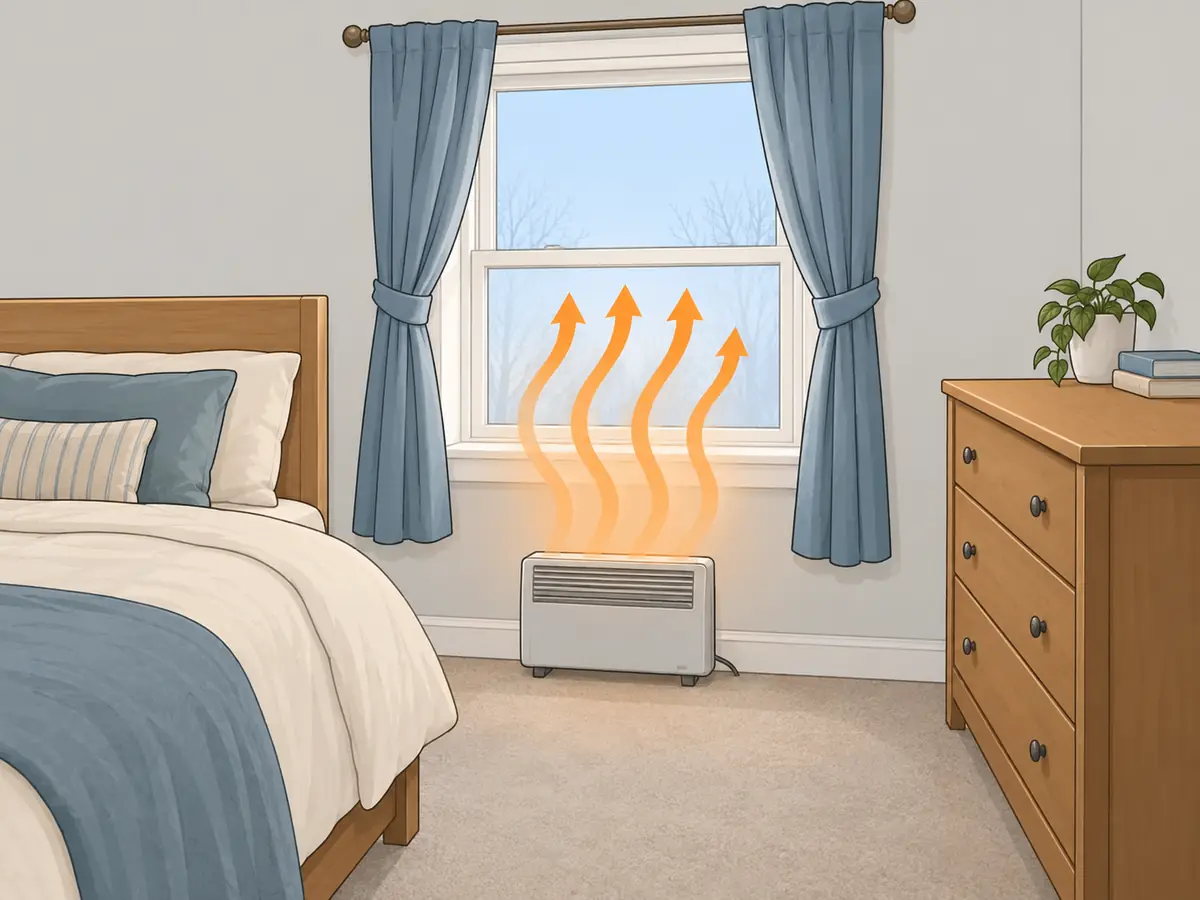 Leave a gap between furniture, beds and curtains and the window wall so warm air can reach the glass and keep it above the dew point.
Repair seals, caulk and paint
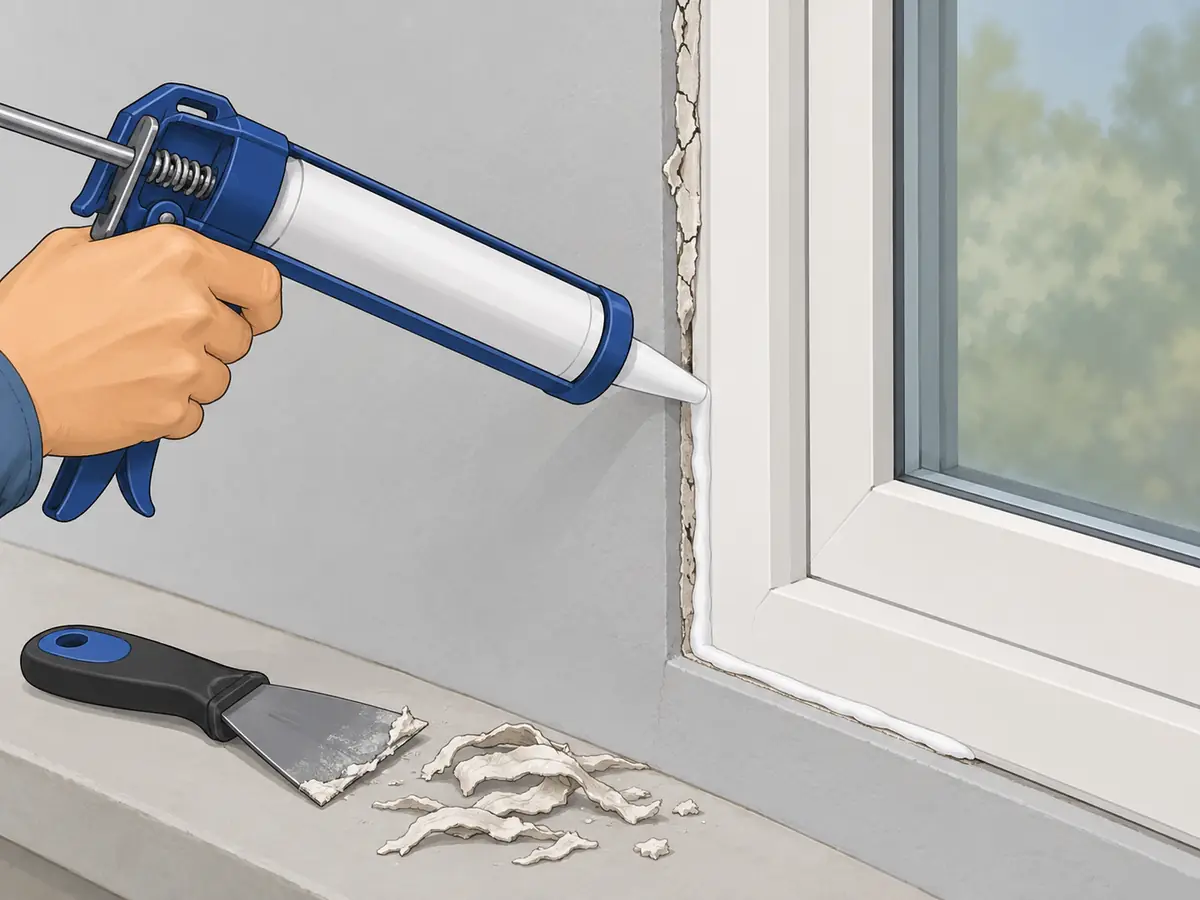 Inspect every window from the outside once a year. Replace cracked caulk, damaged seals and peeling paint. Reseal bare wood as soon as you see it.
Upgrade old windows when it makes sense
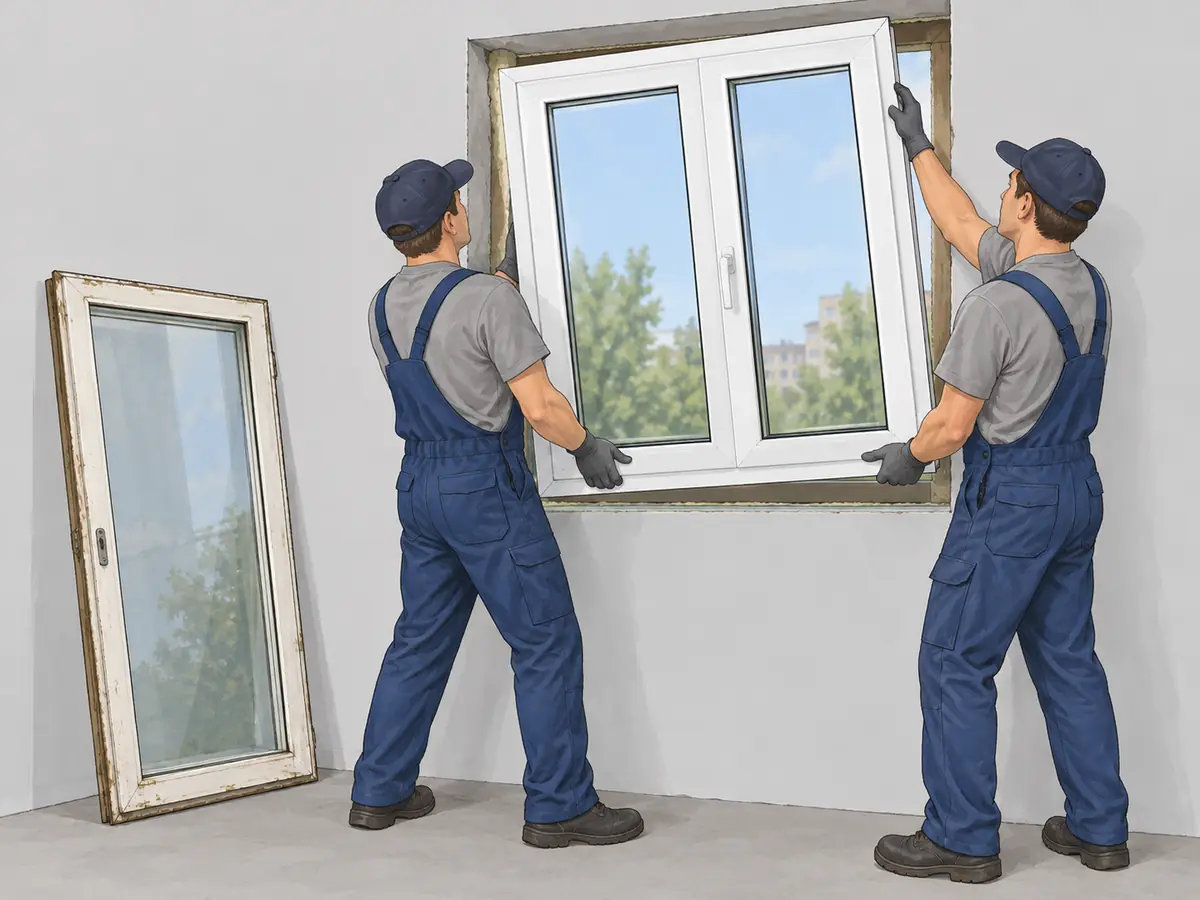 If a window runs with water every winter morning despite good ventilation, the glass is the problem. Double or triple glazing, warm-edge spacers and thermally broken frames keep the inside surface warmer. Replacing a fogged glass unit is often much cheaper than replacing the whole window.
Never paint over mold
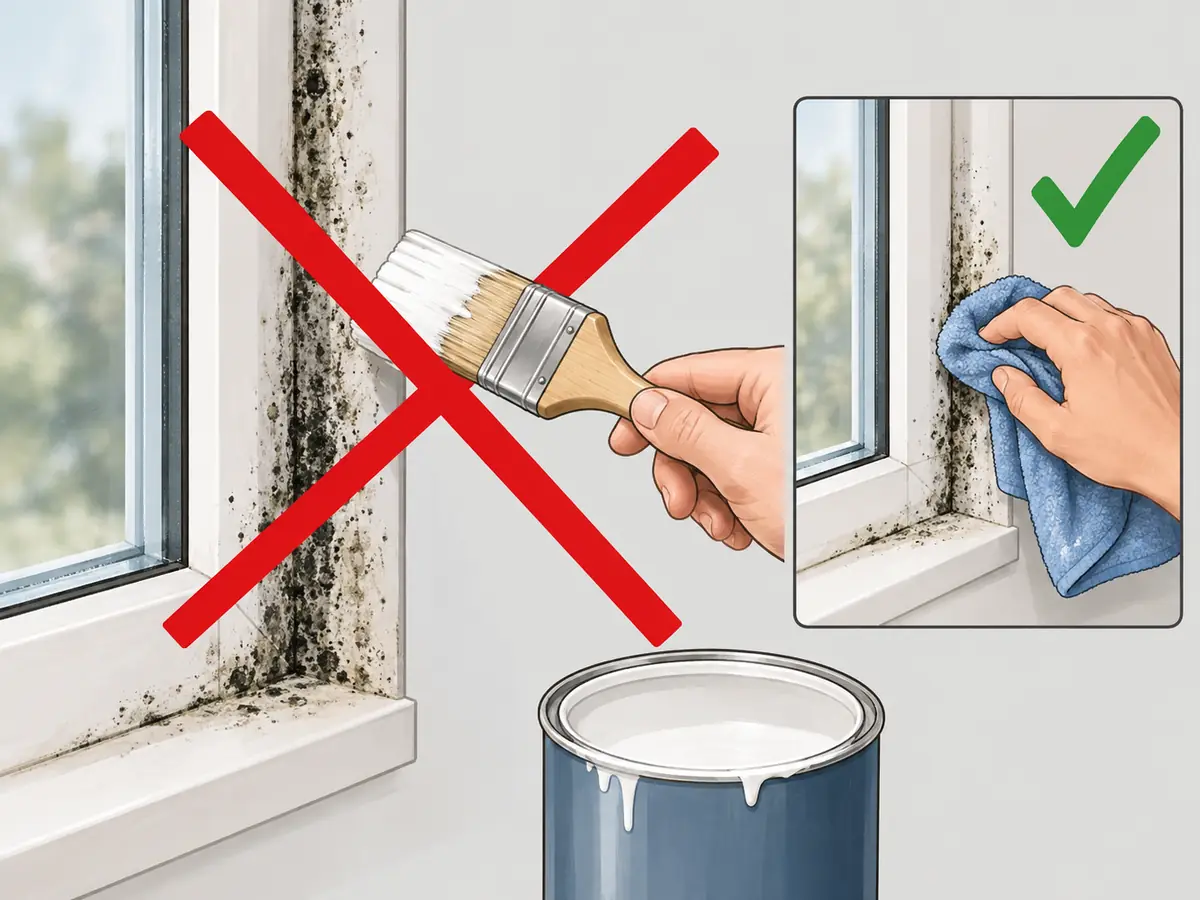 Mold-resistant paint is useful on a clean, dry frame. It does not kill mold that is already there. Paint over mold and it grows back through the new coat. Clean, dry, prime with a stain-blocking primer, then paint.
Moldy Windows in a Rental Property
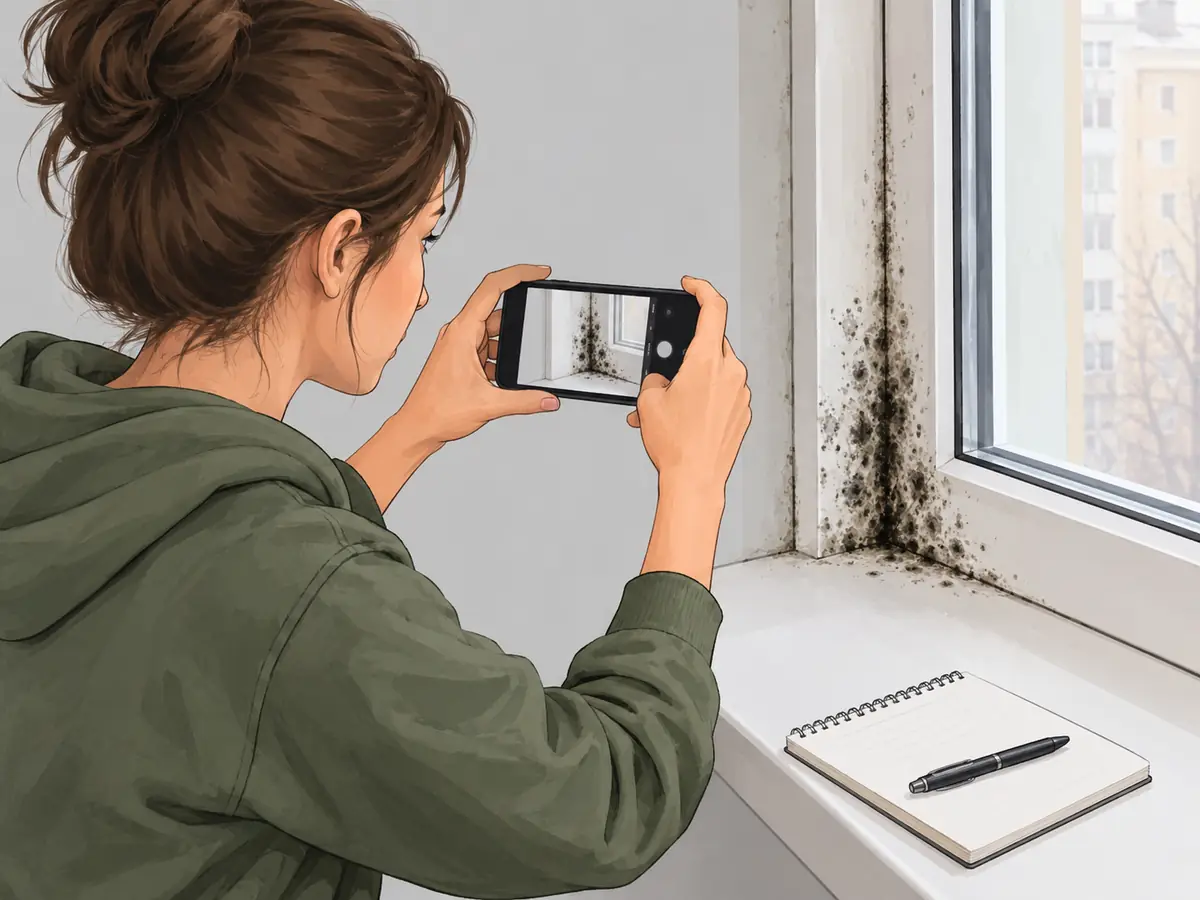
Window mold is one of the most common complaints renters have, and one of the most argued about. Landlords often say “a little mold is normal” or blame the tenant for not ventilating.
The fair answer is that it is usually shared. Tenants are generally expected to ventilate, use exhaust fans and wipe condensation. Landlords are generally responsible for leaks, broken exhaust fans, failed window seals and windows that are so poorly insulated they run with water no matter what. The rules differ by country, state and city, so check your local tenancy rules.
What to do as a renter: photograph the mold with dates, clean small patches yourself as above, report it to your landlord in writing, and ask for repairs if you find a leak, a failed seal or a broken fan.
When to Call a Mold Removal Professional
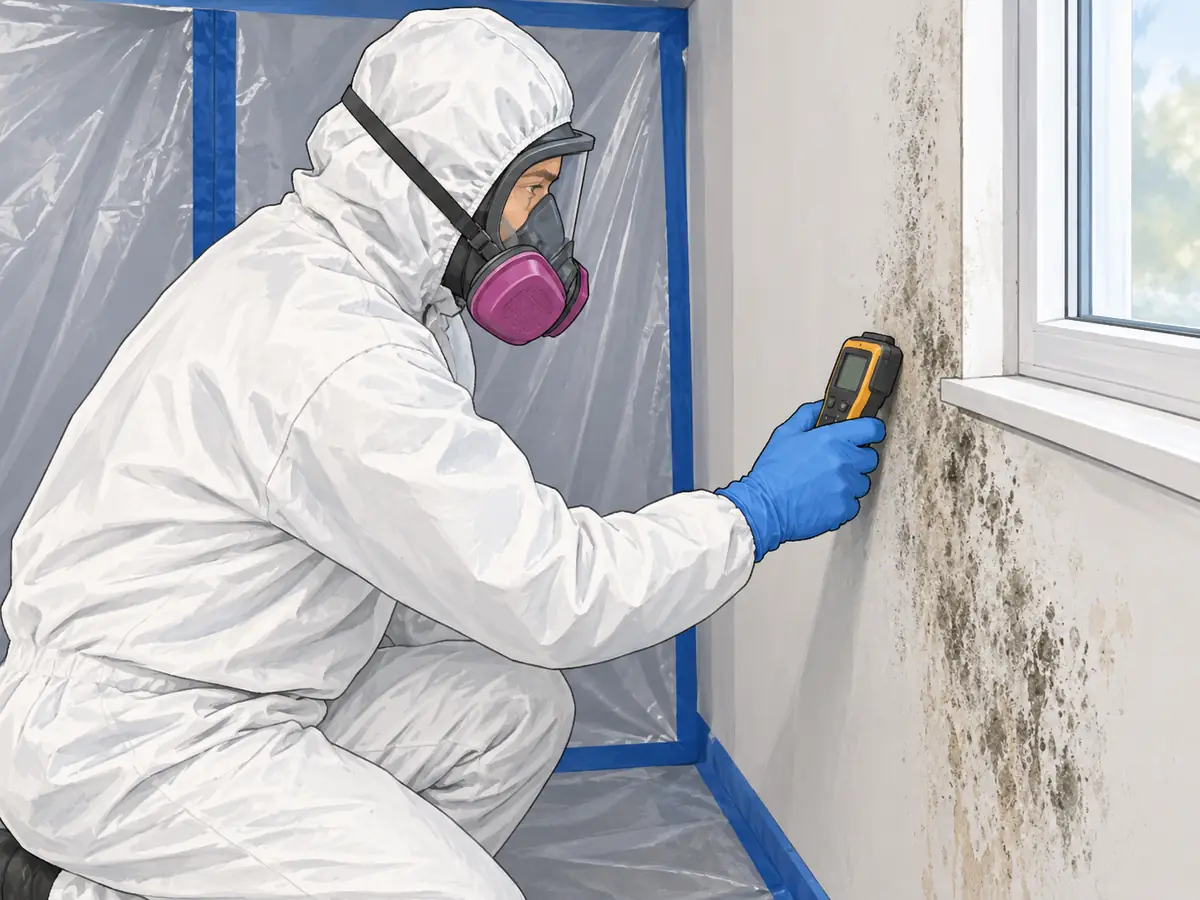
Call a professional when:
- The mold covers more than about 10 square feet
- It is spreading into the wall, behind trim or under paint
- The wood is soft or rotting
- It keeps coming back even after you have lowered the humidity
- You can smell mold but cannot see it
- Someone in the home has asthma, allergies or a weakened immune system
- The window was flooded or water damaged
A reputable mold remediation company will find the moisture source, measure moisture inside the wall, contain the area so spores do not spread, remove damaged material and confirm the problem is gone.
Mold keeps coming back on your windows? Get a window mold assessment and find out where the moisture is coming from before it reaches your walls.
Frequently Asked Questions
What is the best way to remove mold from windows?
Spray white vinegar or soapy water on a microfiber cloth, wipe the glass, frame and sill, scrub the tracks and seals with a soft toothbrush, and dry everything completely. Then fix the condensation or leak that caused it.
Does vinegar kill mold on windows?
Yes. White vinegar removes surface mold from glass, plastic, painted and sealed wood frames, sills and rubber seals. Use it undiluted or 4 parts vinegar to 1 part water, leave it for up to an hour, then wipe and dry. Do not use it on marble or natural stone.
How do you remove mold from windows without bleach?
Use white vinegar, 3% hydrogen peroxide or dish soap and warm water. All three remove window mold without the damage bleach causes to aluminum, rubber seals and wood.
Is mold on window sills common?
Yes, very common, especially in winter. Condensation runs off the glass and sits on the sill overnight. Common does not mean harmless, so clean it promptly and reduce the moisture.
Is mold on a window sill dangerous?
Small patches of surface mold are a low risk for most healthy people, but mold can trigger allergies and asthma. Clean it with gloves and a mask, and get professional help if the area is large or someone in the home is sensitive.
Why does mold keep coming back on my windows?
Because the moisture is still there. Nightly condensation, high indoor humidity, blocked drainage holes or a leaking seal will regrow mold within 2 to 4 weeks. Clean, then fix the cause.
How do I get rid of mold on windows from condensation?
Clean the mold off, then lower indoor humidity to 30% to 50%, ventilate daily, run exhaust fans, use a dehumidifier in problem rooms, and wipe the glass every morning in cold weather.
What is the white mold on my windows?
White, powdery growth on a window is usually mildew or early-stage mold. White crystals on the wall around a window may be efflorescence, a salt deposit left by water moving through masonry. Both are signs of moisture.
Can you clean mold between double-glazed window panes?
No. Mold or fog between the panes means the glass unit's seal has failed. The sealed unit needs replacing.
How long does it take to remove mold from a window?
About 20 to 45 minutes per window, including the tracks and seals, plus drying time. ---
Final Word: Clean It, Dry It, Then Stop the Water
Window mold is a moisture problem that shows up as a cleaning problem. Clean every part of the window with the right product, dry it thoroughly, then deal with the condensation or leak behind it. Lower humidity, daily ventilation, clean tracks and sound seals keep windows mold-free for good.