How to Get Rid of Mold on Window Frames (Every Frame Type, Every Method)

Quick answer: To get rid of mold on window frames, wipe the affected area with a mild detergent solution (or 4 parts white vinegar to 1 part water on frames that tolerate acid) using a microfiber cloth, clean the seals and tracks, then dry everything completely. Match the cleaner to the frame material: never use bleach on aluminum, and never soak wood. Then fix the moisture source, usually condensation or a leaking seal, or the mold will return within weeks.
Mold on window frames shows up as black, green, grey or white spots along the bottom rail, in the corners, on the rubber seals and in the sill tracks. It is one of the most common mold problems in any home because windows are the coldest surface in most rooms, and cold surfaces collect water.
Small patches on a sound frame are a normal DIY job. This guide gives you the exact process, the right product for your frame material, a quick way to tell condensation from a leak, and the point where cleaning stops being enough.
In this guide:
- The 7-step removal method
- Which cleaner works on which frame (comparison table)
- Natural methods: vinegar, detergent, baking soda, hydrogen peroxide
- Bleach and commercial mold removers
- Black, green and white mold
- Wood, uPVC, aluminum, painted, vinyl and steel frames
- Why window frames get moldy (and a 60-second diagnosis)
- How to stop mold returning
- When to call a professional
- FAQs
Can You Remove Window Frame Mold Yourself? Check First
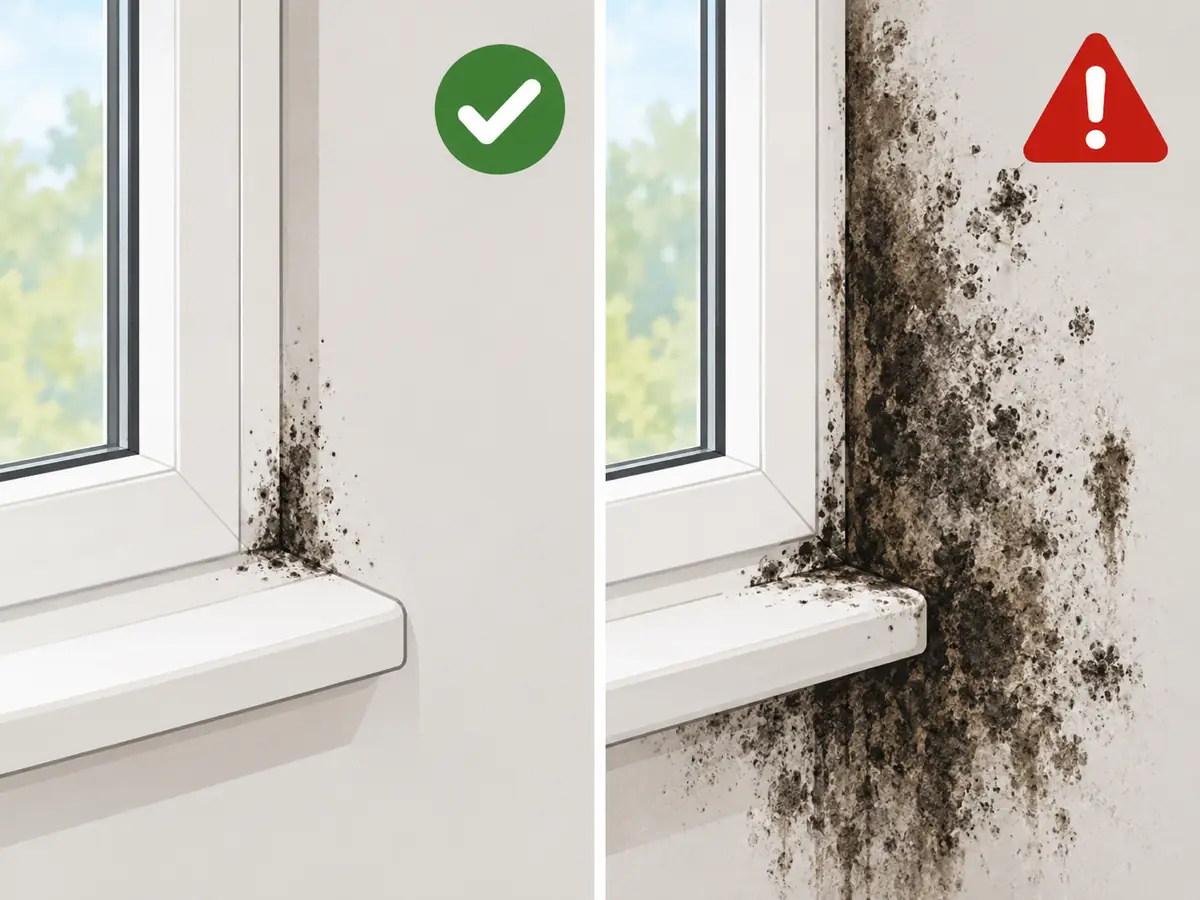
Before you touch the mold, decide whether this is a DIY job. The US EPA uses a simple size guide: if the moldy area is smaller than about 10 square feet (roughly a 3 ft × 3 ft patch), you can usually clean it yourself.
| Situation | DIY or professional? |
|---|---|
| Spots or a strip of mold on the frame surface, under 10 sq ft | DIY with the steps below |
| Mold returns within 2 to 4 weeks after cleaning | DIY clean, then find the moisture source |
| Wood is soft, crumbles or flakes when pressed | Professional assessment (rot repair needed) |
| Mold on the wall around the window, behind trim or under paint | Professional (likely hidden water entry) |
| Musty smell with no visible mold | Professional inspection |
| Anyone in the home has asthma, mold allergy or a weakened immune system | Have someone else clean it, or hire a professional |
| Paint on a pre-1978 home is peeling (lead risk) | Do not sand or scrape; get the paint tested |
How to Get Rid of Mold on Window Frames: 7 Steps
What you need
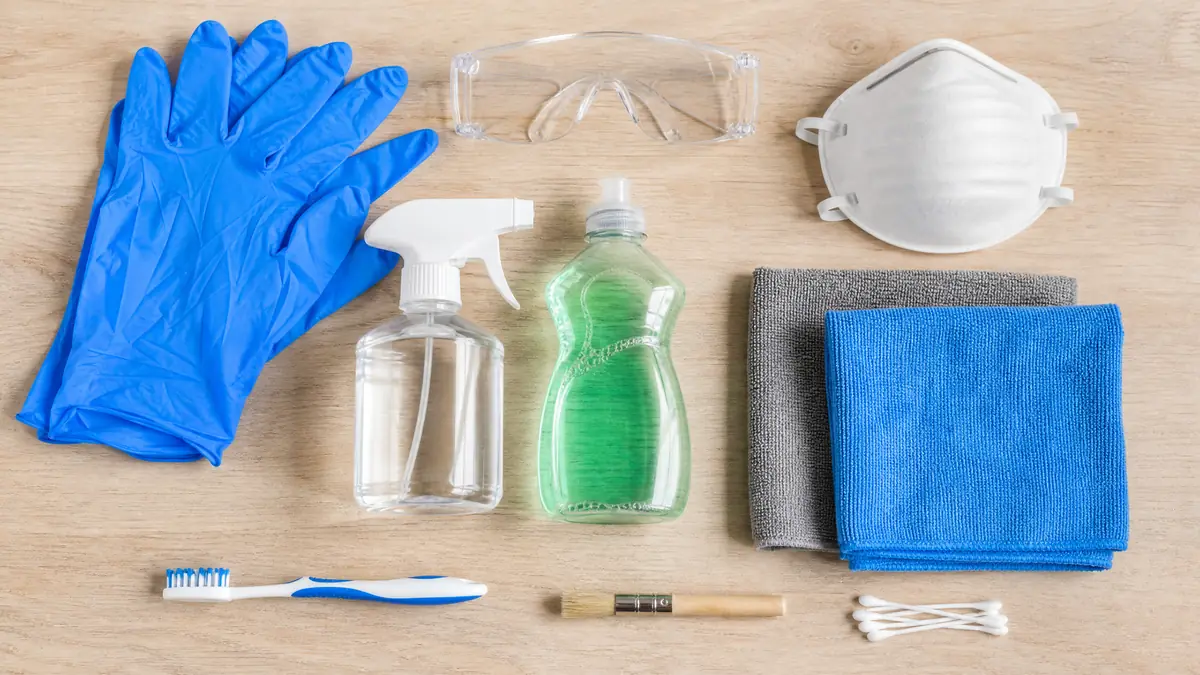
- Household rubber or nitrile gloves
- Safety glasses
- N95 (US) or P2 (UK/AU) disposable respirator
- 2 to 3 microfiber cloths
- Soft toothbrush or detailing brush
- Spray bottle
- Mild dish detergent, or white vinegar
- Old towel or plastic sheet
- Dry cloth or paper towels
Step 1: Identify the frame material
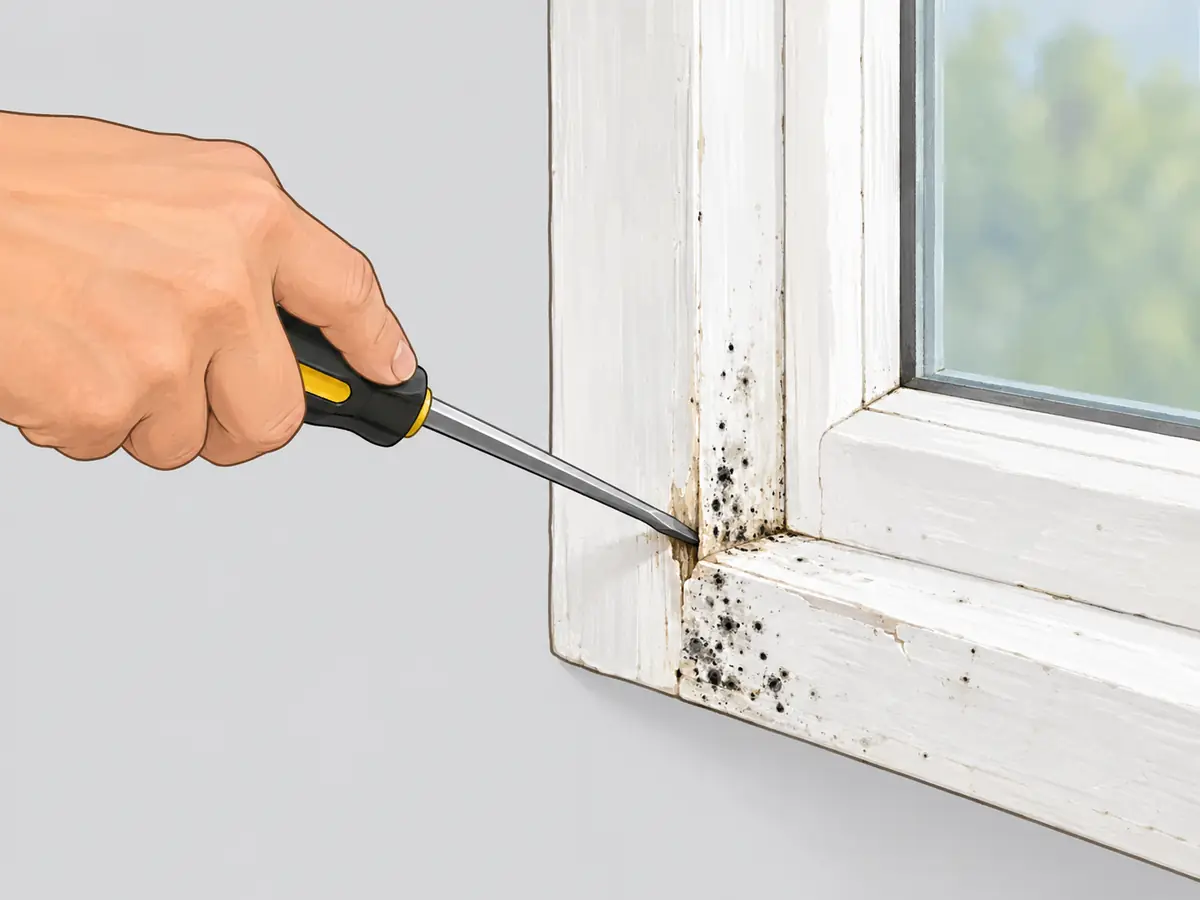
The frame material decides the cleaner. Wood absorbs water and swells. uPVC and vinyl scratch under abrasives. Aluminum corrodes and pits with bleach. Painted frames lose their finish with strong solvents. If you are not sure, a magnet sticks to steel, aluminum is light and cool to touch, uPVC feels like hard plastic and sounds hollow when tapped, and wood shows grain at cut edges or chips.
Check the frame’s condition too. Press the wood gently with a screwdriver tip. If it sinks in, you have rot under the mold, and cleaning alone will not fix it. Rot changes the whole job, which is why mold on wooden window frames needs a different repair plan from a plastic frame.
Step 2: Protect yourself and the room
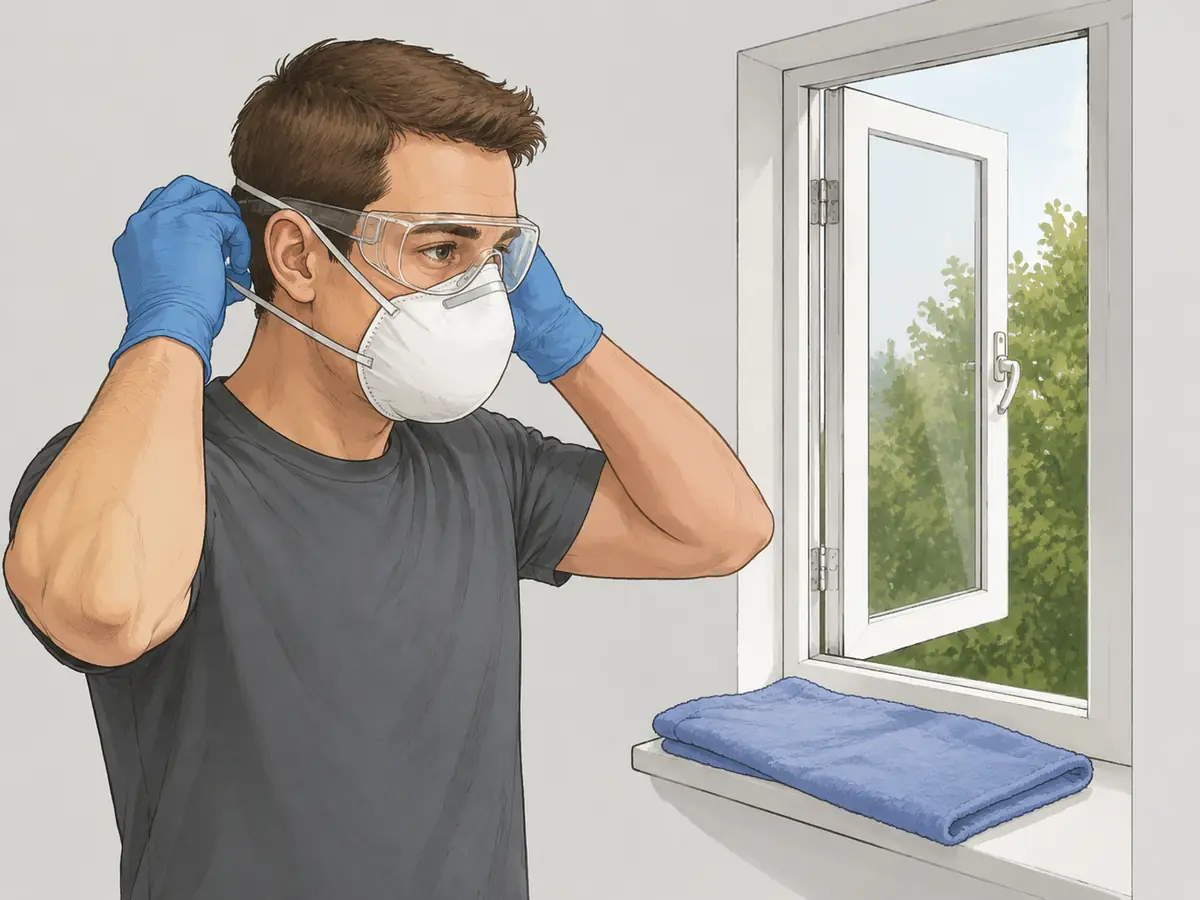
Open the window if the weather allows, and close the door to the rest of the house. Put on gloves, glasses and the respirator. Lay a towel or plastic sheet under the window to catch drips. Keep children and pets out of the room.
Never dry brush or vacuum mold with a normal vacuum. Dry brushing throws spores into the air. Always dampen the mold first.
Step 3: Mix your cleaning solution

Pick one solution and stick to it:
- Detergent solution (all frame types): a few drops of dish soap in a liter (quart) of warm water.
- Vinegar solution (wood, uPVC, vinyl, painted): 4 parts white vinegar to 1 part water, the ratio Australian public health guidance gives for routine mold cleaning.
Never mix products. Bleach plus vinegar releases chlorine gas. Bleach plus ammonia releases chloramine gas. Both are dangerous in a small room.
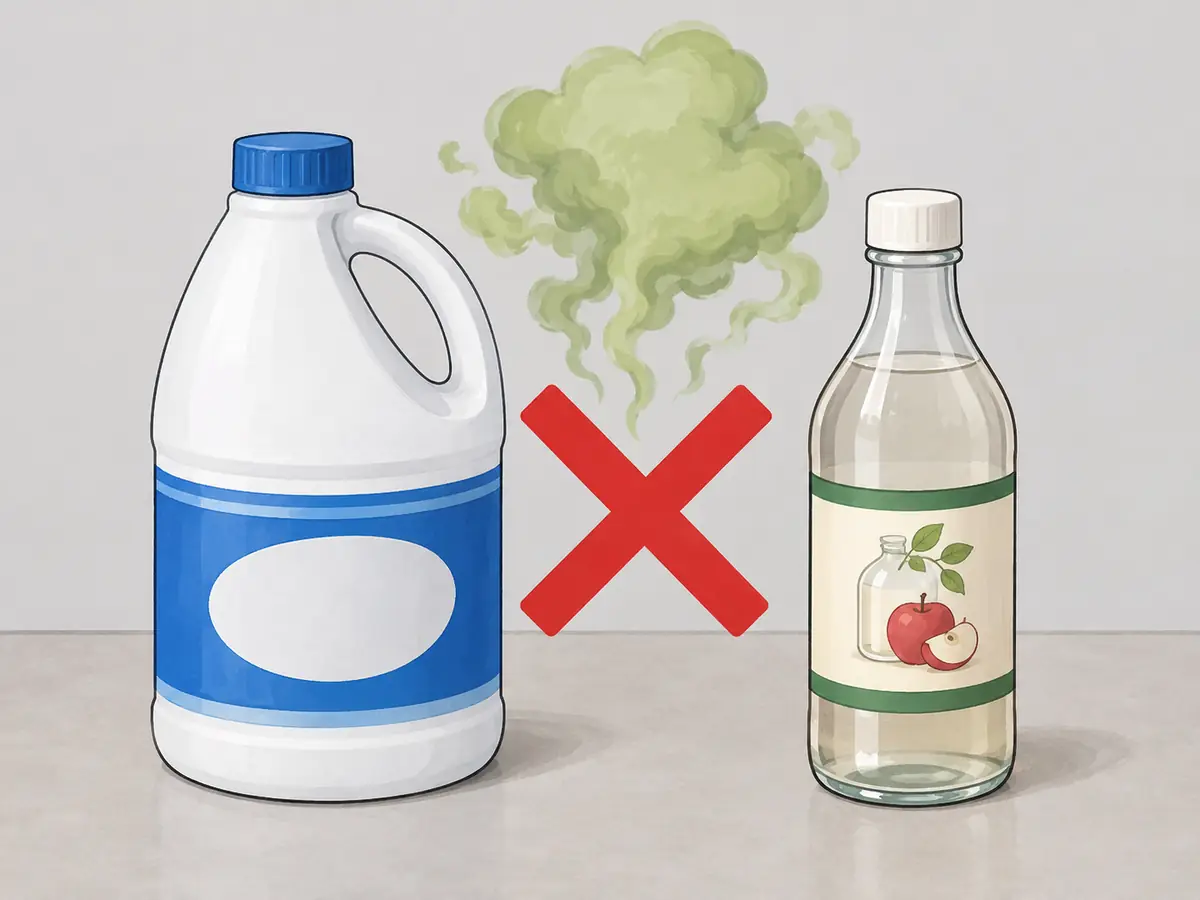
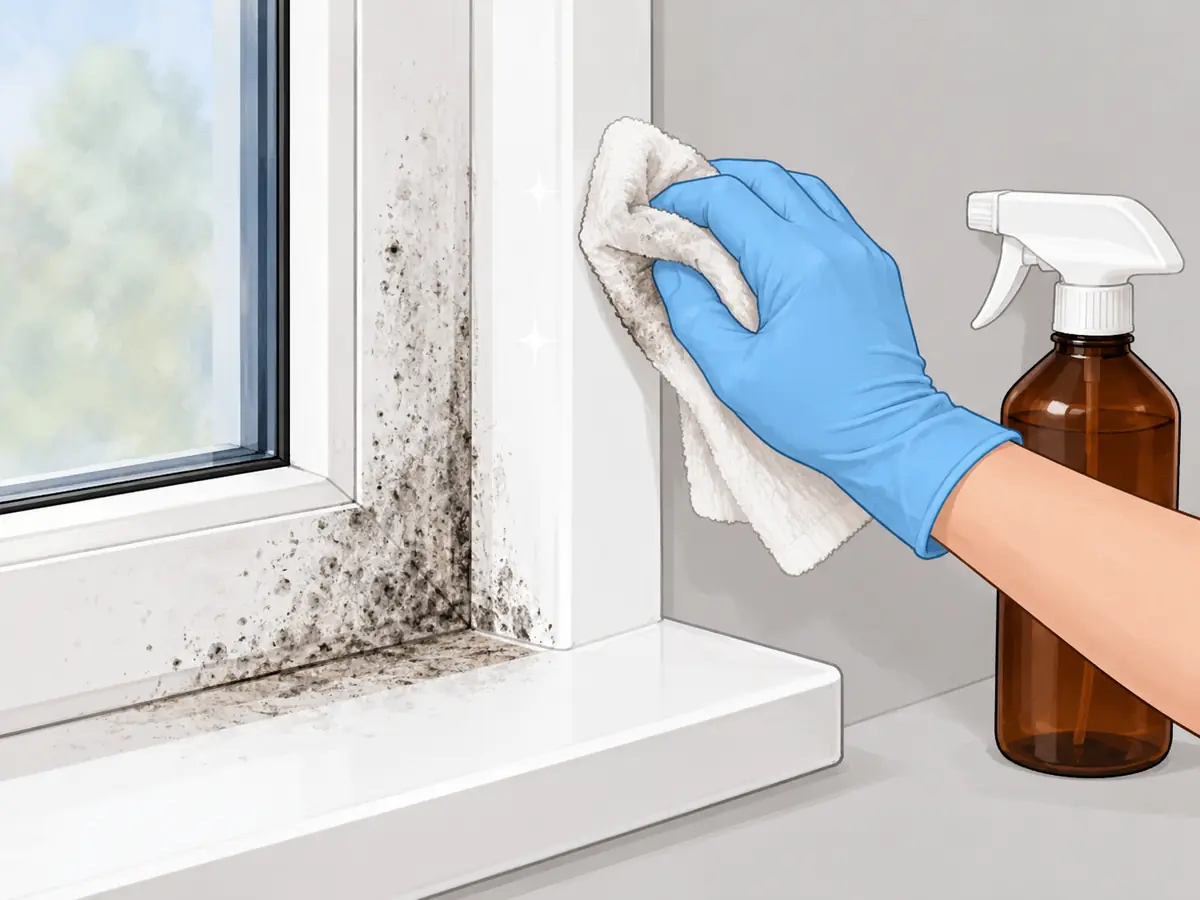
Step 4: Wipe the mold off the frame
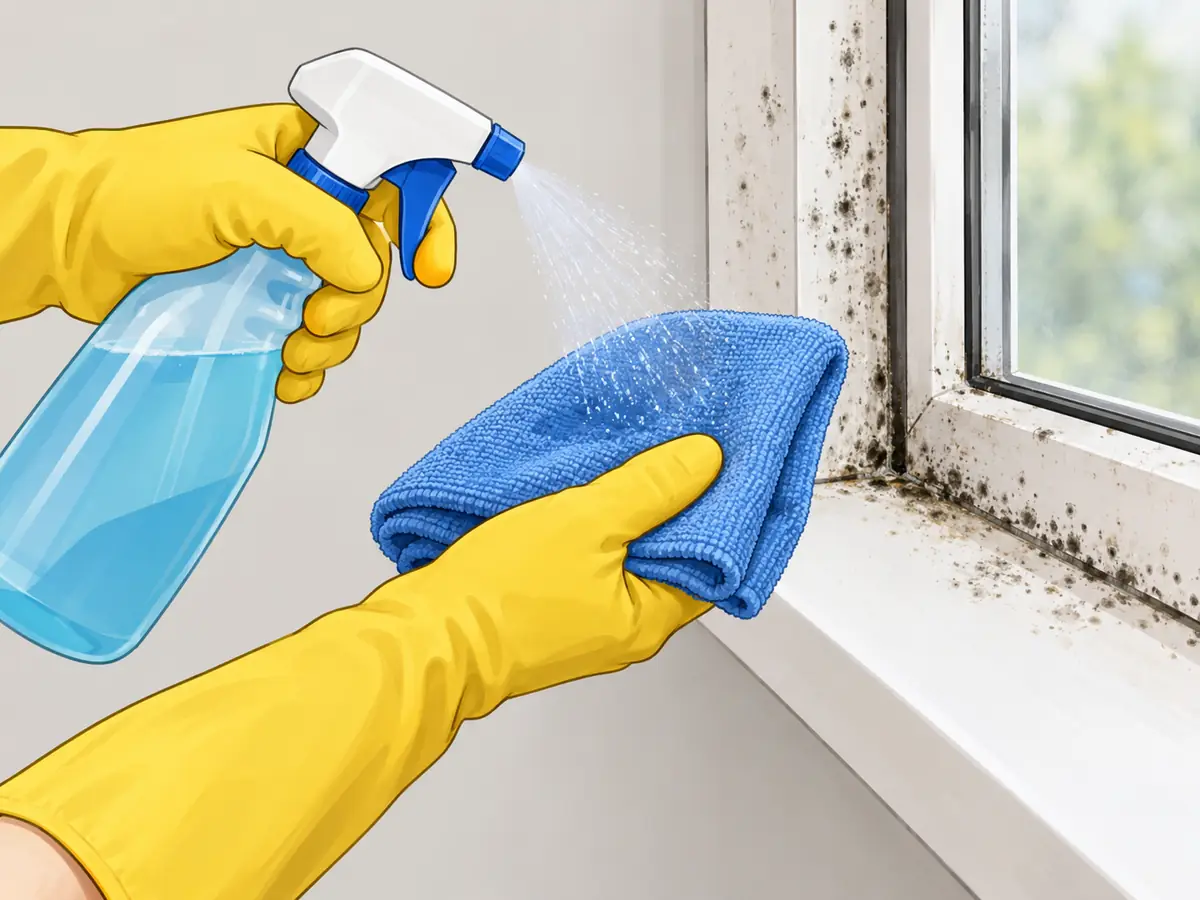
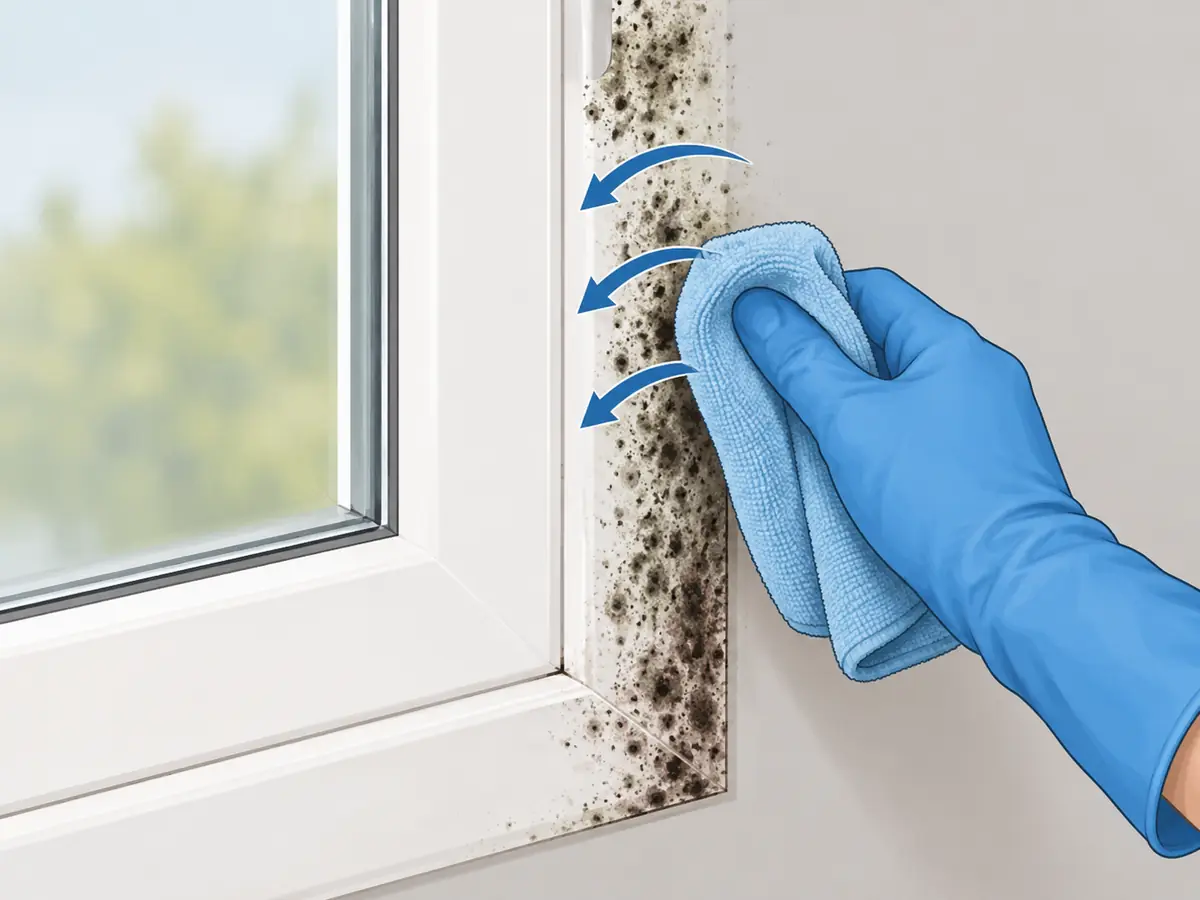
Spray the solution onto the cloth, not straight onto the frame. This stops liquid running into joints and behind the sill. Wipe from the outer edge of the patch toward the center so you do not spread it. Fold the cloth to a clean face after every pass, and swap cloths when they are dirty.
For stubborn spots, let the solution sit for 5 to 10 minutes, then wipe again. Do not scrub hard on uPVC, vinyl or painted finishes.
Step 5: Clean the seals, sill and tracks
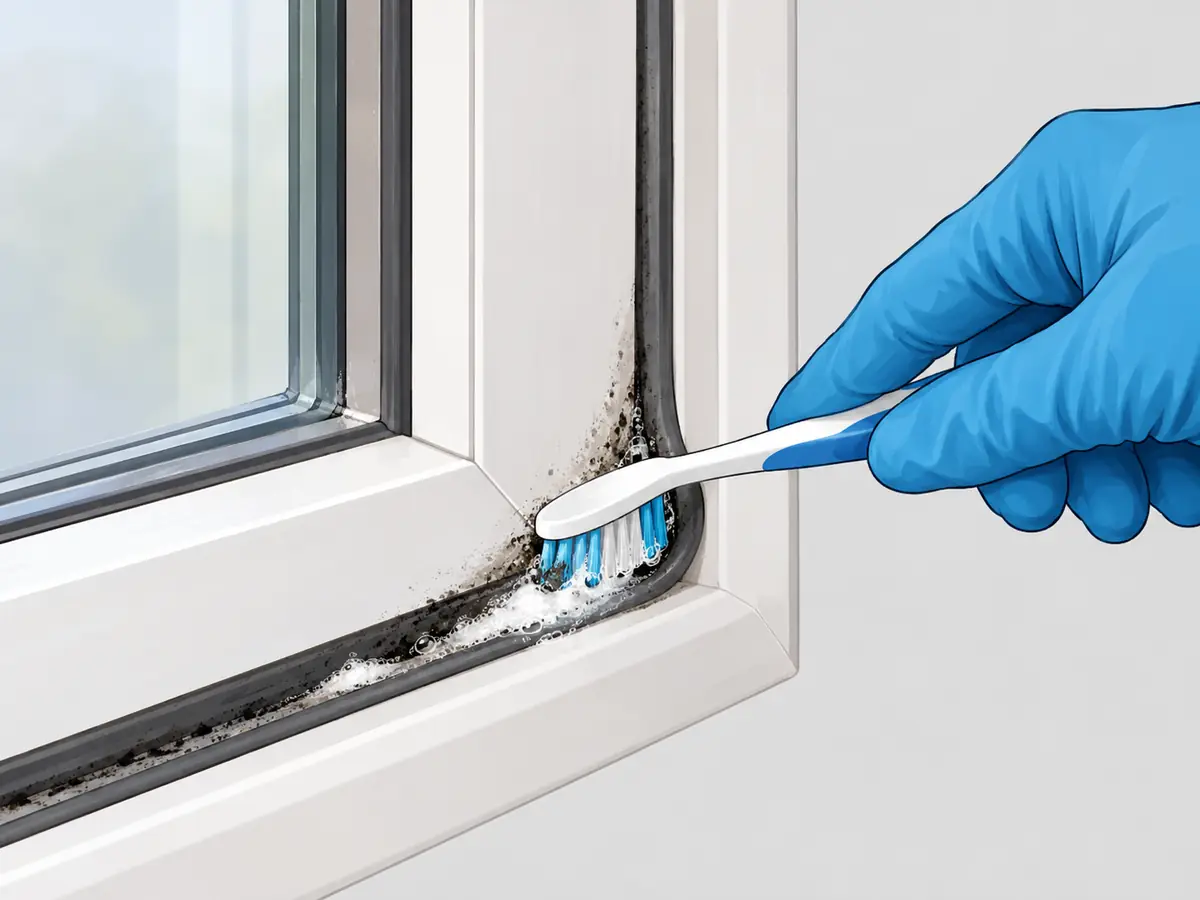
This is where most window mold actually lives. Run a soft brush dipped in the solution along the rubber gasket, into the corners, and through the sliding track. Clear dirt out of the weep holes (small drainage slots at the bottom of the outer frame) with a cotton bud or pipe cleaner. Blocked weep holes trap water inside the frame and feed mold all year.
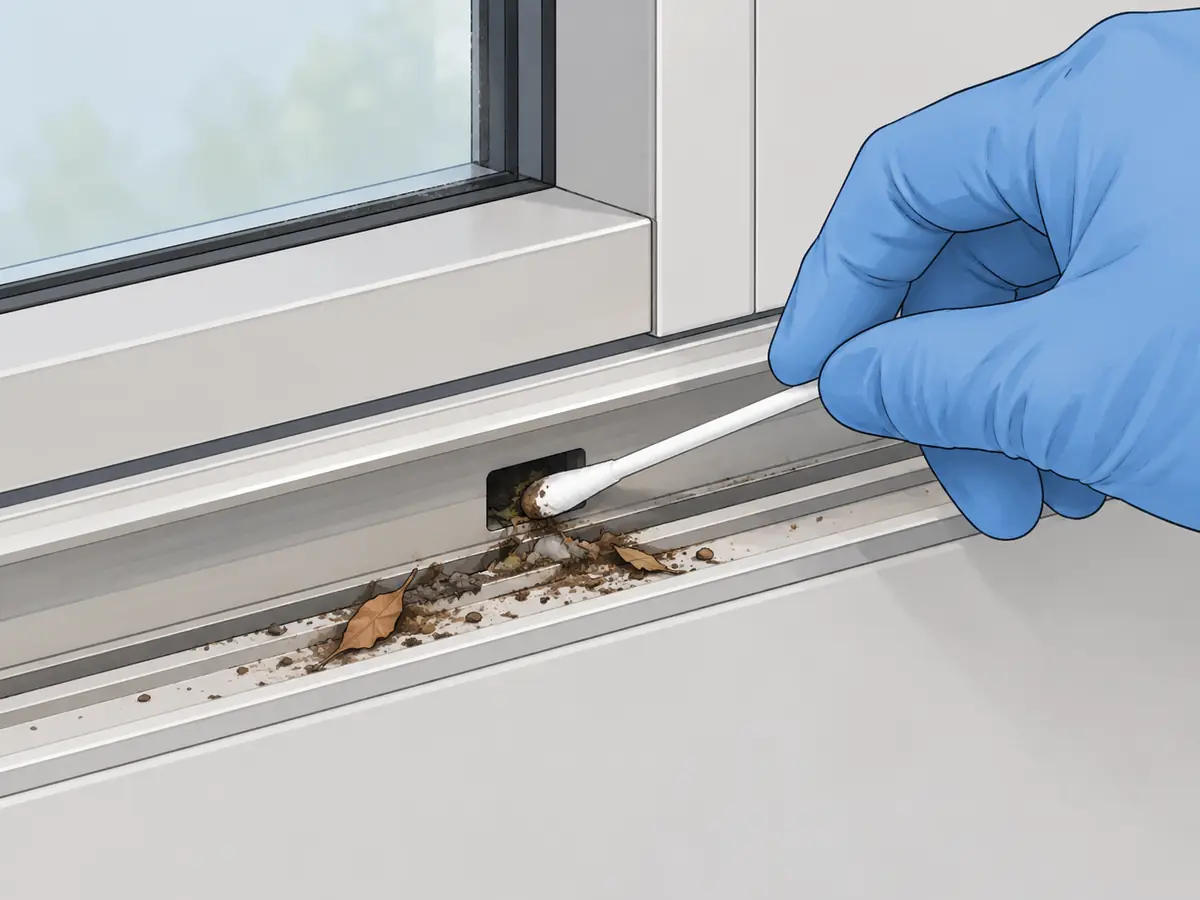
Do not pull rubber seals out of their channel or poke sharp tools into drainage slots.
Step 6: Rinse and dry completely
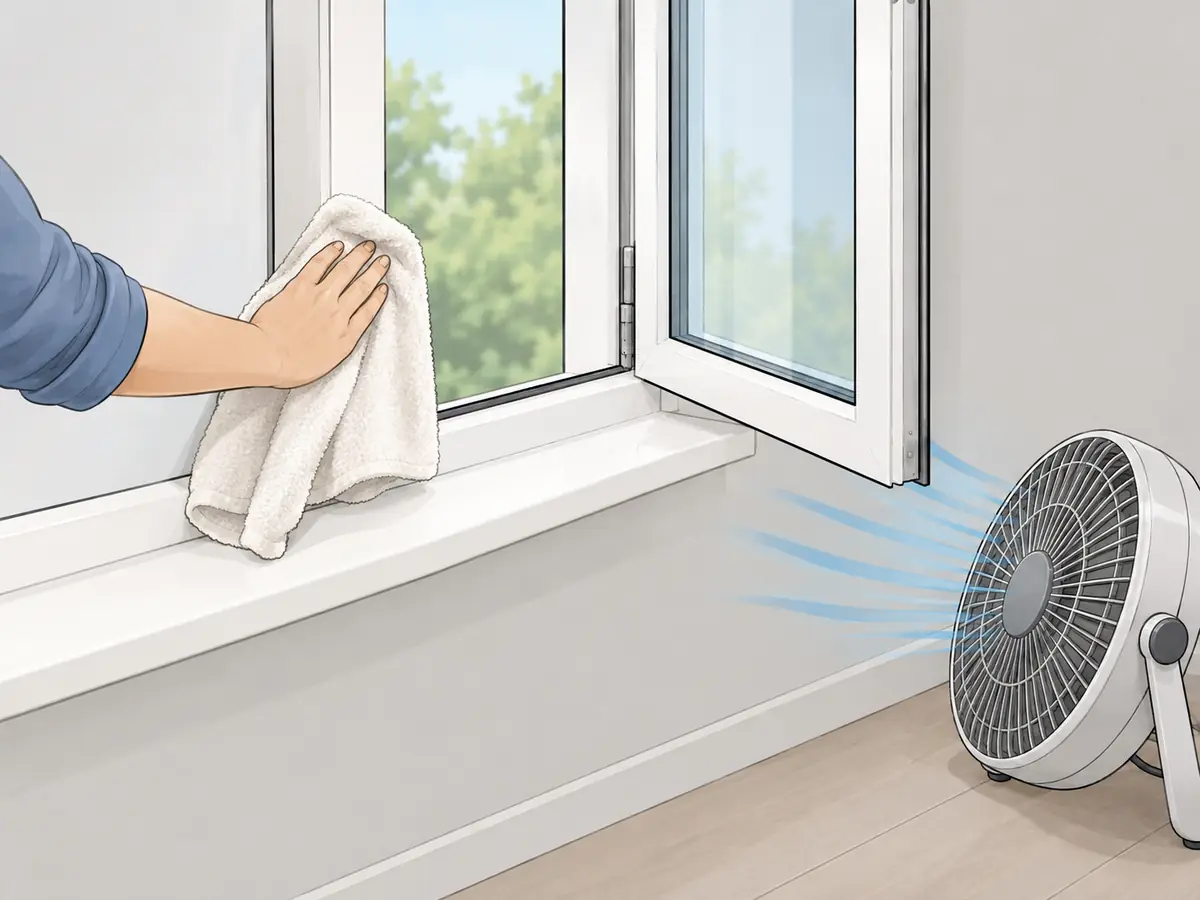
Wipe the frame with a cloth dampened in clean water to remove residue (skip this for vinegar, which can be left to evaporate). Then dry every surface, including corners and the track, with a dry cloth. Leave the window open or run a fan for an hour. Wood must be dry before you close it up or repaint it.
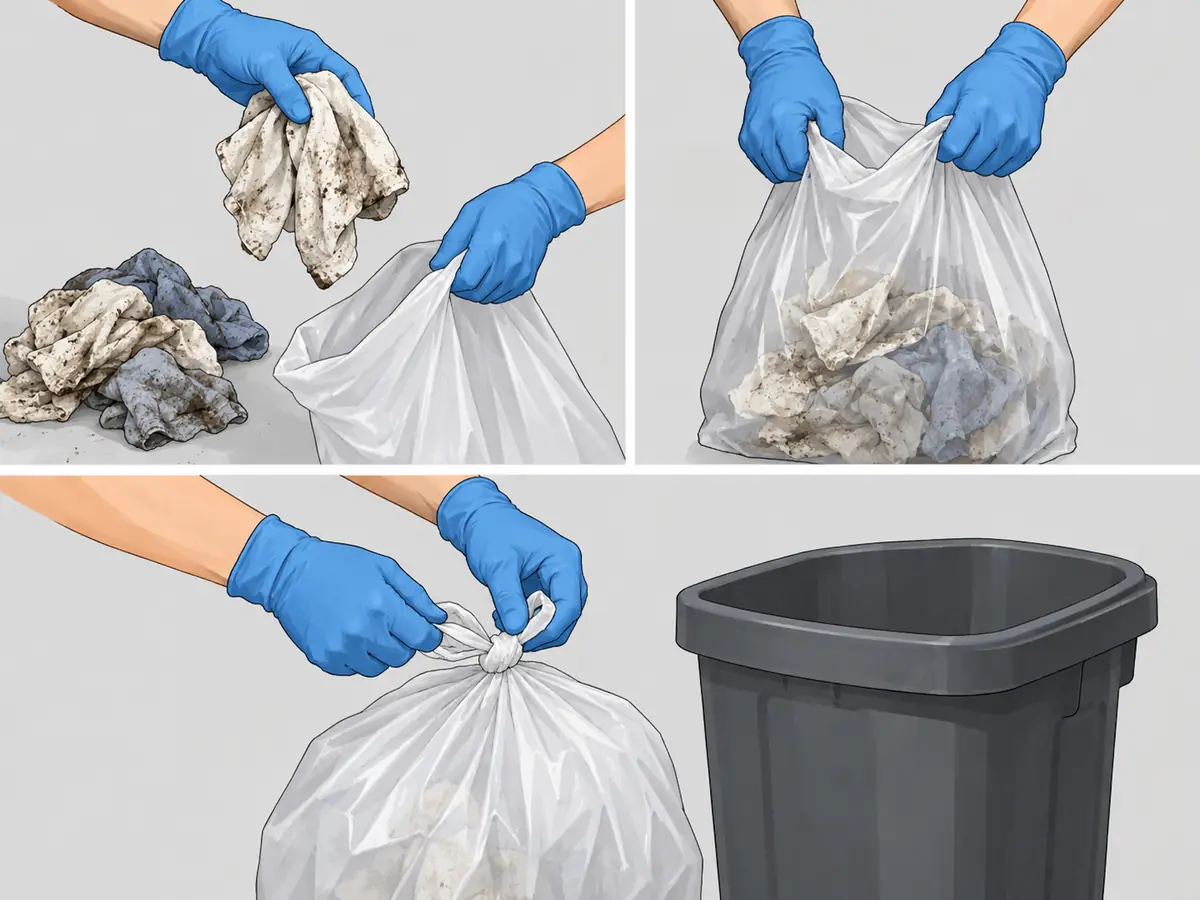
Bag and bin the used cloths, or wash them on a hot cycle on their own.
Step 7: Find and fix the moisture source
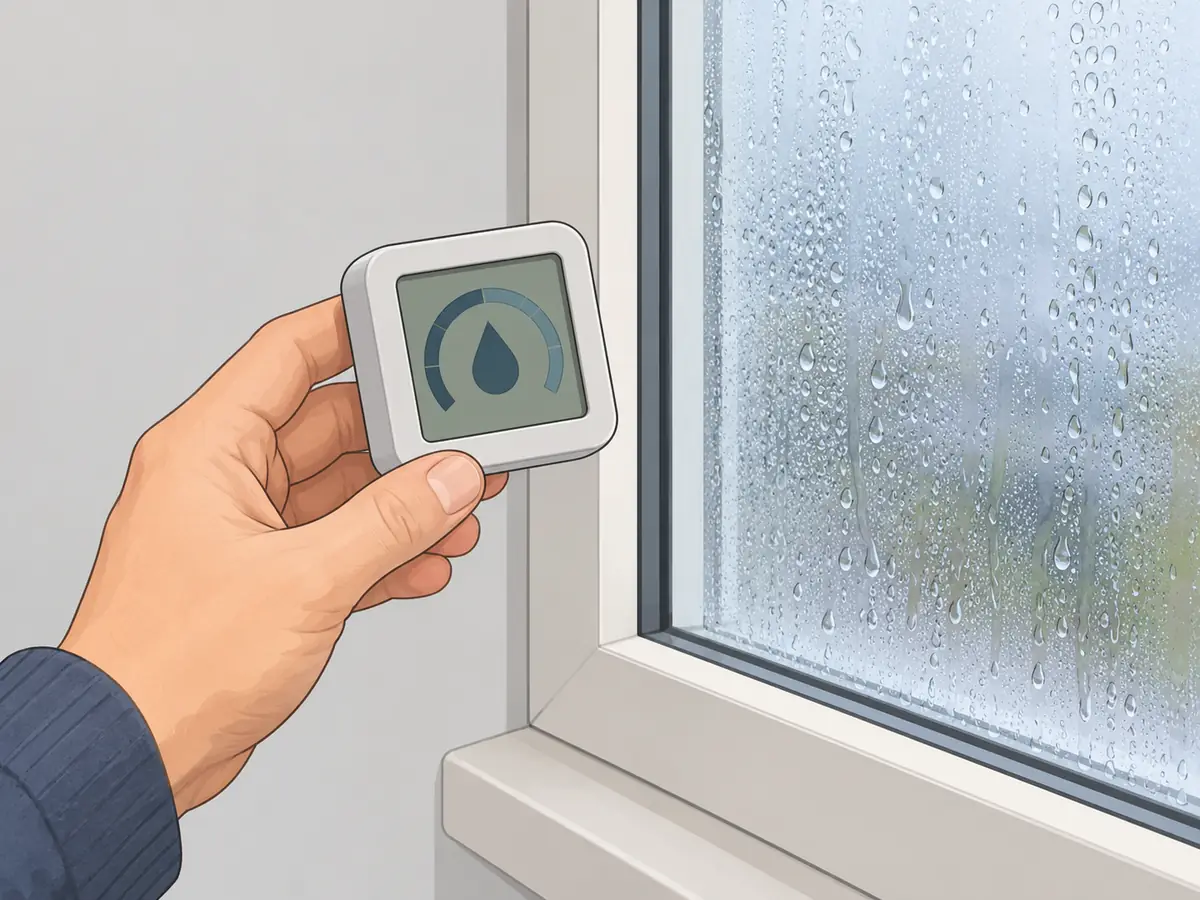
Cleaning removes today’s mold. Moisture creates next month’s. Use the diagnosis table further down this guide to work out whether your problem is condensation or a leak, then fix it. This is the step most guides skip, and it is the reason mold keeps returning.
Which Cleaner Should You Use on Your Window Frame?
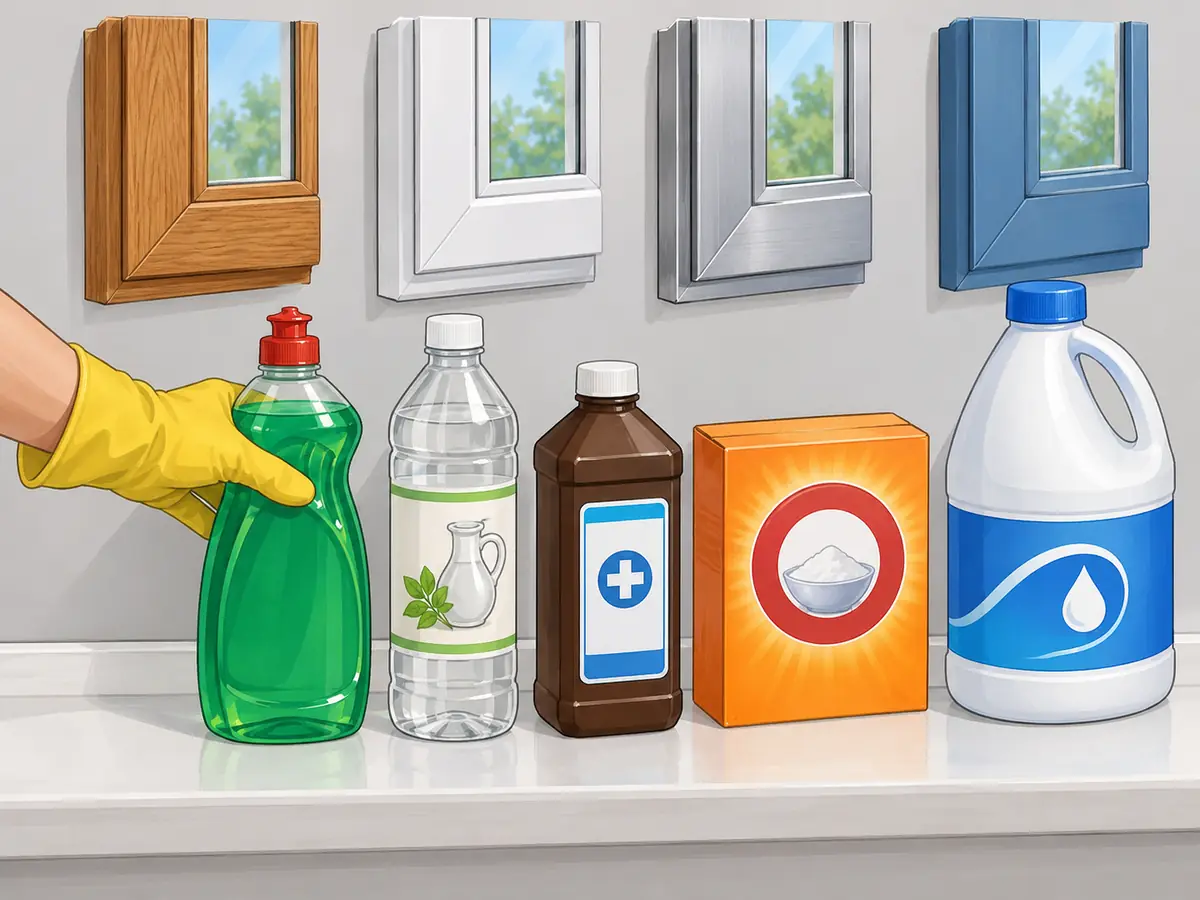
| Cleaner | Wood (sealed) | uPVC / vinyl | Aluminum | Painted | Rubber seals |
|---|---|---|---|---|---|
| Dish detergent + water | ✅ Best first choice | ✅ Best first choice | ✅ Best first choice | ✅ Best first choice | ✅ |
| White vinegar 4:1 | ✅ Wipe, don’t soak | ✅ | ⚠️ Rinse well, can dull anodizing | ✅ Test first | ✅ |
| Hydrogen peroxide 3% | ⚠️ Can lighten wood | ✅ | ✅ | ⚠️ Test first | ✅ |
| Baking soda paste | ⚠️ Gentle only | ⚠️ Can scratch gloss | ✅ Gentle only | ⚠️ Can dull finish | ✅ |
| Diluted bleach | ❌ Discolors, raises grain | ⚠️ Stain only, rinse well | ❌ Corrodes and pits | ⚠️ Can strip color | ❌ Degrades rubber |
| Commercial mold remover | ✅ If label says wood | ✅ If label says PVC | ✅ If label says metal | ✅ If label says painted | ✅ If label says seals |
| Abrasive pad / scouring powder | ❌ | ❌ | ❌ | ❌ | ❌ |
✅ suitable · ⚠️ use with care · ❌ avoid
How to Get Rid of Mold on Window Frames Naturally
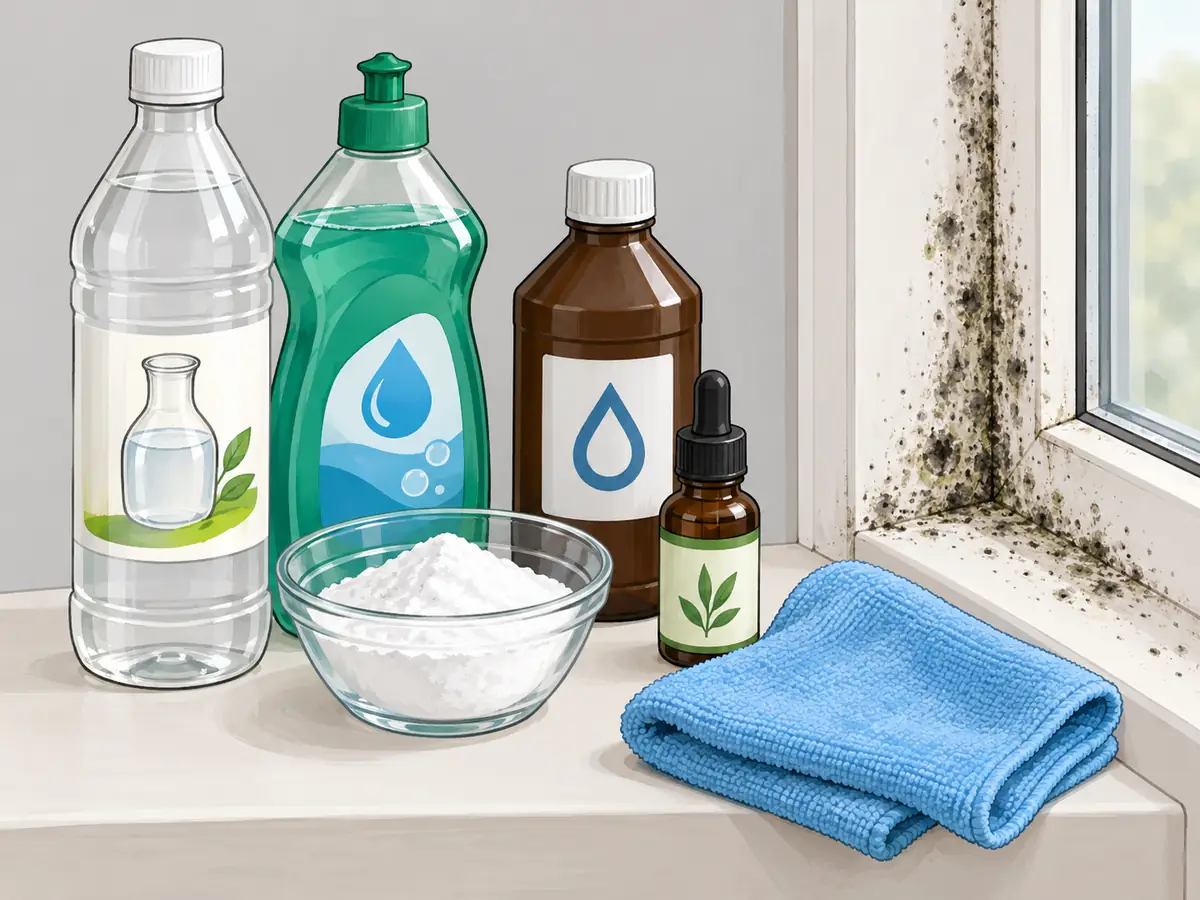
Natural methods work well on surface mold. Natural does not mean every product suits every frame, so check the table above first.
Vinegar
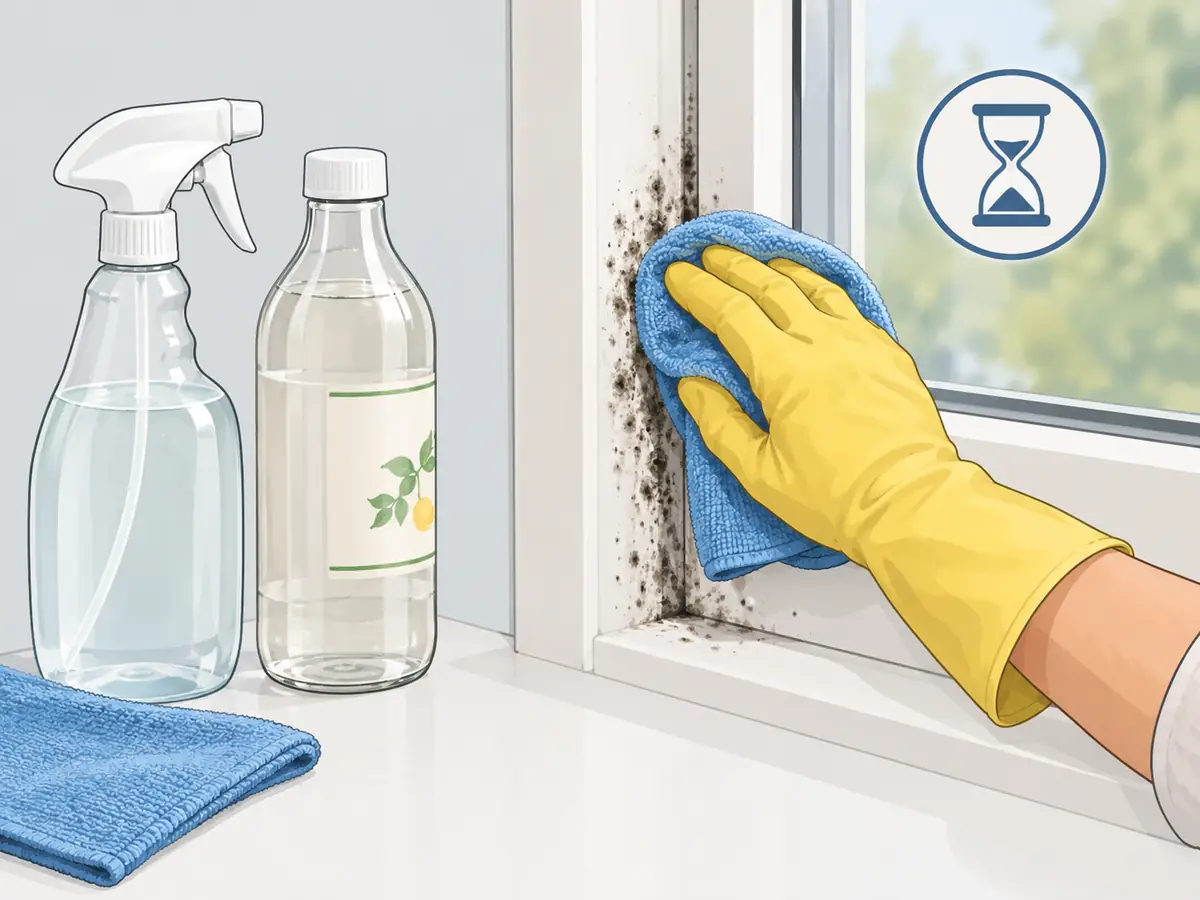 White vinegar is mildly acidic (around 5% acetic acid), which helps break down and lift mold from non-porous surfaces.
- Mix 4 parts white vinegar to 1 part water in a spray bottle.
- Spray onto a microfiber cloth.
- Wipe the mold, then leave the area damp for about an hour.
- Wipe again with a clean, damp cloth and dry.
Vinegar has a strong smell that fades as it dries. It does not always remove dark staining, and it will not work on mold that has grown deep into soft, damaged wood.
Dish soap and water
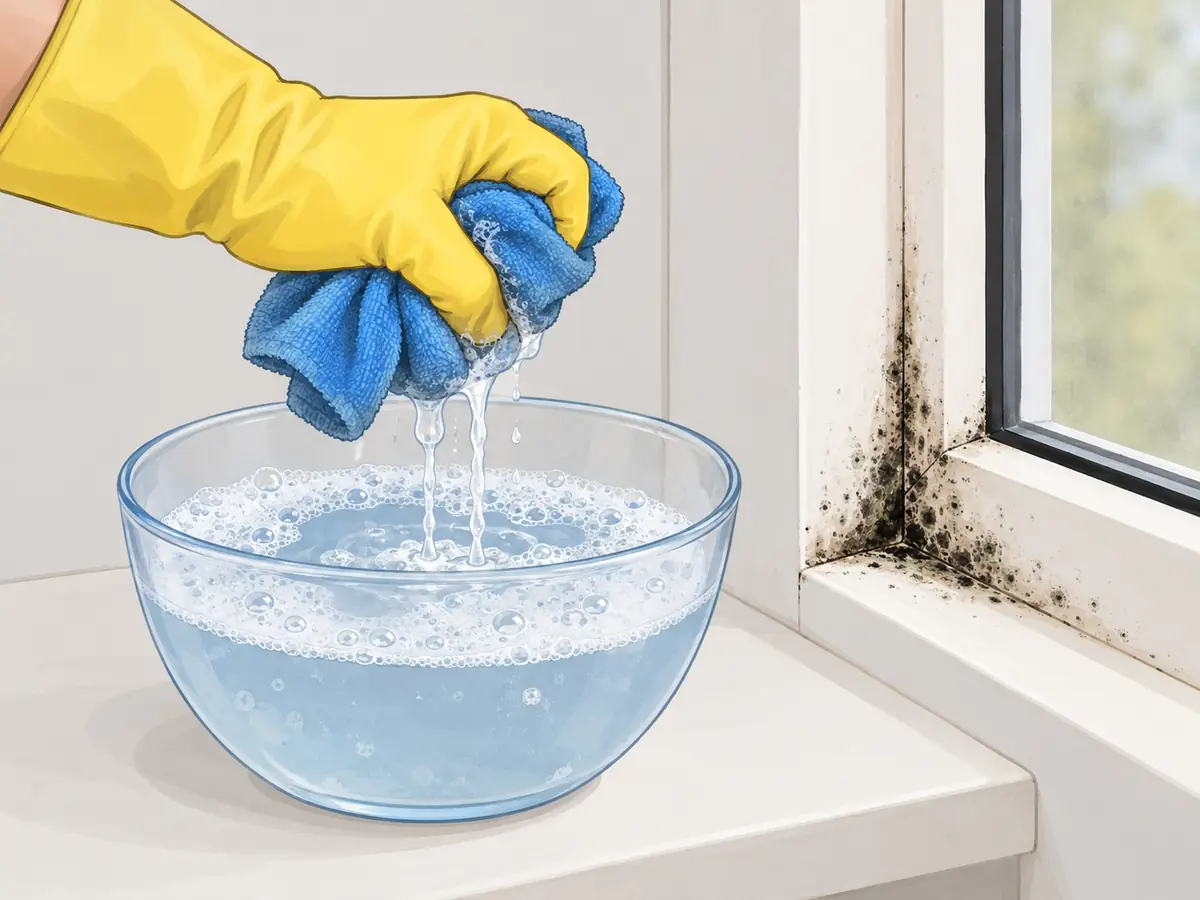 Mild detergent is the safest first choice on every frame type. It does not “kill” mold the way marketing claims for sprays do, but the EPA’s own guidance is that physical removal with detergent and water, followed by drying, is what matters. Dead mold left on a surface can still cause allergic reactions, so removing it is the real goal.
Hydrogen peroxide
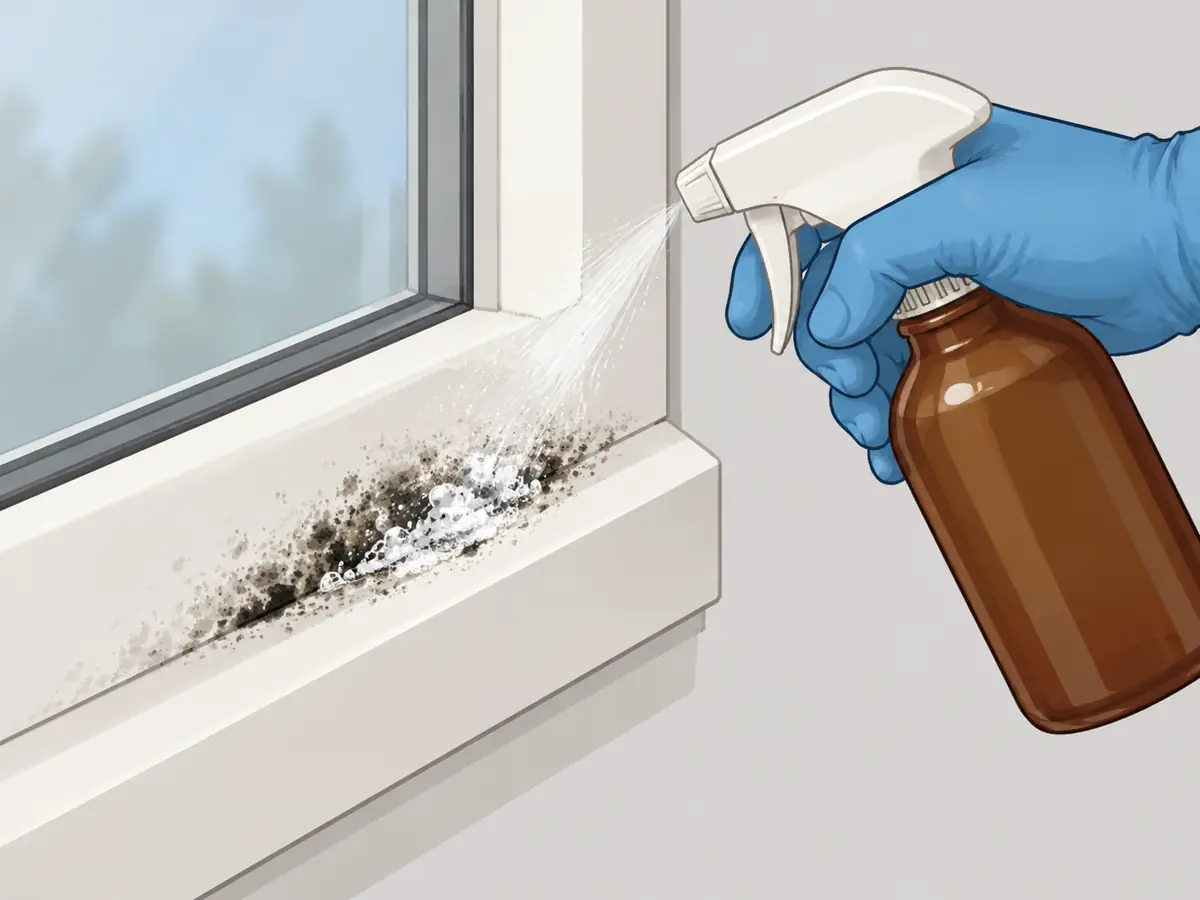 Household 3% hydrogen peroxide works on uPVC, vinyl, aluminum and rubber seals. Spray it on, leave for 10 minutes, wipe and dry. It has a mild bleaching effect, so test on a hidden part of painted or wooden frames.
Baking soda
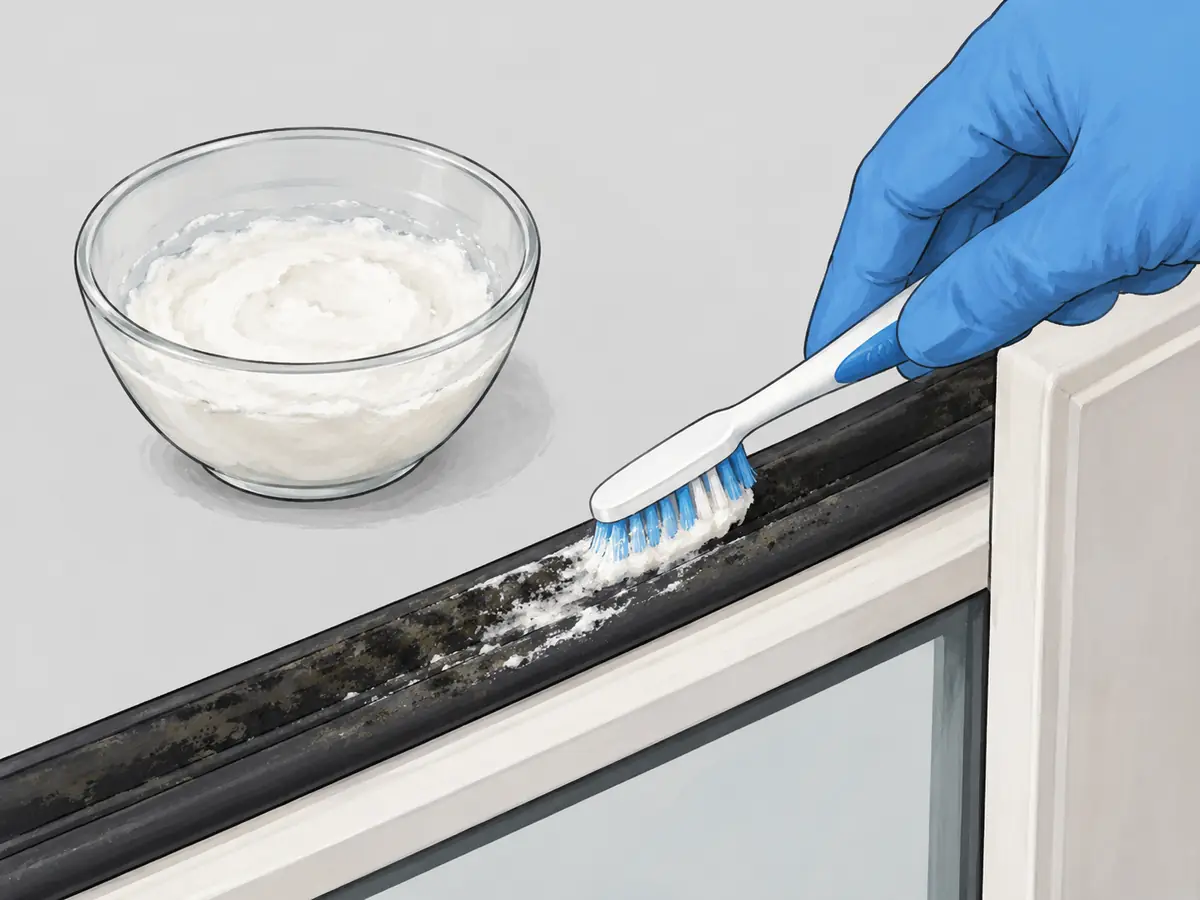 Baking soda is a mild abrasive that helps lift mold from seal folds and corners. Mix 1 tablespoon into a cup of water, or make a thin paste for stubborn spots, and brush gently. Rinse well, because dried residue leaves a white film. Avoid rubbing it hard on glossy uPVC or painted finishes.
Tea tree oil and essential oils
 Tea tree oil is popular online, but results vary and the oil can leave greasy residue on frames. Treat it as optional, not as a replacement for proper cleaning and drying.
Bleach and Commercial Mold Removers
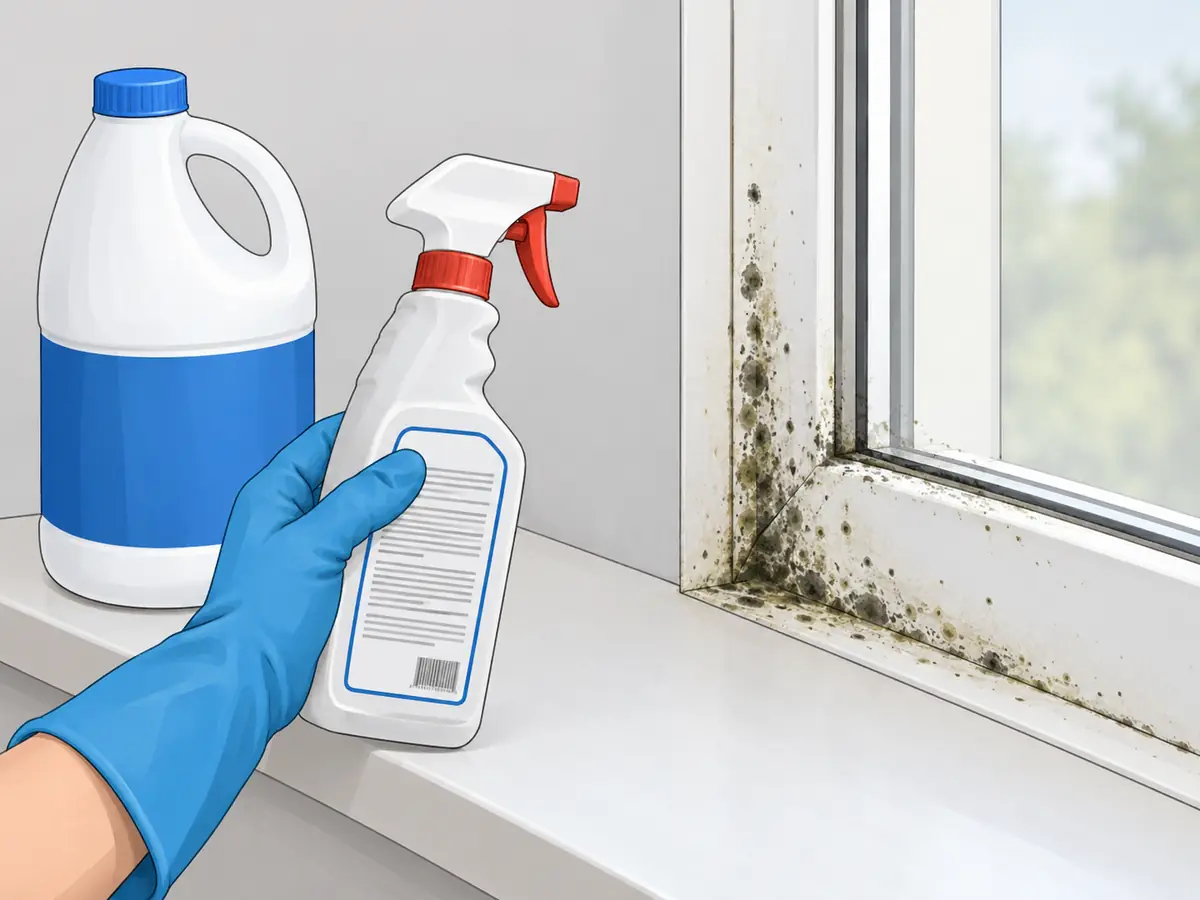
Should you use bleach on window frames?
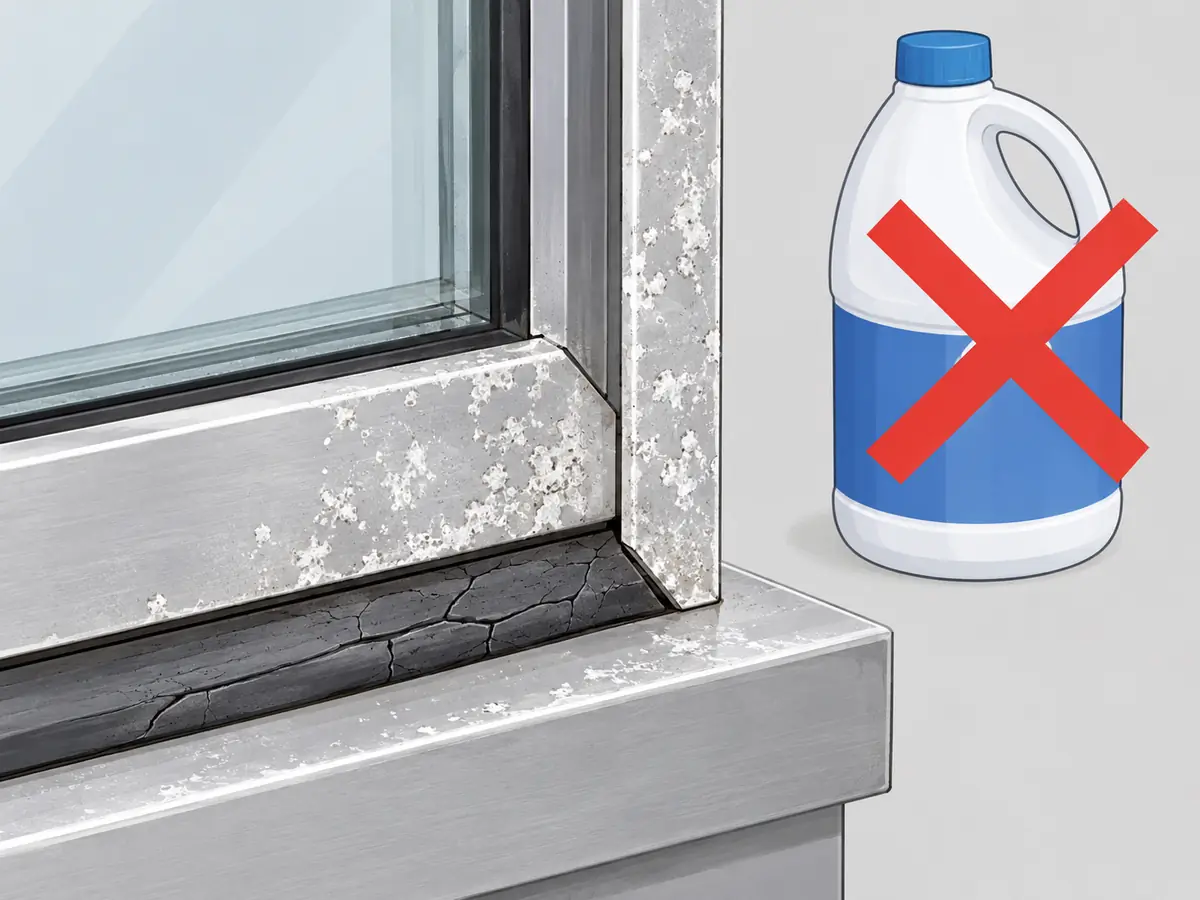 Usually not. Bleach is good at removing the color of mold, which is why it looks effective. But it has three problems on window frames:
- It corrodes aluminum and can pit metal hardware such as hinges and handles.
- It cannot soak into porous wood effectively. The chlorine stays on the surface while the water in it soaks in, which can feed the mold under the surface.
- It degrades rubber seals over time, which causes the leaks that bring mold back.
The EPA states that using biocides like chlorine bleach is not routinely recommended during mold cleanup. If you do use a bleach-based product on white uPVC to lift a stain, choose one made for that surface, follow the label exactly, ventilate the room and rinse thoroughly.
How to choose a commercial mold remover
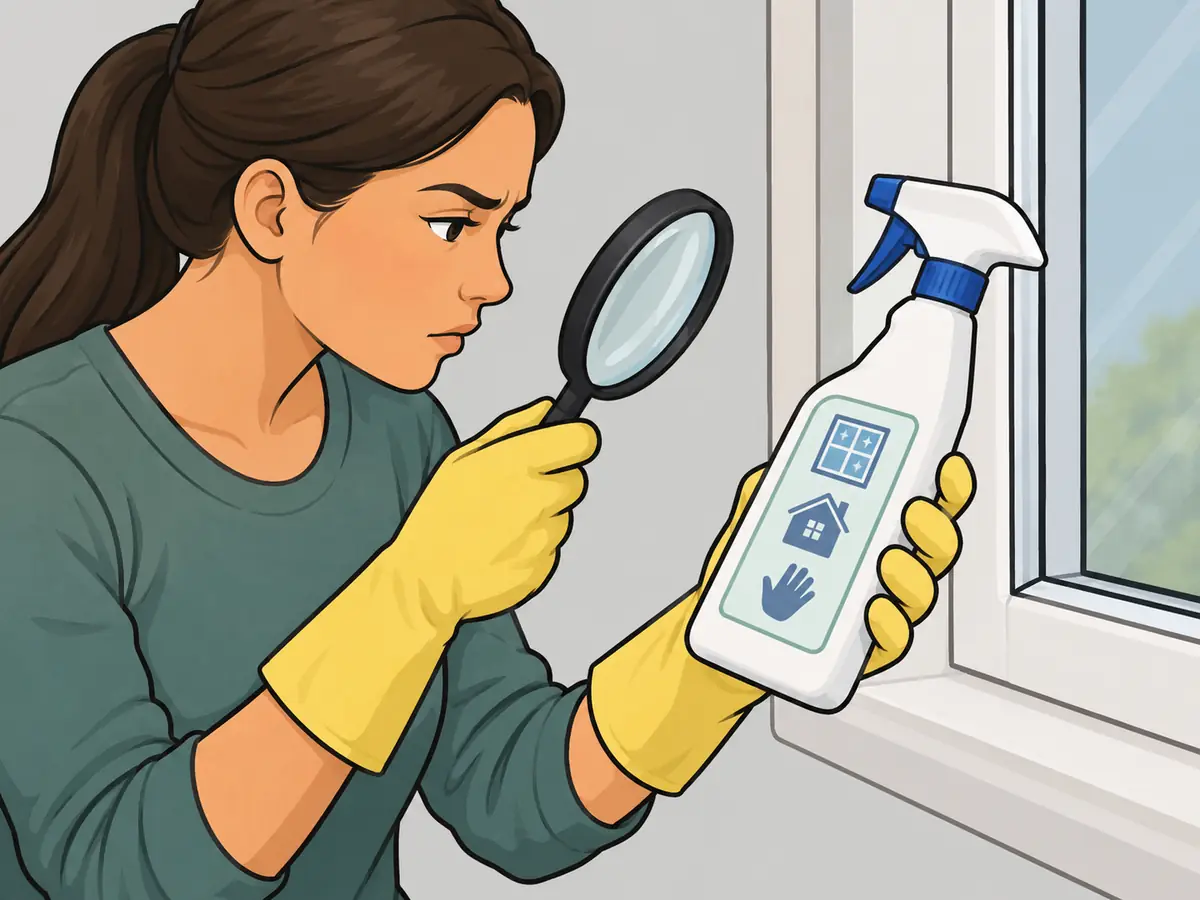 Read the label for three things:
- Surface approval: it must list your frame material (wood, PVC, metal, painted surfaces).
- Indoor use: outdoor fungicides and roof or patio cleaners are not for use in living spaces.
- Dwell and rinse instructions: leaving a product on longer than stated does not make it work better, and it can damage the finish.
Wear the protective equipment the label lists, keep the room ventilated, and never combine a commercial remover with vinegar, bleach or any other cleaner.
How to Get Rid of Black Mold on Window Frames
Black mold on window frames is usually Cladosporium or Aspergillus, two very common indoor molds that love condensation. You cannot identify mold from its color, though, and “black mold” in the news usually refers to Stachybotrys, which needs wet material like drywall or wood for weeks and is rare on frame surfaces alone.
The removal method is the same as the 7 steps above. Black mold tends to grip harder in seal folds and corners, so:
- Let the solution sit for 10 minutes before wiping.
- Use a soft toothbrush in corners and gasket grooves.
- Expect a second clean for deep corners.
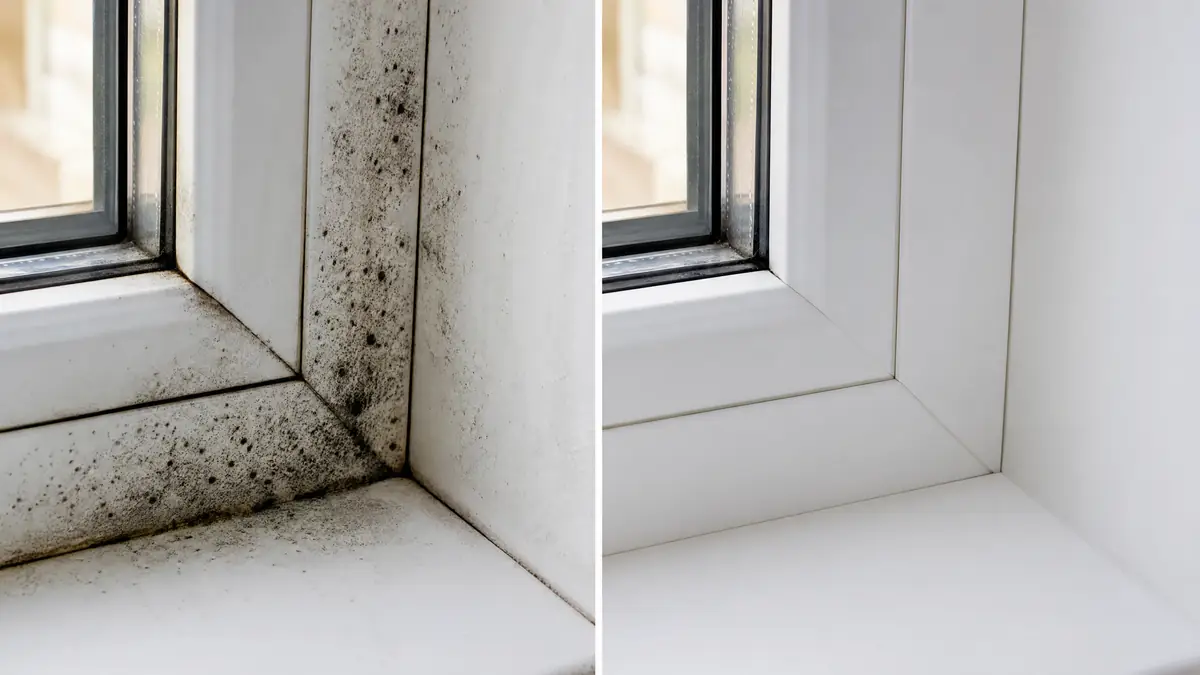
Black mold on white window frames
 White uPVC and painted frames show black mold more than any other surface. Clean with detergent first, then 3% hydrogen peroxide for remaining marks. If grey shadows stay after two cleans, the mold has stained the plastic or paint. That is cosmetic staining, not active growth. A dedicated uPVC cleaner can lift it, and our guide to removing mold on uPVC window frames walks through stain removal without yellowing the plastic. A painted frame can be repainted with a mold-resistant paint once it is clean and fully dry.
Black mold in window seals
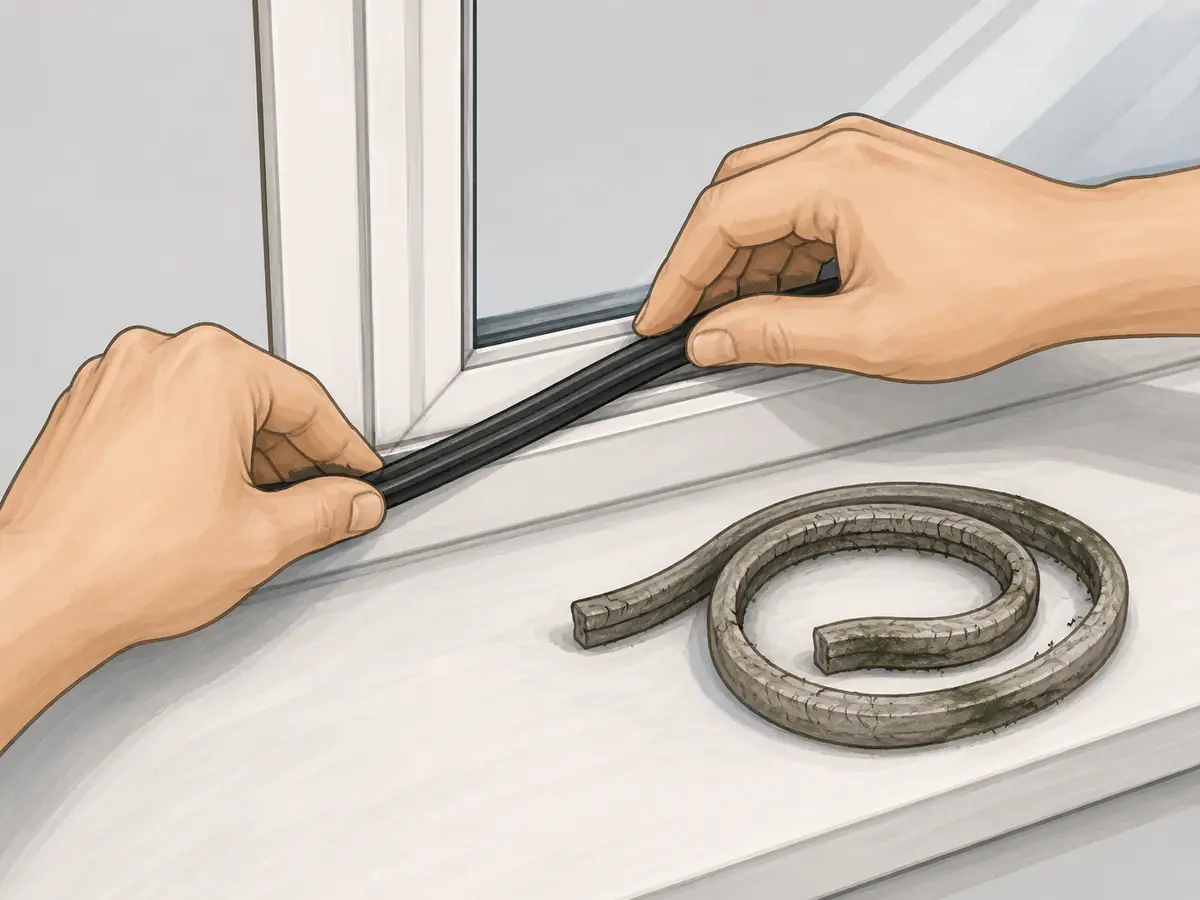 Rubber seals are porous enough that mold can grow into them. Clean them with detergent or vinegar and a soft brush. If black spots remain inside the rubber after cleaning, or the seal is cracked, hardened or pulling away, replace it. Replacement window gaskets are cheap and press into the channel, and a failed seal is a common cause of water getting in.
Green and white mold
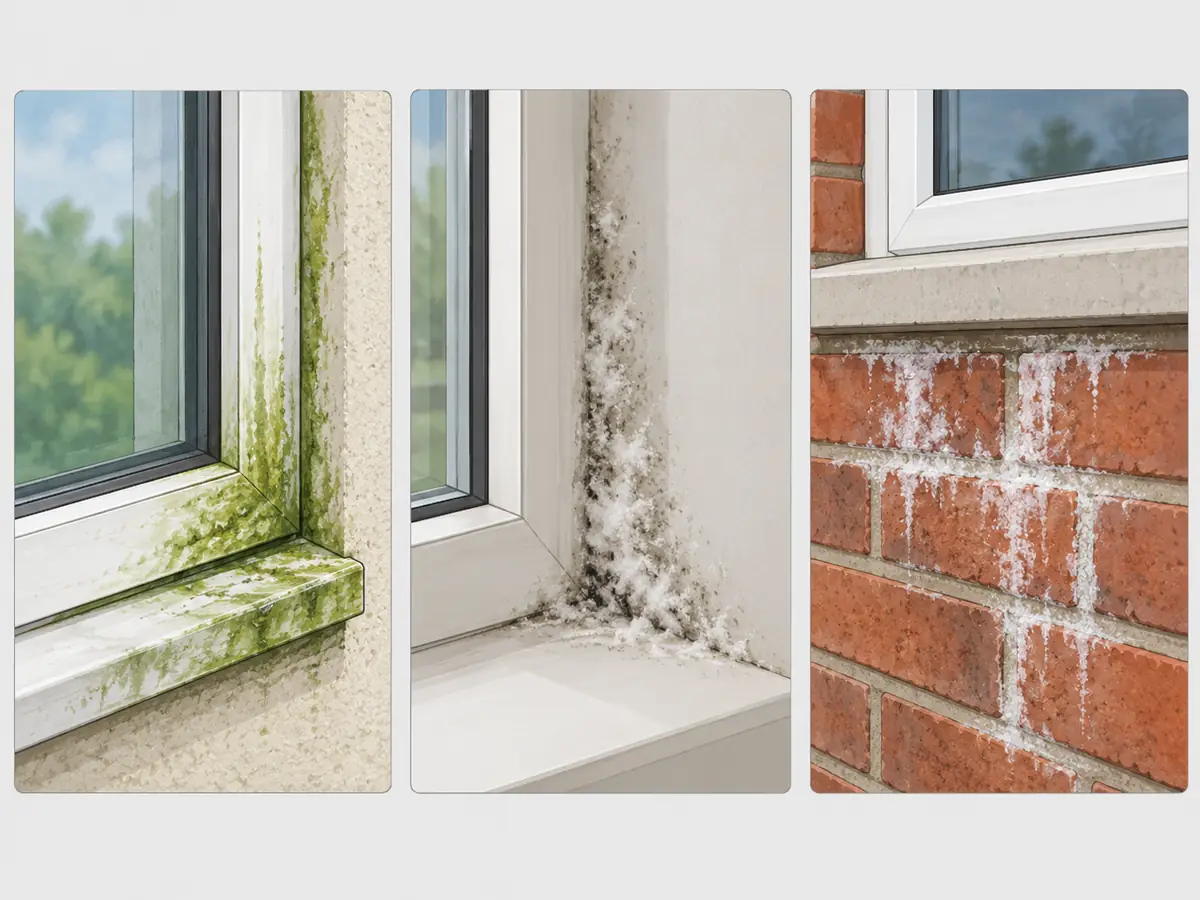 Green growth on the outside of a frame is often algae, not mold, especially on north-facing or shaded windows. Inside, it is usually mold. Clean both the same way.
White fuzzy growth is often early-stage mold. White crystals that turn to powder when touched are efflorescence: salt deposits left by water moving through masonry around the window. Efflorescence does not grow, but it is a sign water is coming through the wall.
How to Remove Mold From Different Window Frame Materials
Wooden window frames
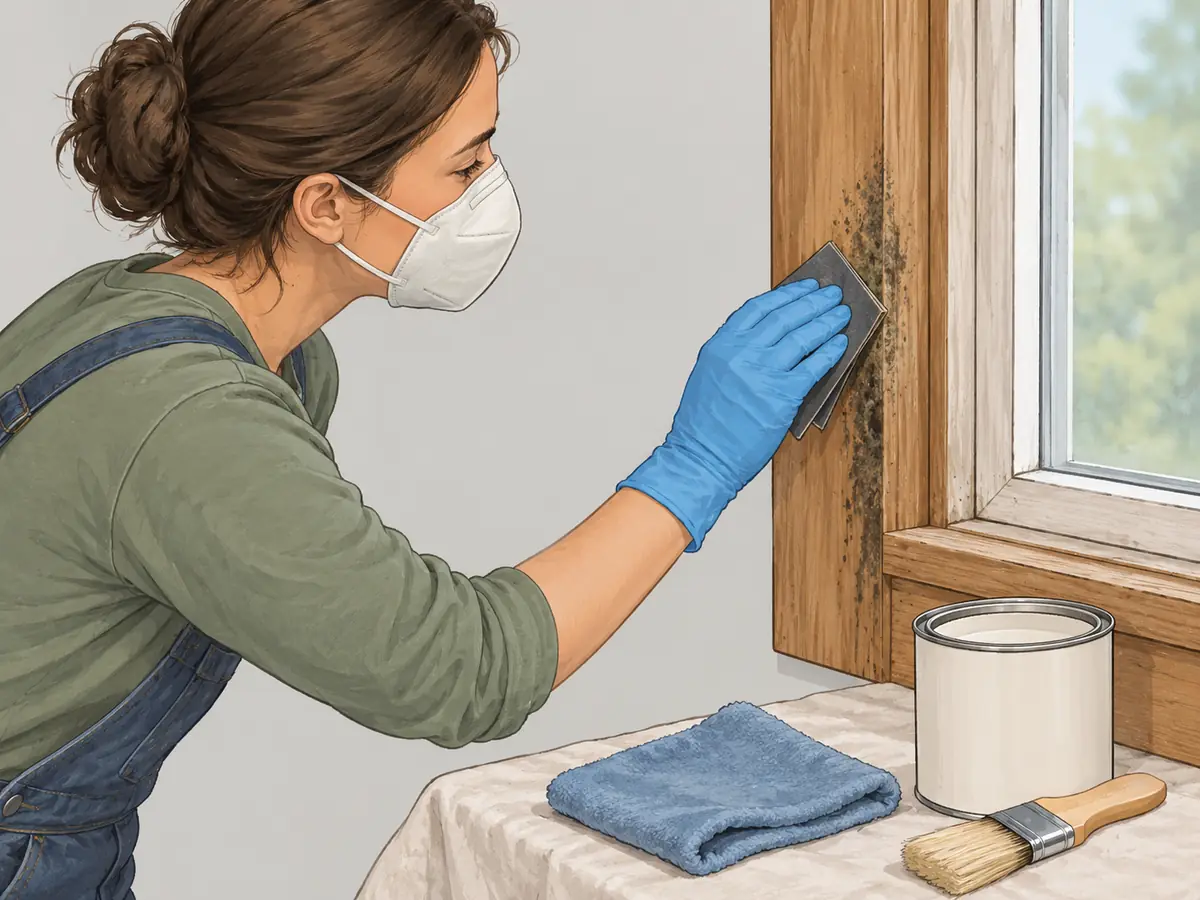 Wood is the frame most at risk, because mold can grow into the grain wherever the paint or varnish is cracked. The basics are below, and our complete guide to mold on wooden window frames covers sanding, rot repair and resealing in detail.
- Clean with detergent or vinegar on a damp, not wet, cloth.
- Dry immediately and leave the window open to air dry.
- If dark marks stay after cleaning, sand the surface lightly with fine (120 to 180 grit) sandpaper while wearing a respirator, then wipe the dust away with a damp cloth. Do not sand old paint in a pre-1978 home without a lead test.
- Once dry, reseal with primer and paint or varnish to stop water getting into the grain.
- Soft, spongy wood is rot. Small areas can be cut out and filled with a two-part wood repair epoxy; large areas mean a new sill or frame section.
uPVC and vinyl window frames
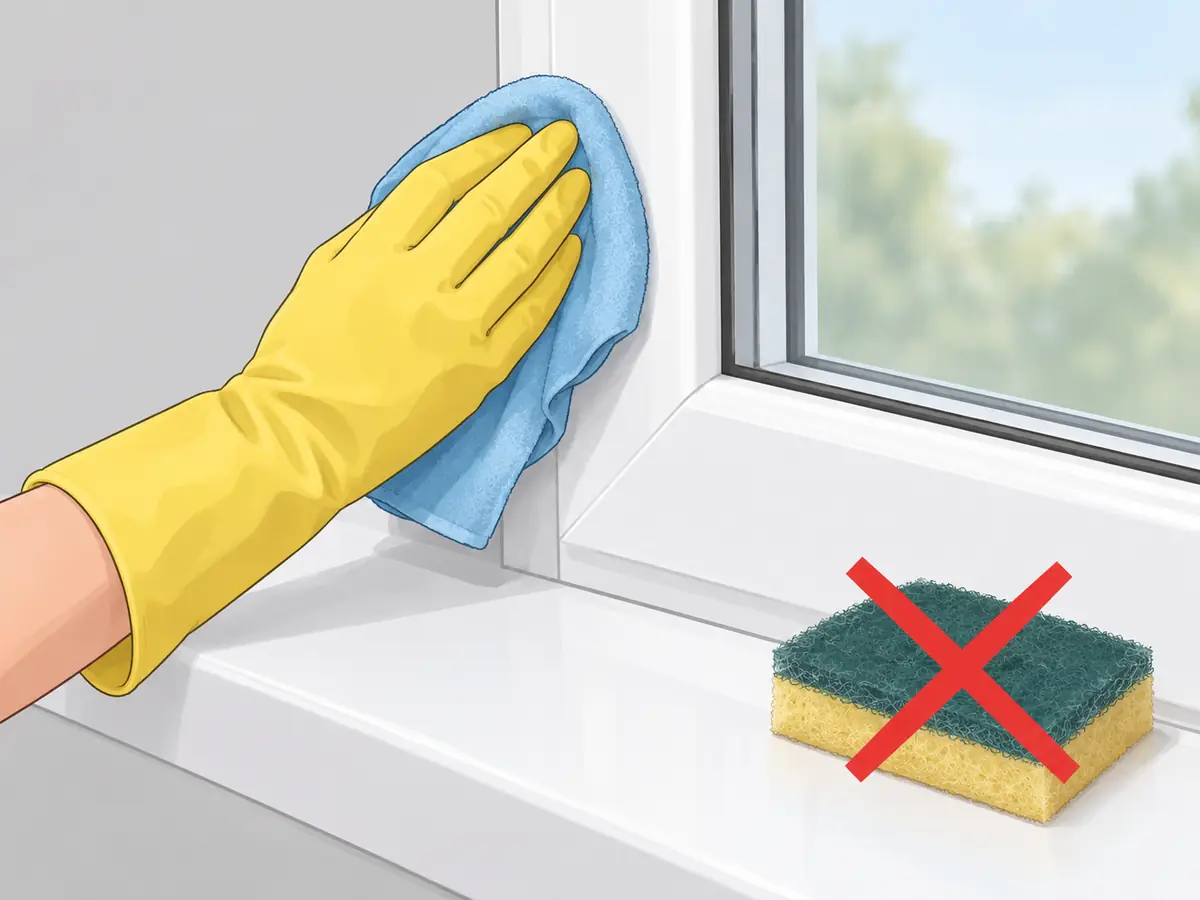 uPVC (common in the UK, Europe and Australia) and vinyl (common in the US) are non-porous, so mold sits on the surface and wipes off easily.
- Clean with detergent or vinegar, then dry.
- Avoid abrasive pads, scouring powders, acetone and other solvents, which dull and yellow the surface.
- Focus on the seals, tracks and drainage slots, which is where uPVC windows actually grow mold. Most mold on uPVC window frames starts in the gasket groove, not on the flat face of the frame.
Aluminum window frames
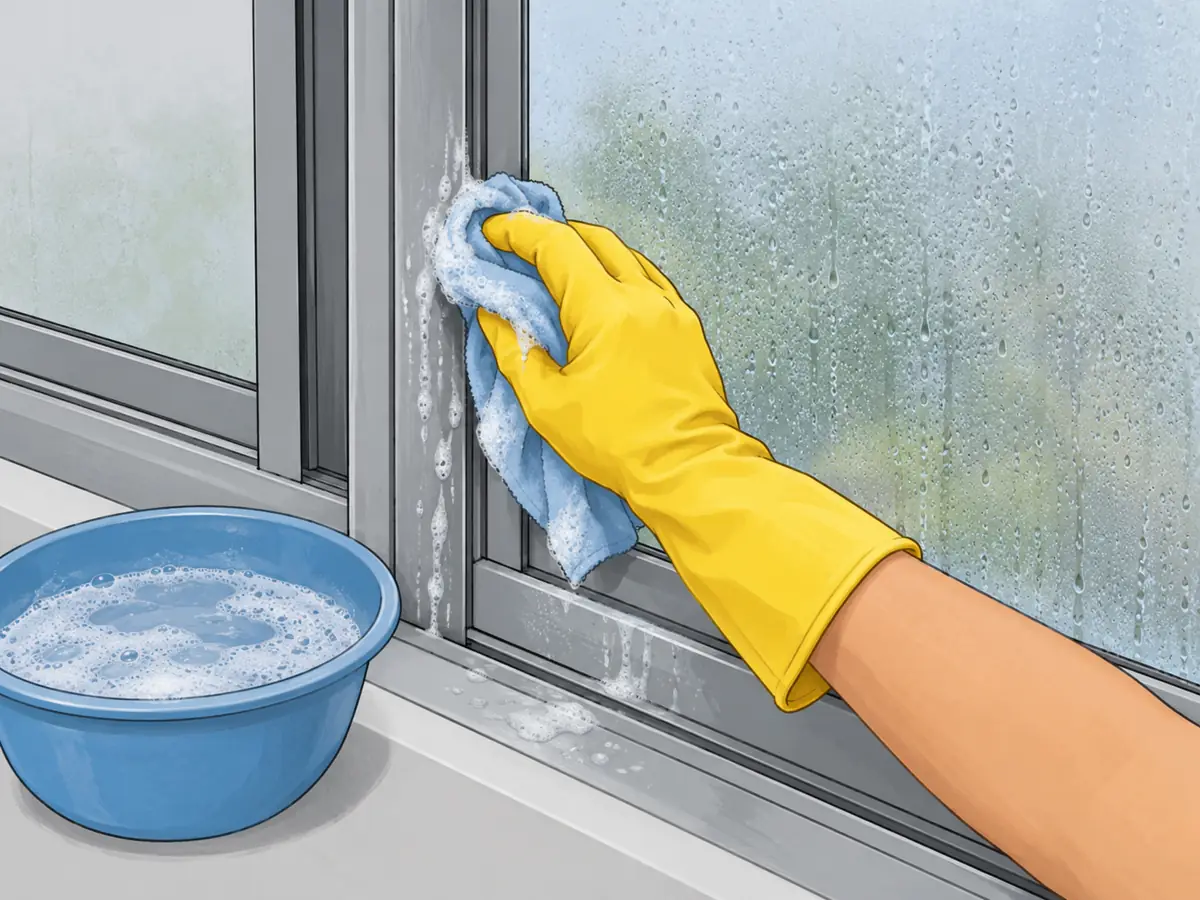 Aluminum frames are the coldest frame type because metal conducts heat out of the room. That makes them condensation magnets, especially older frames without a thermal break, and it is why mold on aluminum window frames usually comes back every winter until the condensation is fixed.
- Clean with detergent and water only, then dry fully.
- Do not use bleach, which corrodes and pits the metal.
- Rinse vinegar off quickly if you use it, as acid can dull anodized finishes.
- White powdery spots that do not wipe away are oxidation (corrosion), not mold.
Painted window frames
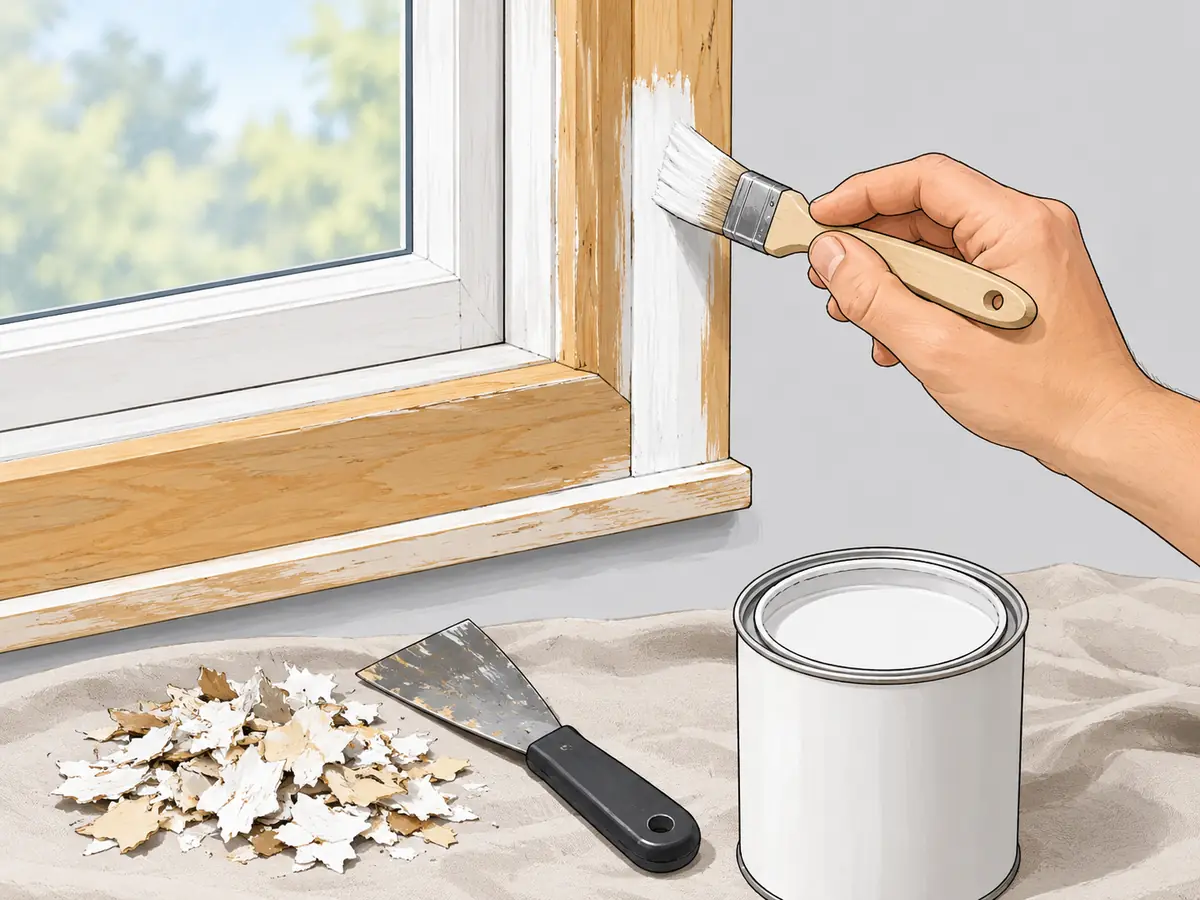
- Use detergent and a soft cloth. Avoid strong solvents and hard scrubbing.
- Blistered or peeling paint means moisture is underneath. Scrape loose paint (after a lead check on older homes), clean, dry fully, prime with a stain-blocking primer and repaint.
- Never paint over mold. It grows back through the new paint, which is the most common reason mold on painted window frames reappears a few months after a fresh coat.
Steel and other metal frames
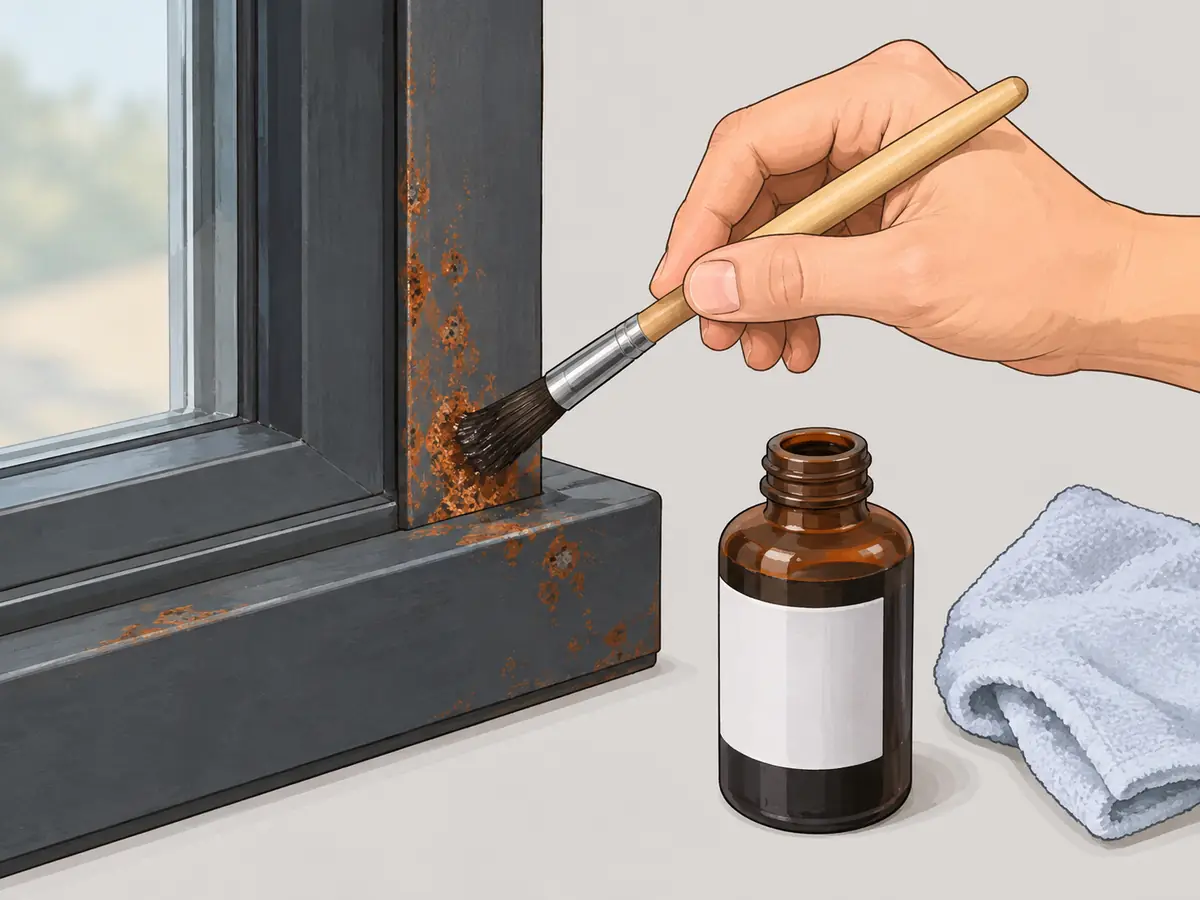 Steel frames rust when mold and moisture sit on them. Clean with detergent, dry, and treat any rust spots with a rust converter before touching up the paint. Composite and fiberglass frames clean the same way as uPVC.
Old wooden window frames
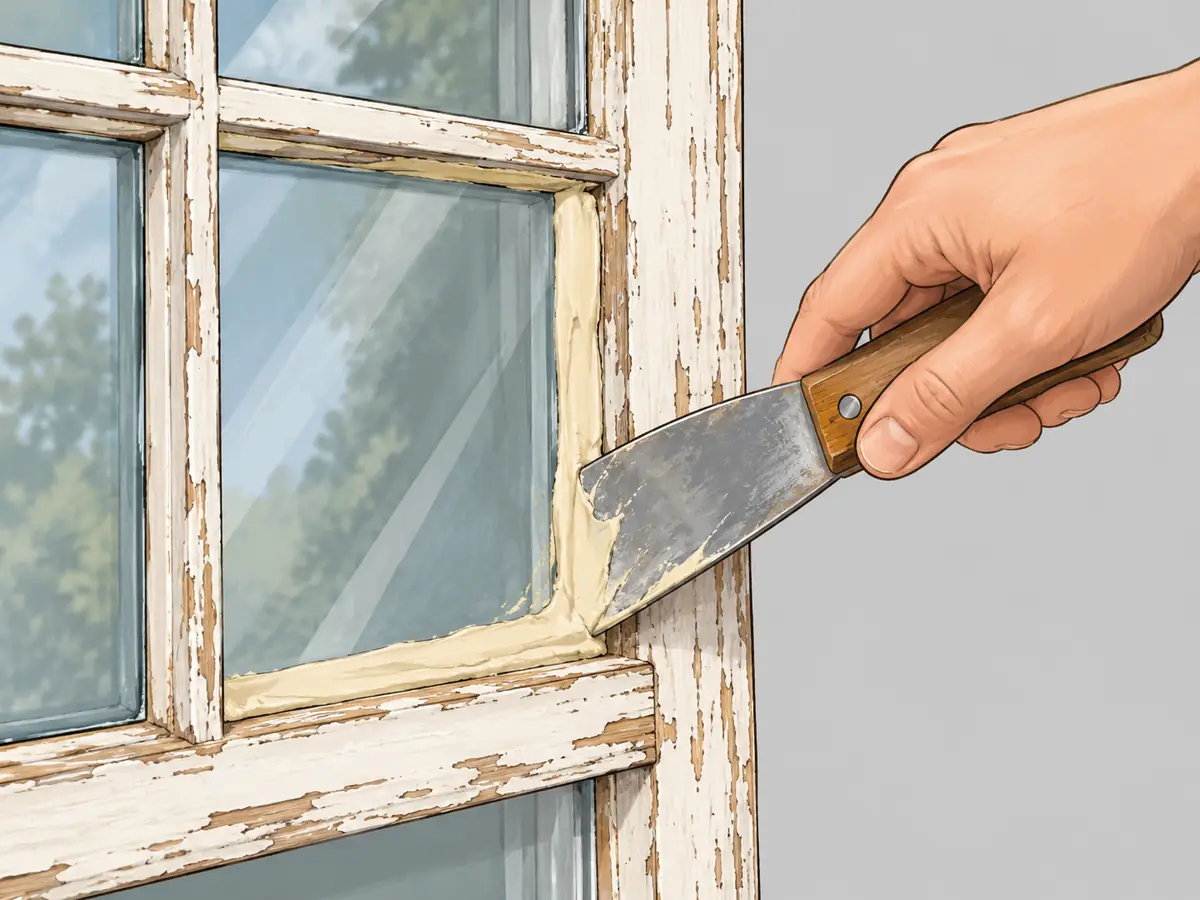 Older sash and casement windows often have loose joints, worn putty and failed paint, which let water into the timber. Clean only sound surfaces, keep water to a minimum, and repair glazing putty and paint before the next wet season. Never dry-scrape old paint.
Why Do Window Frames Get Moldy?
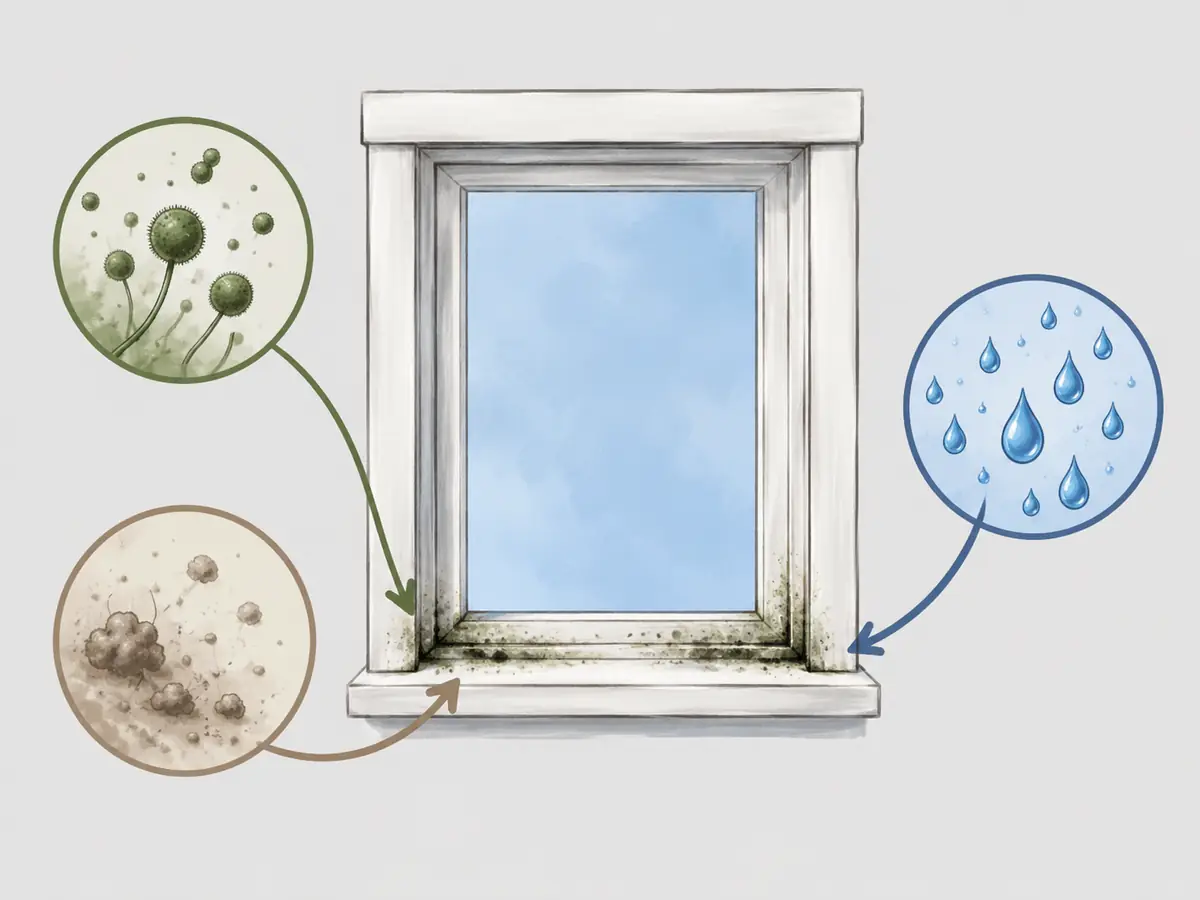
Mold needs three things: spores (always present in air), food (dust, paint, wood, soap residue) and moisture. You cannot remove spores or all the dust, so moisture is the only thing you can control.
Condensation
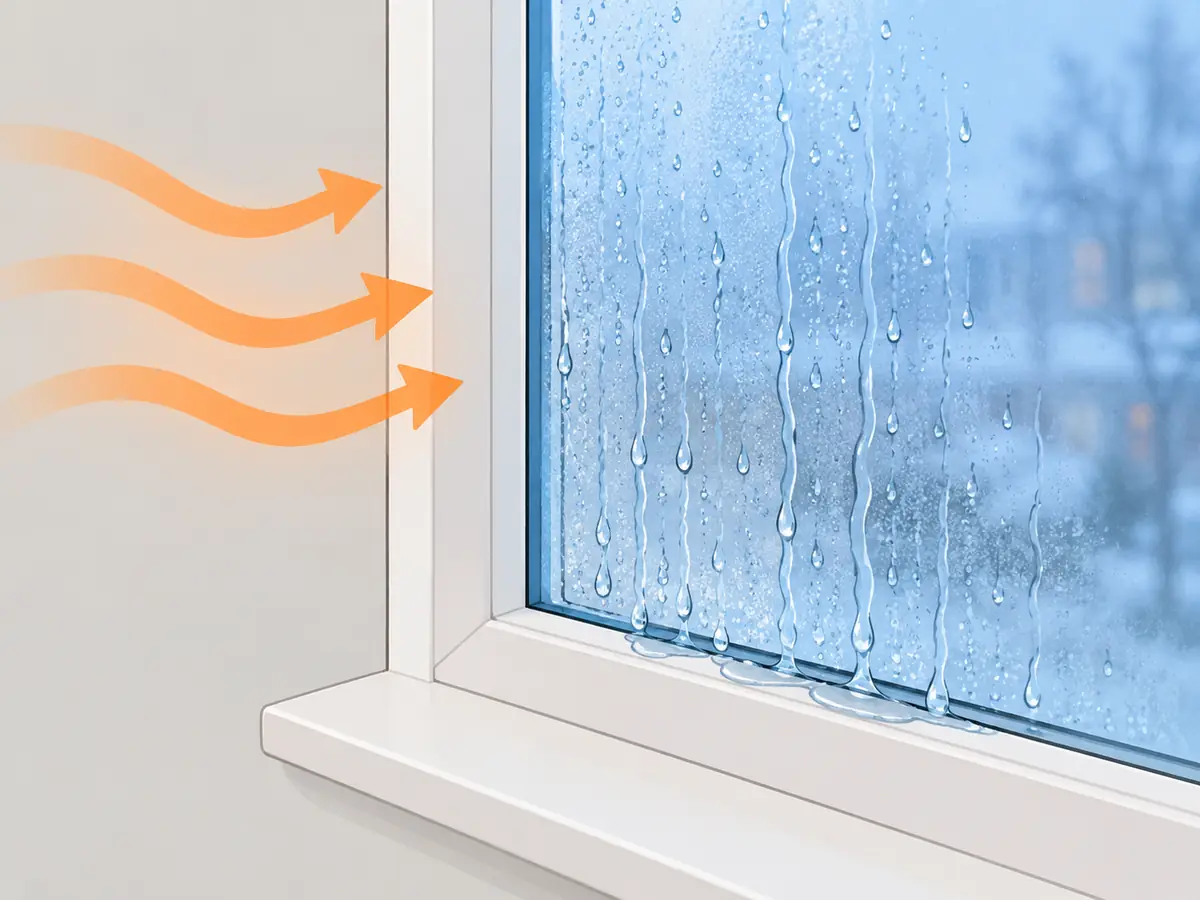 Warm indoor air holds water vapor. When it touches a surface colder than its dew point, the vapor turns into water droplets. Windows are the coldest surface in most rooms, so water forms on the glass, runs down and pools on the bottom rail and sill. Do that every night and the frame never fully dries.
Condensation is worst with:
- Single-glazed windows and aluminum frames without a thermal break
- Failed double glazing (fogging between the panes)
- Cold, dry weather outside and warm, humid air inside
- Bedrooms with the door closed overnight, where breathing adds moisture for hours
High indoor humidity
 Cooking, showering, drying laundry indoors, aquariums, unvented gas heaters and even breathing add water to indoor air. A family of four can add several liters of water to the air every day. If that moisture cannot escape, it ends up on the windows.
Poor ventilation
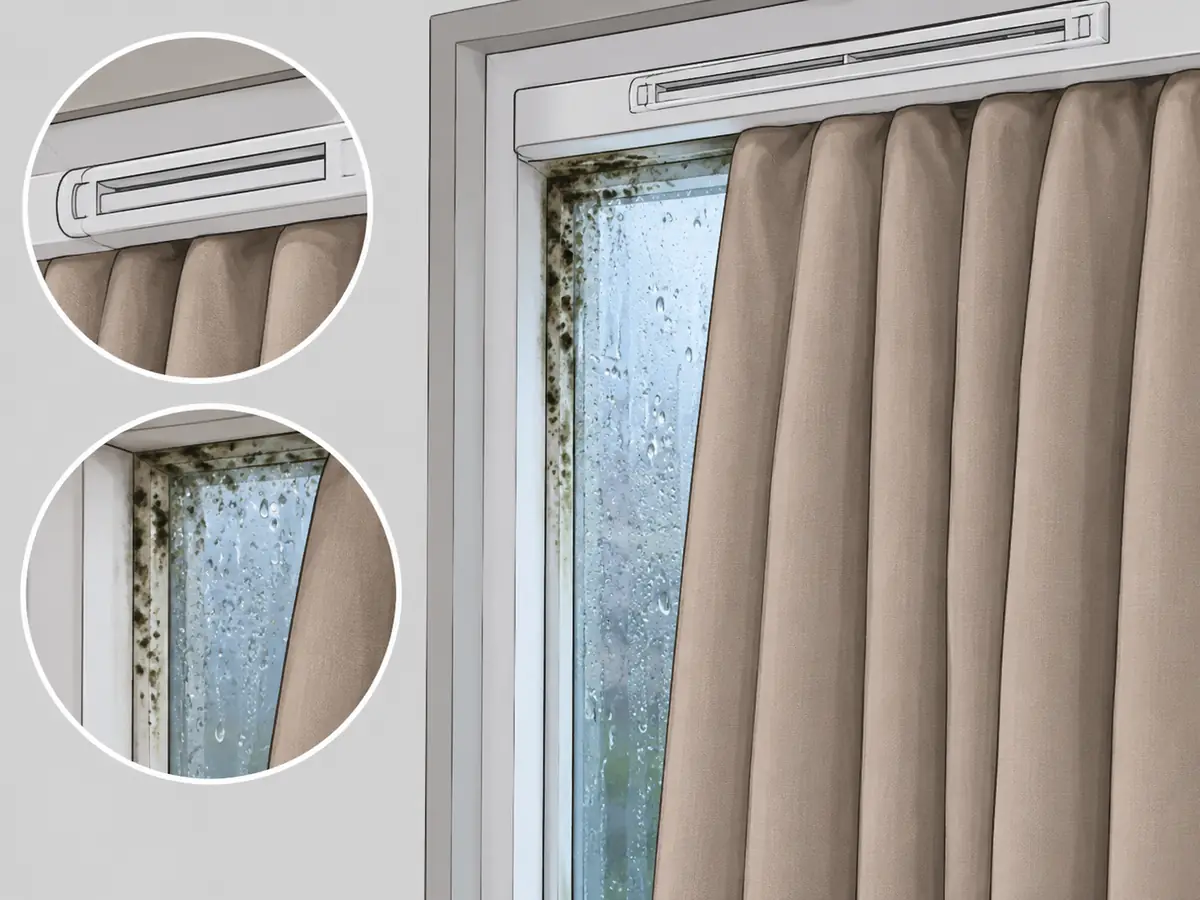 Sealed modern homes trap moisture. Closed trickle vents, kitchens without range hoods, bathrooms without exhaust fans and heavy curtains pressed against the glass all keep humid air sitting against the frame.
Leaks and water entry
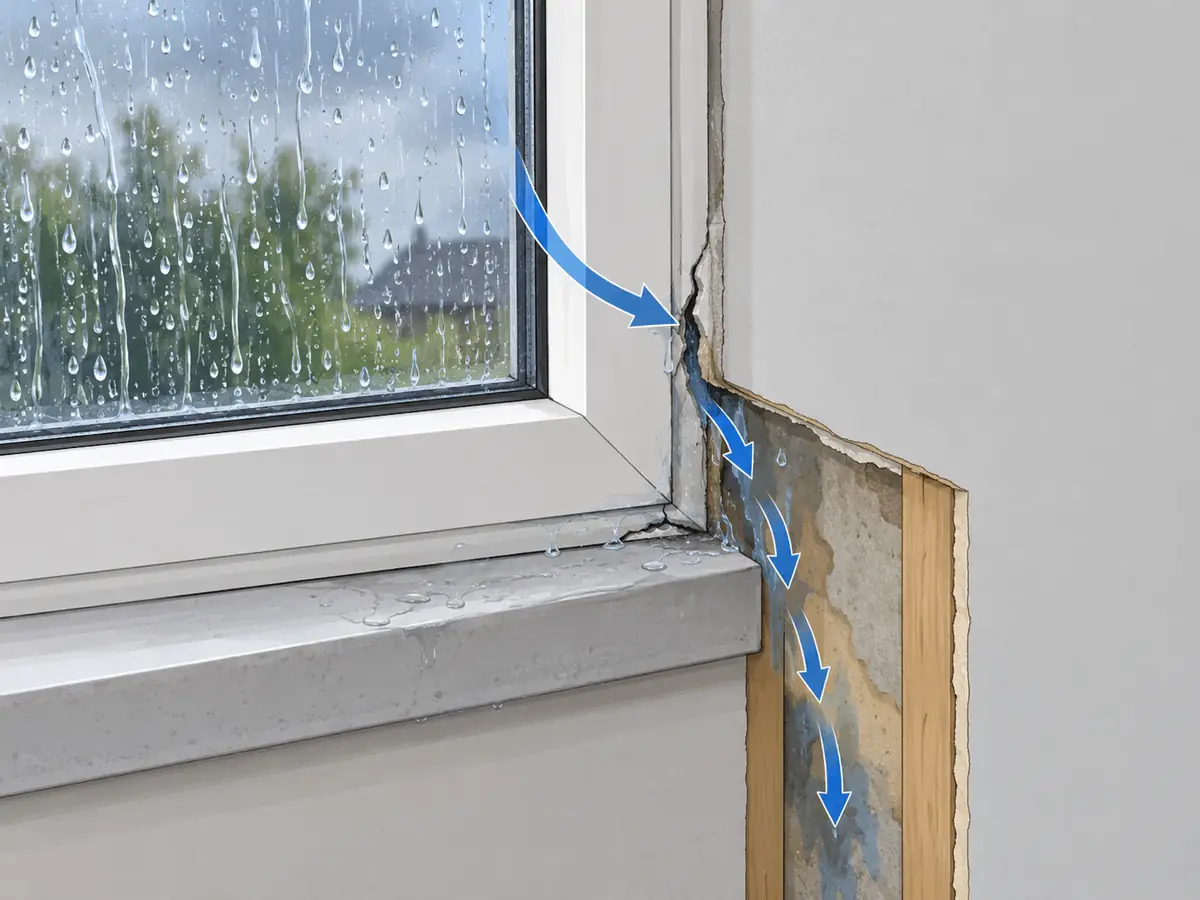 Rainwater can get in through cracked caulk around the outside of the frame, failed seals, blocked weep holes, missing flashing over the window or cracks in the wall. Leaks often cause mold in the corners of the frame and on the wall underneath, not just on the glass.
Mold between the window frame and the wall
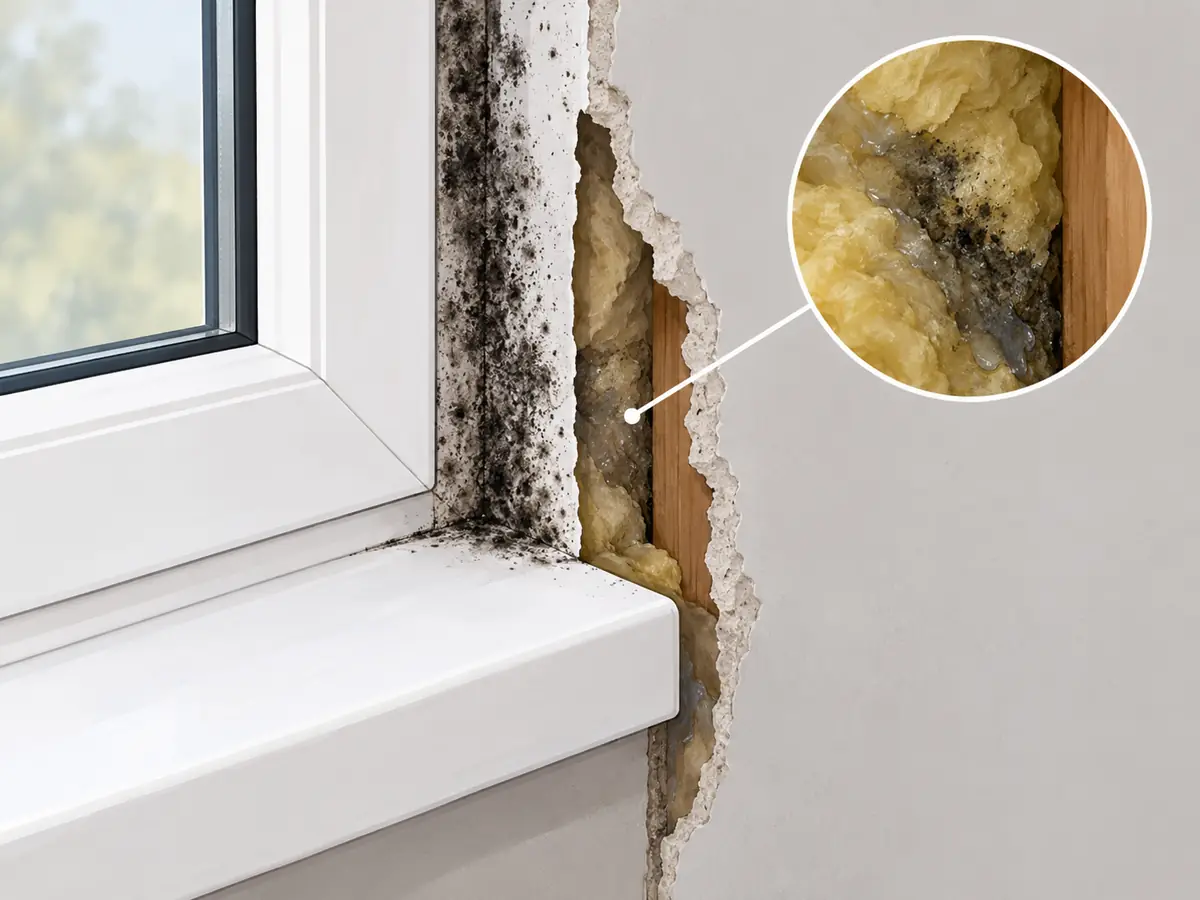 Mold in the joint where the frame meets the wall or plaster usually means water is getting behind the frame or condensing on a cold spot in the wall (a thermal bridge). Cleaning the visible edge will not reach it. Do not seal over it with new caulk. Find the water path first: our guide to mold between window frame and wall shows how to trace it and when the plaster needs opening up.
Condensation or Leak? 60-Second Diagnosis

Answer each question and count your answers.
| Question | Points to condensation | Points to a leak |
|---|---|---|
| When is the frame wet? | Mornings, cold weather | After rain, any season |
| Where is the water? | On the glass and bottom rail | Corners, top of the frame, wall below |
| Is the glass wet on the inside? | Yes, droplets on the inside pane | No, glass is dry |
| Does it affect several windows? | Yes, many windows, worse in bedrooms and bathrooms | Usually one or two windows |
| Is there staining on the wall or ceiling near the window? | No | Yes, or bubbling paint |
| What does a hygrometer read? | Above 60% relative humidity | Normal humidity |
Mostly condensation: follow the humidity and ventilation steps below. Mostly leak: check outside caulking, seals, weep holes and flashing, and book a window or roofing repair if you cannot find the entry point. Mixed: you may have both. Fix the leak first, then reduce humidity.
Mold on Bedroom, Bathroom and Kitchen Window Frames
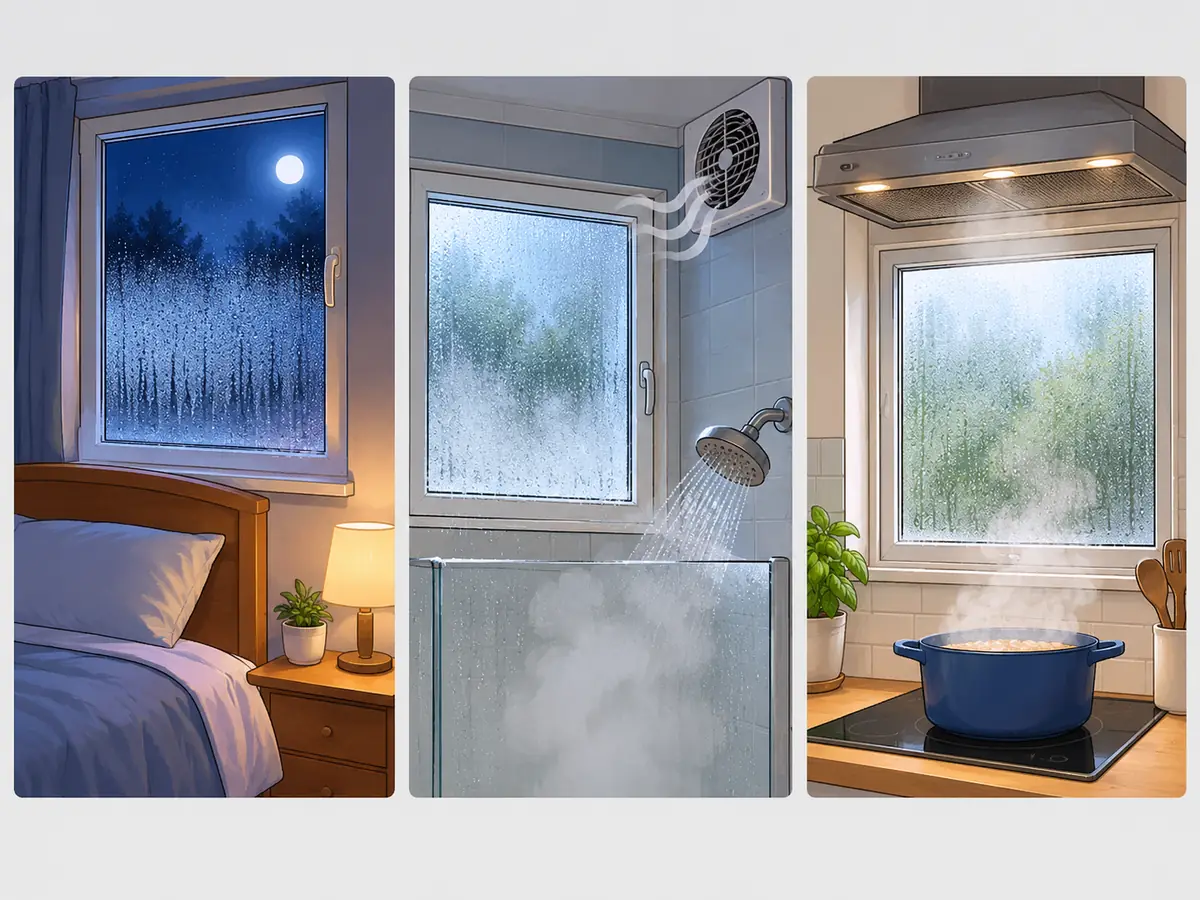
The room tells you a lot about the cause.
Bedrooms: bedroom windows are the most common place for black mold on window frames, because two adults breathe out a lot of moisture overnight in a closed room. Mold here is almost always condensation. Open the door or a trickle vent at night, pull curtains a few inches away from the glass, and wipe the window each morning in winter.
Bathrooms: showers produce the most humidity in the house. Run the exhaust fan during the shower and for 20 to 30 minutes after. Squeegee the glass and wipe the frame after each shower. If the bathroom has no fan, open the window after every shower.
Kitchens: boiling and cooking add steam. Use a range hood vented outside and keep lids on pots.
Inside face of any window: mold on the inside of window frames is condensation in most homes, and that guide has the room-by-room fixes. If the mold is on the inside face of the outside wall instead, suspect water entry.
How to Stop Mold Coming Back on Window Frames
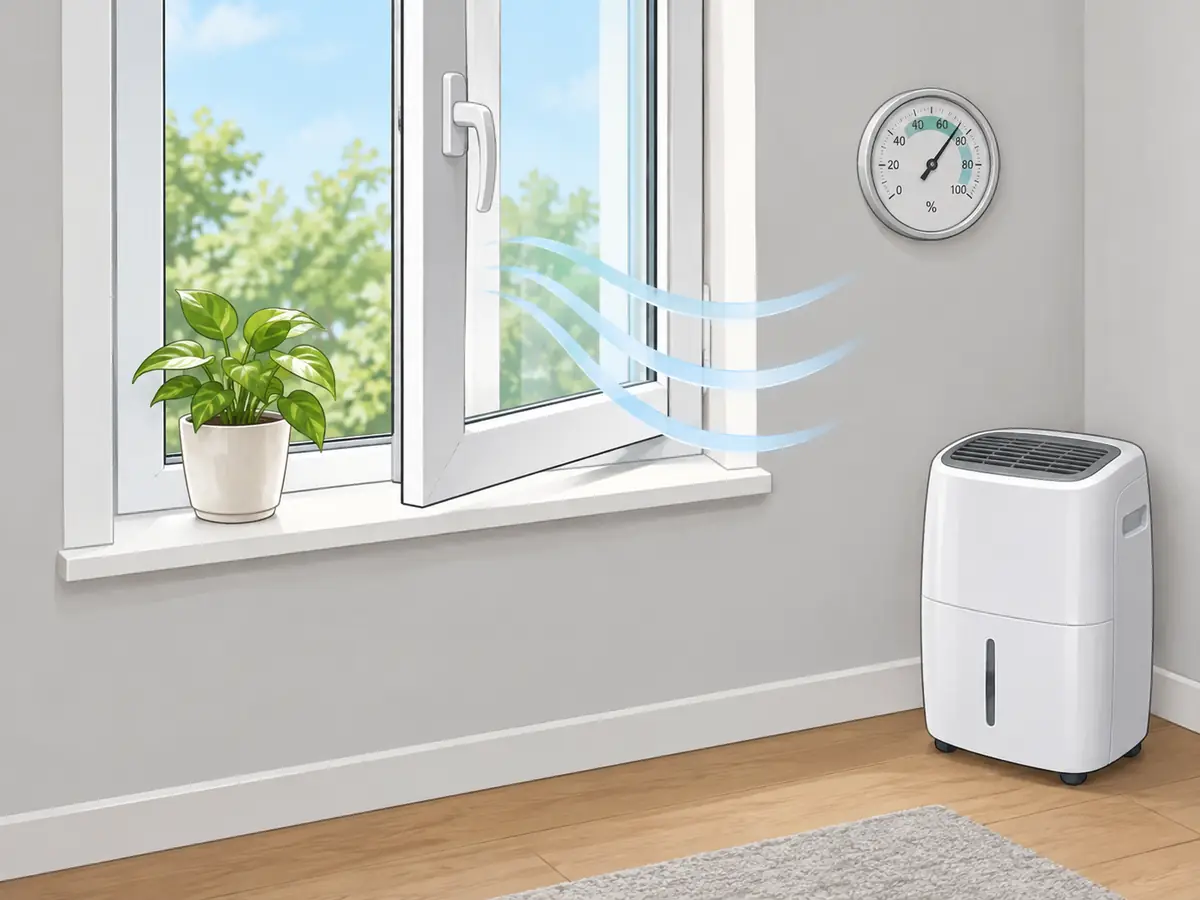
Keep indoor humidity between 30% and 50%
 The EPA recommends keeping indoor relative humidity below 60%, ideally between 30% and 50%. A cheap digital hygrometer tells you where you are. In cold climates you may need to stay near the low end of that range in winter to stop condensation on the glass.
Ventilate every day

- Open windows for 10 to 15 minutes each morning, even in winter.
- Leave trickle vents open.
- Use bathroom and kitchen extractor fans every time.
- Dry laundry outside or in a vented dryer.
Run a dehumidifier in problem rooms
 A dehumidifier in the bedroom or a damp basement room can stop condensation completely. Empty or drain it daily. It treats the symptom, so still fix any leaks.
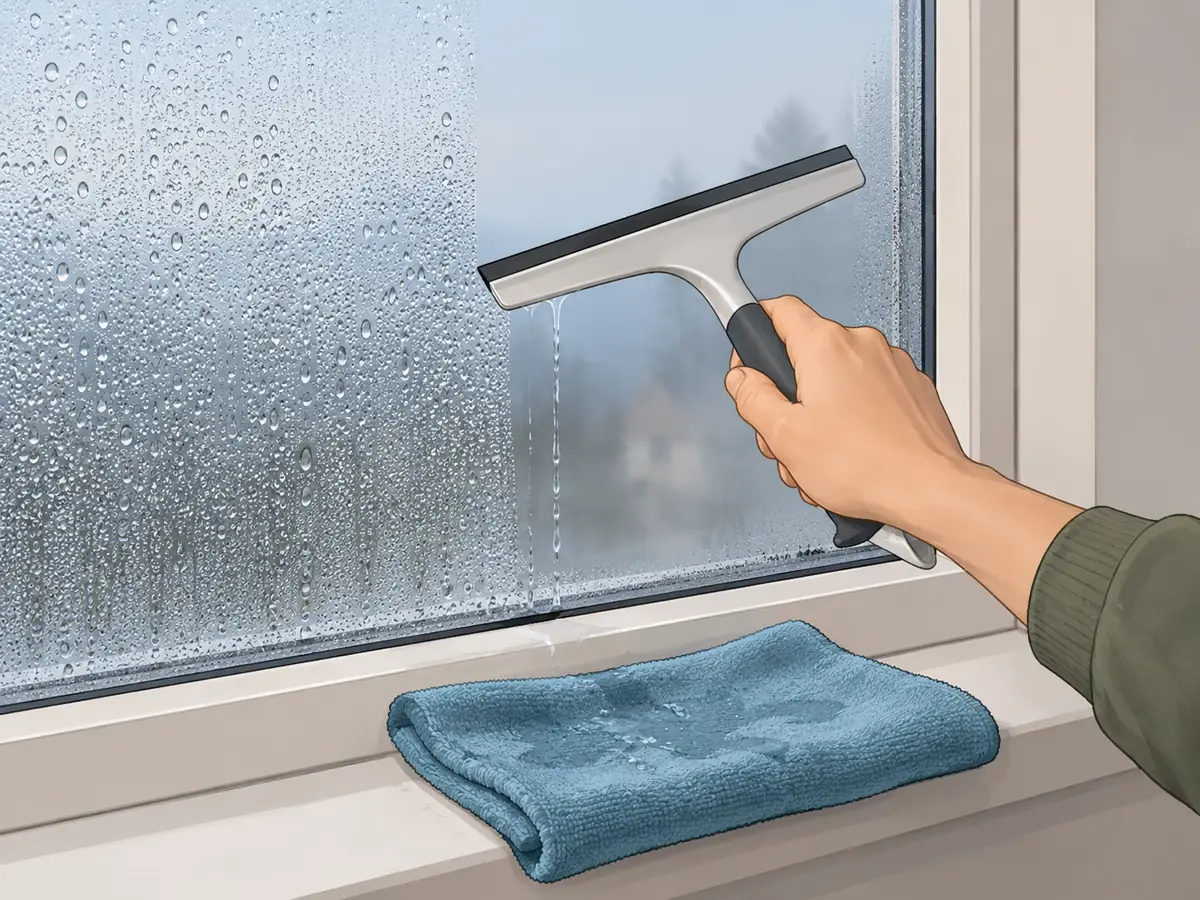
Wipe condensation every morning
A squeegee and a microfiber cloth take 30 seconds per window. Moisture-absorbing window strips along the bottom rail help on windows that sweat heavily.
Keep tracks, seals and weep holes clean
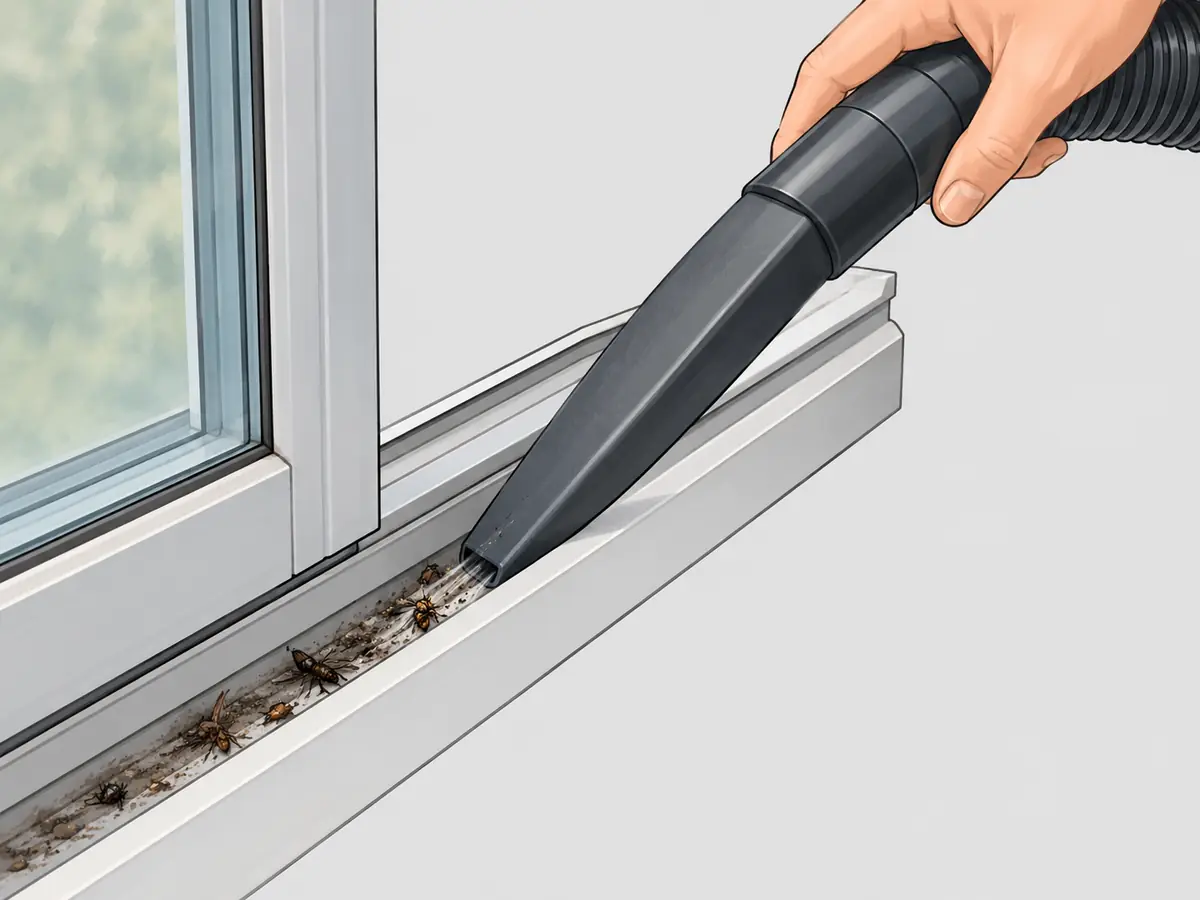 Clean tracks and seals monthly in winter. Clear weep holes twice a year. Dust and dead insects in tracks hold water and feed mold.
Repair seals, caulk and paint
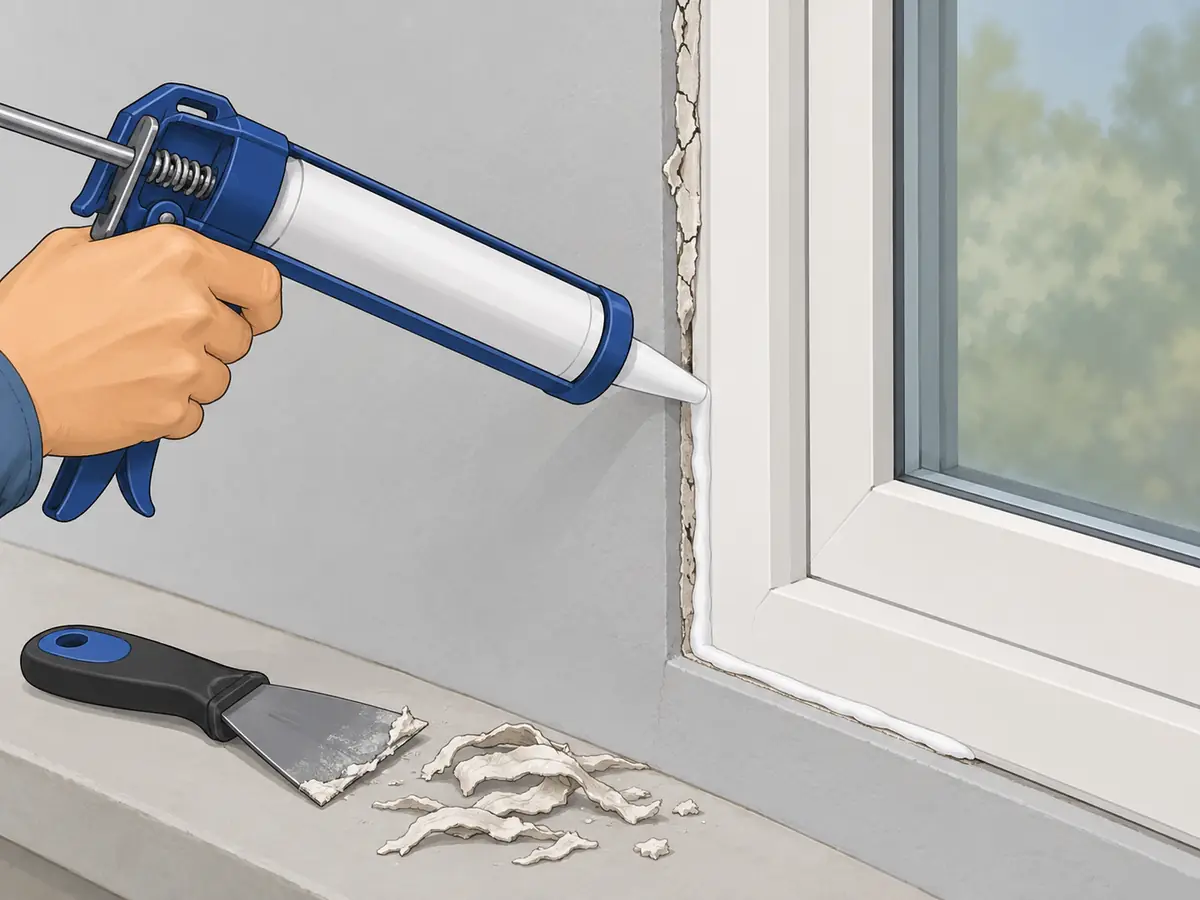 Inspect the outside of every window once a year. Replace cracked caulk, damaged seals and peeling paint. Reseal bare wood as soon as you see it.
Upgrade the window when it makes sense
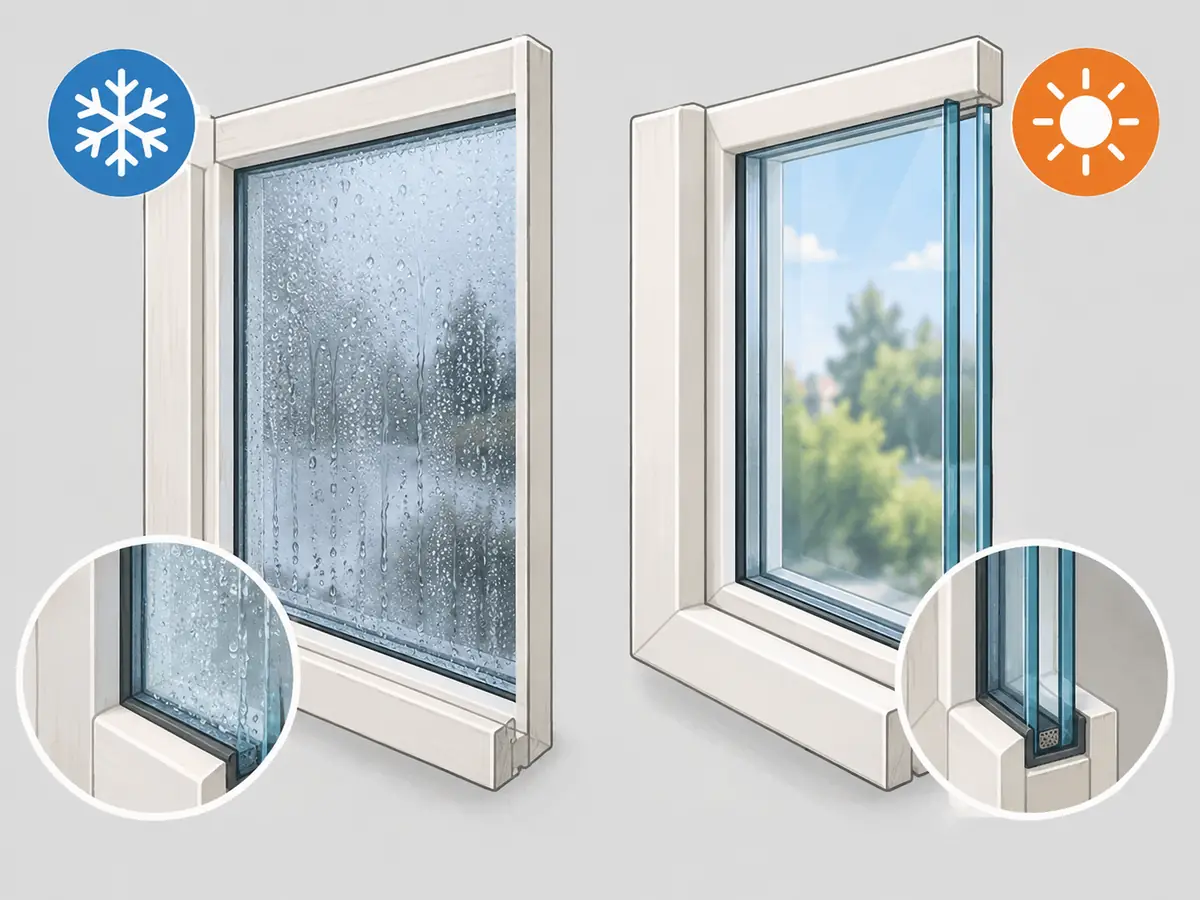 If a window runs with water every winter morning despite good ventilation, the glazing is the problem. Double or triple glazing, warm-edge spacers and thermally broken frames keep the inner surface above the dew point. Replacing fogged double-glazed units is often cheaper than a whole new window.
Use mold-resistant paint on wooden and painted frames
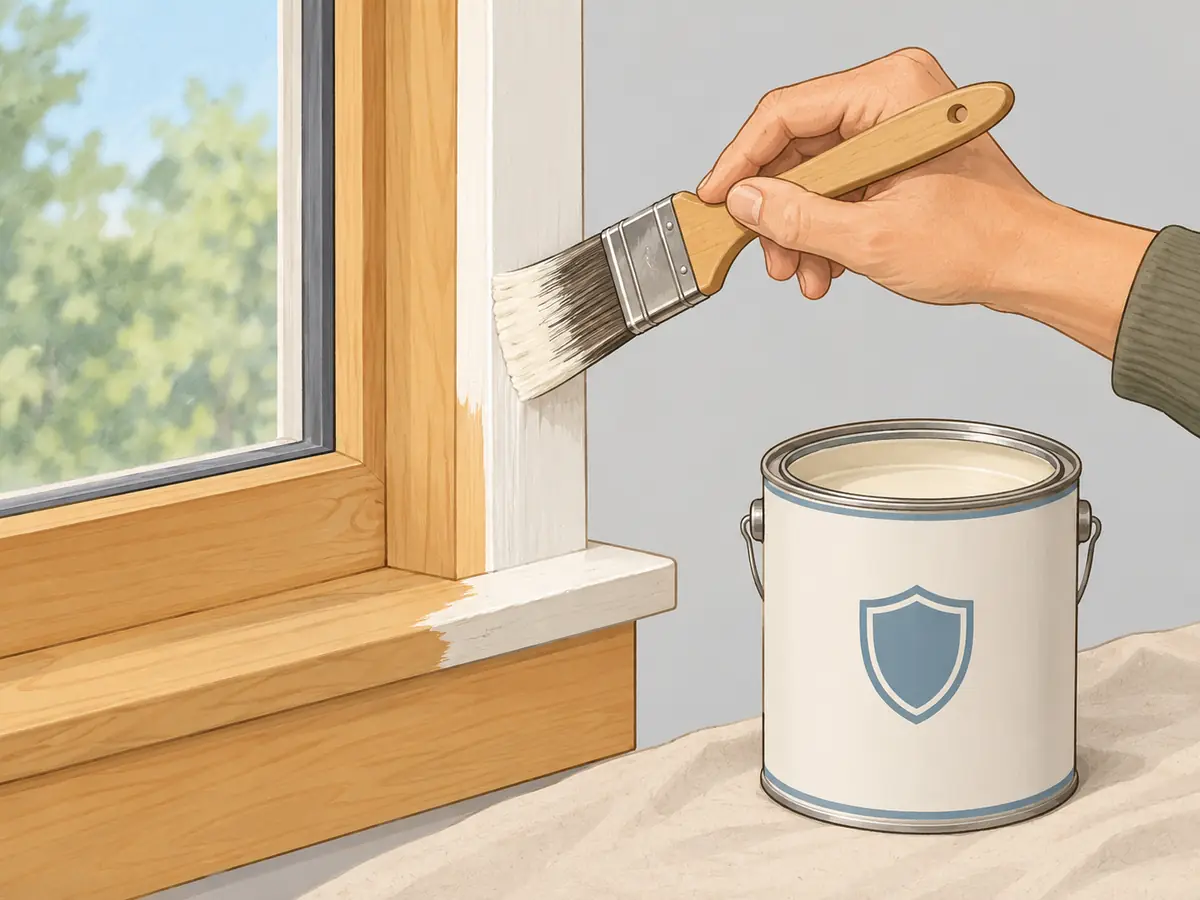 After a full clean and dry, a mold-resistant primer and paint slows regrowth. It does not replace moisture control.
How often should you clean window frames?
 Inspect every window monthly. Wipe condensation daily in winter. Do a full clean of frames, seals and tracks every 1 to 3 months in bathrooms, kitchens and bedrooms, and every season in other rooms.
When to Call a Mold Removal Professional
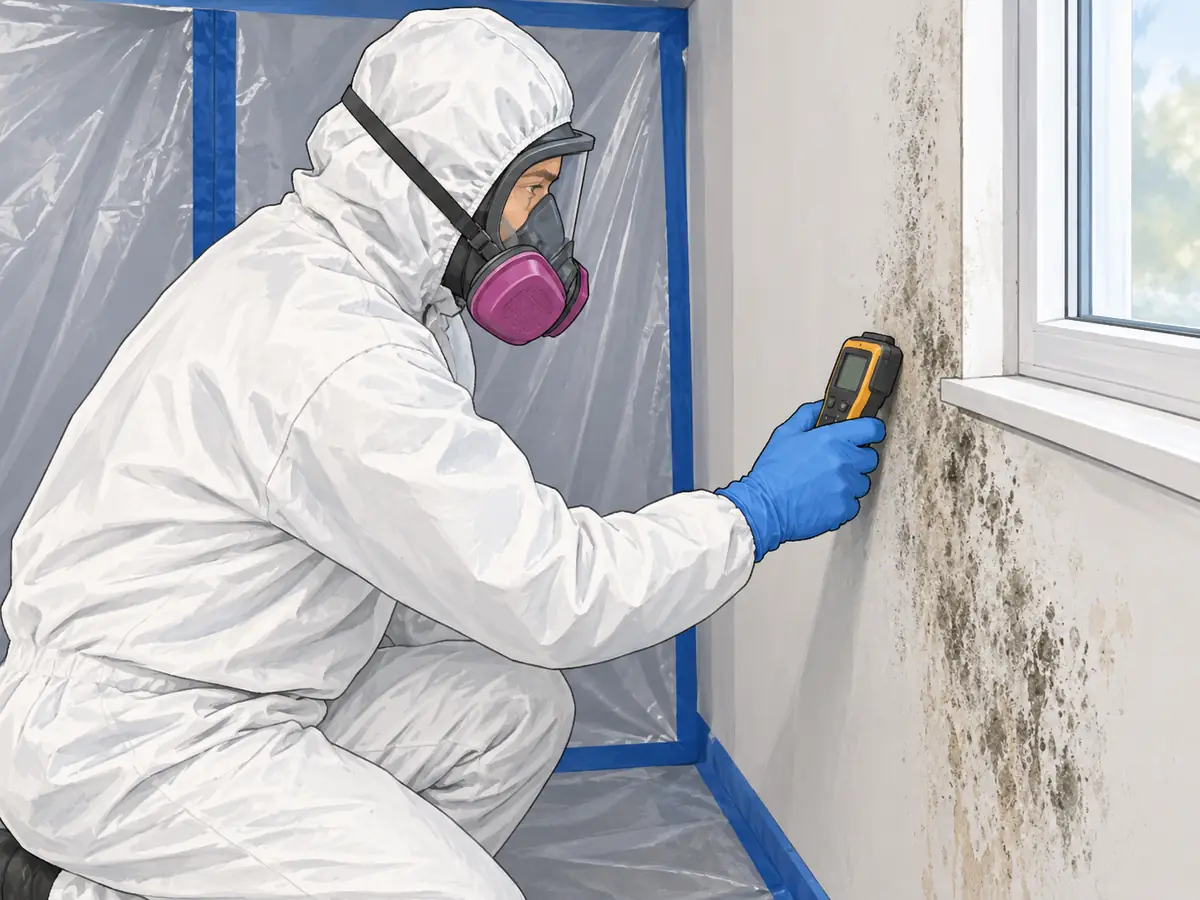
Call a professional when:
- The mold covers more than about 10 square feet
- It extends behind the frame, trim or into the wall
- The wood is soft or rotting
- It keeps returning even after you have reduced humidity
- You can smell mold but cannot see it
- Someone in the home has asthma, allergies or a weakened immune system
- The window was flooded or water damaged
A professional mold remediation company will find the moisture source, measure moisture inside the wall, contain the area so spores do not spread, remove damaged material and confirm the problem is fixed. Reputable companies follow the IICRC S520 mold remediation standard.
Mold keeps coming back? Get a free window mold assessment and we’ll find where the moisture is coming from before it spreads into your walls.
Frequently Asked Questions
What is the best way to remove mold from window frames?
Wipe the mold with mild detergent and water, or a 4:1 white vinegar solution, using a microfiber cloth. Clean the seals and tracks, dry everything completely, then fix the moisture source. Choose the cleaner by frame material.
Does vinegar kill mold on window frames?
Diluted white vinegar is effective for removing surface mold on most frames and is recommended in some public health guidance. It is less effective on deep stains and on mold growing inside soft, damaged wood. Never mix it with bleach.
Is bleach or vinegar better for mold on window frames?
For window frames, vinegar or detergent is usually better. Bleach corrodes aluminum, degrades rubber seals and does not penetrate wood. It mostly hides the color of mold rather than removing it.
Why does mold keep coming back on my window frames?
Because the moisture is still there. Nightly condensation, high indoor humidity, blocked weep holes or a leaking seal will regrow mold in 2 to 4 weeks. Use the diagnosis table above to find the cause.
Is black mold on window frames dangerous?
Most black mold on window frames is a common indoor mold, not toxic black mold. Any mold can trigger allergies and asthma, so remove it promptly, wear a mask and gloves, and get professional help if you are sensitive or the area is large.
Can mold on window frames make you sick?
Mold exposure can cause sneezing, coughing, itchy eyes, skin irritation and asthma attacks in sensitive people. People with weakened immune systems are at higher risk. Small amounts of surface mold cleaned promptly are low risk for most healthy adults.
Can you paint over mold on window frames?
No. Mold grows back through paint. Clean it off, let the frame dry completely, then prime with a stain-blocking or mold-resistant primer before painting.
What is the difference between mold and mildew on window frames?
Mildew is a type of mold that grows flat on the surface and usually looks white or grey and powdery. Other molds can be fuzzy or slimy and black, green or other colors. Both are removed the same way.
Can mold grow inside double-glazed windows?
Mold between the panes is rare. Fog or droplets between the glass mean the seal on the sealed unit has failed. The glass unit needs replacing, but the frame can usually stay.
How do you get mold out of rubber window seals?
Scrub the seal gently with a soft toothbrush and detergent or vinegar, rinse and dry. If black marks remain inside the rubber or the seal is cracked, replace the seal.
How long does it take to clean mold off a window frame?
About 15 to 30 minutes per window for light surface mold, including seals and tracks. Allow extra time for drying, especially with wood. ---
Final Word: Clean It, Dry It, Then Fix the Cause
Window frame mold is a moisture problem that shows up as a cleaning problem. Clean small patches with the right product for your frame, dry everything, and then use the diagnosis to stop the water. Lower humidity, open vents, clear weep holes and sound seals will keep frames clean for good.
Window Frame Mold Guides
| By frame material | By location and cause |
|---|---|
| Mold on wooden window frames | Mold between the window frame and wall |
| Mold on uPVC window frames | Mold on the inside of window frames |
| Mold on aluminum window frames | Get a window mold assessment |
| Mold on painted window frames |